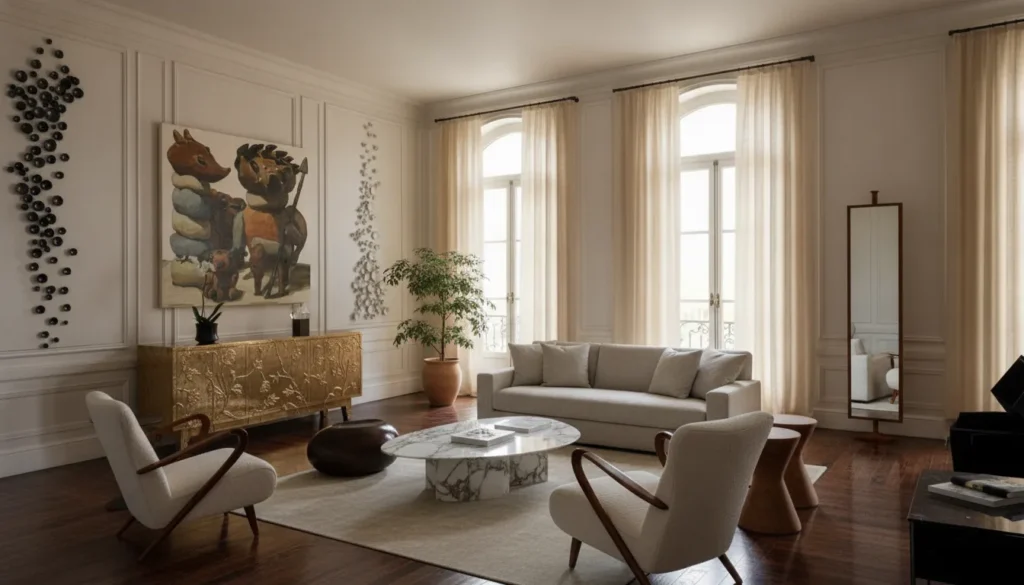
A valued canvas hung on a trendy, mass-produced wall soon loses its visual power. Enduring homes are built from the art outward, not the trend inward.
A timeless interior design philosophy relies on classic building traditions and useful purpose rather than fleeting market trends to create lasting luxury spaces that outlast short fashion cycles. By centering on a room’s clear structure, this careful, disciplined approach ensures that custom luxury homes keep both their utility and their beauty across many future generations. Instead of taking cheap, mass-produced styles, elite designers use bespoke materials, global artisan partnerships, and a collection-first focus that always starts with the client’s own fine art collection. This method is backed by historic design archives at Yale University, proving that classic architectural rules allow for immense decorative variety while treating homes as personal art museums.
To build a home that withstands the test of time, we must first examine the core of this approach. That means exploring what a timeless interior design philosophy really is and how these classic principles shape modern luxury living.
Schedule a consultation with Catherine Weinstock and build a home that endures, art-first and bespoke from the very first sketch.
What Is a Timeless Interior Design Philosophy?
A beautiful home should feel resolved. A true timeless interior design philosophy does not chase what is in style today. It builds on ideas that have lasted for many years and will last for many more. This clear path does not rely on fast trends to make a bold statement.
Instead, it looks to the past and the future at the same time. This thoughtful balance creates a space that feels both fresh and lasting. We design for real life and real people, not for a passing moment of fashion. The goal is to make a room that remains graceful for a lifetime.
A foundation in design traditions
To make a home that lasts, we must look at design rules tested by generations of architects. We do not need to copy old styles in a rigid way. But we should respect the design ideas that have worked well for centuries. These proven guidelines give us a strong frame for our work.
A Yale study on Wharton shows how design traditions let us adorn with a wide choice. We can do this without losing sight of the purpose of each room. Our rooms will always keep their beauty when we build on this solid ground. They stand strong because they have deep roots in proven forms.
The balance of purpose and style
A fine room is useless if you cannot live in it with ease. True style and function must always work together in a home. We believe that the best designs are those where function and beauty are joined as one. We must never adorn a space so much that we lose its true use.
This balance of form and function creates a balanced, harmonious home composition that feels right the moment you walk in. Every piece we choose should have a clear job to do. We make sure that each corner of a room serves a real need. This makes the space feel calm and complete rather than busy.
Designing with deep intention
When we design with deep intention, we make choices that do not fade with time. We do not buy mass-market goods just because they are popular today. Instead, we choose items that have real meaning. A single piece of fine art or a restored wood desk can ground a whole room.
This thoughtful approach to a space makes the design feel both personal and rich. When your home is built on your own life and tastes, it will always feel right to you. It will not go out of style because it was never part of a passing trend. It is simply yours, and that is why it lasts.
A custom home does not look like a sterile retail showroom. It is built for the exact people who live there, not for a quick photo shoot. You do not need to change your rooms when new trends come and go. Every single detail is chosen with great care, from the custom lighting to the fine materials. Bespoke quality ensures your home stays graceful and useful for many decades.
The Roots of Enduring Design: Principles Tested by Generations
To build a home that lasts, we must look to the past. We must use design rules that have been proven over many years. This path does not follow short trends that fade fast. We believe that a house should tell a story that grows richer with time. True design is a gift to the future, not a quick fix for today.
The weight of historical tradition
More than a century ago, Edith Wharton wrote about how to build rooms. She showed that we do not need new trends. Instead, we can use simple common sense. We can follow architectural traditions that have been tested by many generations of architects. These old rules give us a clear path. They let us make a room beautiful without losing its real use. Wharton believed that the structure of a house must guide how we paint and furnish it. The walls and floors must work together to make the space feel whole.
When we conform to these deep traditions, we can still create many different styles. But we must never forget the main use of the space. A library must still be a good place to read. A dining room must still help people gather and eat. By keeping the focus on use, the design does not fade when trends change. Each space should welcome the family and fit their daily life. This balance is what keeps a home timeless.
The strength of intellectual elegance
In the modern era, designer Massimo Vignelli spoke of a similar path. He believed that we need deep discipline to create work that lasts. For him, intellectual elegance is the key to timelessness. This elegance is not about how rich a room looks. It is about the deep thought behind each choice. It is a mind-set that looks for truth in design. When a room is honest, it does not need to show off.
A disciplined design means we do not add things just to fill space. Every chair, table, and light must have a clear reason to be there. This strict style prevents a room from looking busy or dated. It creates a quiet strength that stays fresh for decades. When we limit what we bring in, we let the best pieces stand out.
Curation over passing fashion
These historic principles form the base of our work. We blend Wharton’s focus on room use with Vignelli’s love for clean discipline. This blend leads to an art-centric design approach. We treat each home as a place for fine art and craft. The art is where we start, not a final step. We do not design a room and then buy art to match the sofas. Instead, the artwork guides our choices of color, wood, and form.
This is why a timeless interior design philosophy does not care about what is popular now. Instead, we curate spaces that reflect the soul of those who live there. We use fine materials and work with global artisans to build things that last. A curated home does not need to change every ten years. It stays beautiful because it was built on rules that have stood the test of time. By honoring the past and holding to strict standards, we build spaces that never lose their grace. Your home becomes a personal haven that will always feel right.
Design That Begins With Meaning: Art and the Collection-First Approach
The search for spatial meaning
To build a room that lasts, we must start with its core purpose. The famed designer Massimo Vignelli argued that design should always begin with a search for meaning. He called this process semantics, which means finding out what a space is meant to do and be. This search for meaning serves as a disciplined design guideline before you make style choices.
When we ignore the true purpose of a room, we end up with fleeting trends. A timeless design philosophy does not rely on fast fashion or passing styles. Instead, we must look at how the space will be used over many years. This careful focus on purpose ensures that the home stays useful and beautiful for generations.
By searching for meaning first, we avoid the trap of surface decoration. We look at the history, structure, and future of the building. This deep research helps us understand the true nature of each project. Only then do we begin to choose colors, textures, and layouts that fit.
Art as the spatial anchor
In a home built for an art collector, the space often acts as a personal museum where art is never an afterthought. Under an art-centric design approach, artwork is where the design begins, not where it ends. This curated focus puts the owner’s taste at the center of the project. We do not design a room and then find a painting to match the walls. Instead, we build the walls, lighting, and layout around the collection itself.
A home designed as a personal museum becomes a true reflection of its owner. It is not a showroom filled with mass-produced items. Every wall and corner is built to honor the art you love. This approach turns daily living into an inspiring, curated experience.
This method protects both the art and the spatial flow, since sensitive paintings need walls that do not catch harsh midday sun. Large sculptures need solid floor support and wide walking paths. When we plan for these details first, the home naturally supports the art. The result feels curated and cohesive, not chaotic.
Global artisan partnerships
To finish a curated home, we must look beyond mass-produced furniture. Working with top global artisans is a key way to find unique pieces that outlast quick trends. These pieces often become focal points in a gallery-like room. These skilled makers create custom goods that carry their own history and soul. When we place these items next to fine art, they start a rich dialogue.
Working with global creators brings rare craftsmanship into the home:
- Francesco Perini, who combines stone and wood in unique ways.
- Patrick Naggar, who designs sculptural furniture with an artistic focus.
- Gallery Fumi, which features bold and collectible design pieces.
These bespoke pieces do not lose their value when tastes change. Instead, they become family treasures that you can pass down to the next generation. This focus on maker and material is what keeps a space from looking dated. It ensures your home remains a personal haven that reflects your unique taste and story. Investing in this level of detail yields lasting beauty.
Bespoke Craftsmanship and Materials That Outlast Trends
Trends fade fast, but true quality remains. A timeless home relies on materials that grow more beautiful with age. When you choose bespoke craft, you invest in pieces made to last for generations. This choice shifts the focus from quick, mass-made items to unique, curated pieces.
The Role of Material Provenance
Choosing the right materials is the first step in creating an enduring space. Raw stone, solid wood, and hand-woven textiles carry a sense of history. They do not wear out. Instead, they take on a rich patina over time. As expert design guides show, intellectual elegance and timelessness must go hand in hand when we design bespoke spaces. True luxury needs a deep study of how materials behave in a space. You must understand where a stone was quarried or how a tree was cut. This focus on provenance ensures that every item lasts and has meaning.
A Structured Approach to Longevity
To find pieces that will endure, you need a clear way to judge quality. You cannot rely on brand names or high price tags alone. Instead, use these steps to judge the materials and craft in your home:
- Check the provenance of materials. Look for natural materials like solid oak, bronze, or real marble that age gracefully.
- Inspect the joinery and build. High-quality furniture uses classic joints like mortise and tenon or dovetails rather than glue and nails.
- See if the piece can be restored. Enduring pieces can be repaired, refinished, or reupholstered over the years rather than thrown away.
- Look at the refined finishes. Hand-applied finishes like oil, wax, or French polish protect the material while highlighting its natural texture.
- Check the custom hardware and metalwork. Bespoke details like sand-cast bronze or hand-forged iron show a commitment to craftsmanship that outlasts standard factory fittings.
The Value of Furniture Restoration
Furniture restoration is a vital part of this timeless approach. Saving and restoring old pieces gives them a second life. This process keeps the hand-crafted work of past artisans. Catherine Weinstock’s multidisciplinary training in fine arts, interior design, and furniture restoration gives her a deep respect for these materials. Because of this, our studio works on a select few large commissions each year. We focus on quality over quantity. This slow design process allows us to craft spaces with great care.
Every job is different, so we treat each project as a unique commission. True luxury relies on the bespoke tailoring of a space to its specific occupants. We blend a commitment to durability with an art-centric design approach. To do this, we run deep research into materials and past methods for each project. Your expectation of quality for goods and services shapes every choice we make. By choosing custom craft over mass-produced trends, we build homes that remain elegant and functional for decades.
Why a Whole-Home Commission Is the Most Enduring Investment
Designing a home is not about filling lone rooms with short-lived trends. Real strength comes when you plan the entire home as a single, unified work. A whole-home commission lets a designer look at how spaces connect, how light moves, and how life flows. This careful work is the core of a timeless interior design philosophy. It ensures that every room feels like a natural extension of the next, building a sense of ease.
See how this scale of work comes together in the Victorian townhouse project.
The value of whole-home cohesion
Piecemeal design often leads to a disjointed house where rooms clash in style and mood. When you design the whole home at once, you create a visual story that flows from the front door to the private rooms. This cohesive planning respects the traditions of design that balance function and beauty across every room. It prevents the space from feeling like a random mix of parts, turning your house into a calm sanctuary.
This design discipline aligns with the principles of timelessness, where every choice has a clear purpose. The layout, the materials, and the light all work together to serve your daily needs. The result is a calm, balanced home that stands strong against the test of time.
Focusing on quality over quantity
Creating an enduring home needs a deep investment of time and care. Serious, long-term engagements often last from twelve to eighteen months. This lengthy timeline is not a delay, but a planned path to high quality. It lets the design team source rare antique items, work with expert makers, and restore historic furniture. These custom steps ensure that each piece in your home has its own history and lasting value.
Because every job is different, there are no quick solutions or mass-made plans. True luxury means tailoring every corner to your own lifestyle and art collection. A boutique studio limits its work to just one or two major projects each year. This exclusive focus ensures that your home gets the full care and craft it deserves, with no detail left to chance.
A dedicated on-site approach
A true designer cannot work from a distance or rely on online photos. To build a space that lasts, the design process must happen on-site. The designer must walk through the physical space to feel its unique mood and understand how light flows. This real-world study lets the team plan with great care, matching the architecture to your everyday habits.
A remote design model might save time, but it misses the true soul of the home. Every wall, window, and doorway has a story to tell that only on-site visits can uncover. By being there in person, a designer can see how the local light changes from morning to evening.
By visiting the site, the team can find the best spots for your art collection and custom furniture. This hands-on method ensures that the final design fits your life like a tailored suit. If you want to build a home of lasting beauty, you can schedule a consultation with our studio. Let us help you start your whole-home design journey with a dedicated, on-site partner.
Timeless Interior Design Philosophy in Practice: Five Working Principles
To create a home that remains elegant for many years, one must follow a clear set of beliefs. A truly timeless interior design philosophy does not rely on fleeting trends. Instead, it relies on structured rules that balance fine art, architecture, and daily life. By looking at the core beliefs of great design minds, we can find five key principles that guide the making of enduring spaces.
Discipline and Appropriateness
The first principle is strict design discipline. Creative work is a strong force, but it needs structure to succeed. In the world of high-end design, disciplined design guidelines show that creativity needs the support of knowledge to be able to perform at its best. Without a deep study of art history and building rules, design choices become messy. Discipline creates the clear limits that keep a room elegant.
The second principle is appropriateness. Every choice must fit the specific home, its setting, and its owner. Lasting rooms do not use plain themes or fast trends. Instead, designers find the right goods, colors, and scale for that exact space. Making appropriate design choices is a key part of building a home that stays beautiful for decades.
Function and Responsibility
The third principle is the balance of function and beauty. A room must serve its daily use while looking its best. Elegance is lost if a space is hard to live in. Classic design studies at Yale University show we can furnish rooms in many ways without losing sight of their main purpose. Use and beauty must work as one.
The fourth principle is responsibility. A designer is a steward of the home and must think of how people live in it. True luxury is not just for show; it must care for the well-being of the family. This means choosing safe goods, easy layouts, and lighting that helps the mind and body rest.
Bespoke Craft and Curation
The fifth principle is bespoke craft and curation. A home should not feel like a store showroom filled with mass-produced items. Instead, it should be a personal space built around fine art and custom goods. This art-centric design approach matches the home to the owner’s collections. By working with global artisans, designers can create unique furniture and details that trends cannot fade.
When these five rules are used together, they create a balanced and peaceful home. The layout of each room is carefully planned to support the flow of daily life. For example, you can use these rules to build a balanced, harmonious home composition that feels calm and grounded. This method ensures your home is more than a place to store goods. It becomes a quiet retreat where you can live well and enjoy your art.
How to Build a Home That Outlasts Every Trend
Many home designs follow a fast ten-year trend cycle. This means the style you choose today may feel old in a decade. A smart way to avoid this is to build with a timeless interior design philosophy. This approach puts long-term beauty and use above quick fads.
Function over style
When you build a home, you must not let a strict historical style get in the way of daily use. In her work on design, writer Edith Wharton warned against losing a room’s function to a strict style. A dining room must work well for meals, and a study must be a quiet place to read. If you copy an old look too closely, the space can become hard to live in. True beauty comes when a room serves its purpose well.
Fast trends often ignore how you use a space. They focus on quick looks that go out of favor in just a few years. For instance, open shelves might look nice in a photo, but they may not hold enough items in real life. When you build a home, ask yourself how each room will work for your family over ten or twenty years. Lasting choices are always built on real daily needs.
Disciplined creativity and knowledge
To make a home that lasts, a designer must use disciplined creativity. This means your plans are guided by deep knowledge and clear rules rather than wild guesses. As noted in the Vignelli design guide, creativity needs the support of knowledge to work at its best. When you know the history of materials, you make better choices for your space.
Without this knowledge, design can become messy and cluttered. You might mix too many loud colors or choose weak woods that break down fast. A disciplined plan keeps your focus on fine materials. It helps you stay away from cheap, mass-made pieces that fill the shops today. Instead, you can find local stone, solid oak, and handmade goods that only look better as they age.
Balance and the role of white space
A classic home also needs a good sense of balance. Many people feel they must fill every wall and corner with art or furniture. But empty space is just as vital as the items you place in a room. Designers often call this white space. It is a vital tool. As discussed in classical studies at the Vignelli Center, using empty space well helps to bring focus to your key design elements. It gives your eyes a place to rest and lets your finest pieces stand out.
Using white space is a key part of a balanced, harmonious home composition. It creates a calm feel that never goes out of style. When you plan a layout, leave room around your tables and chairs. Let the natural light move through the space with ease. This simple choice keeps your home feeling open and peaceful for years.
How a Timeless Philosophy Differs From Passing Trends
A home should feel like an anchor. But many modern rooms feel more like a store shelf. High-end design must choose between the fast pace of trends and a lasting view of space.
To build a home that lasts, we must reject the rapid cycle of fashion in favor of a timeless design philosophy. This way of thinking does not chase the style of the month. It focuses on how we live.
Natural color palettes and material durability
Trends rely on bright, loud colors that age quickly. A classic approach uses natural shades to build a warm space. These soft colors include cream, beige, and grey.
We pair them with rich tones like chocolate brown and olive green. This mix creates warmth and quiet strength. We also choose raw materials that look better with age.
These design choices reflect a focus on lasting use. Natural shades and strong materials help a room stay calm and grounded. They also let art and furniture take center stage. This path stands in stark contrast to fast design, which relies on quick changes and cheap parts.
The rejection of mass production
Fast fashion in furniture fills landfills. To avoid this waste, we must avoid trend-driven mass production. High-end spaces need pieces made with care and time.
Each object should have a clear purpose and high craft. When we design this way, we honor the deep architectural traditions tested by generations of builders as noted by Yale University scholars. This care ensures the home does not feel like a copy.
Mass production removes the soul from a space. It forces a home to look like every other house on the block. A custom designer avoids these generic looks by choosing handmade items. This focus on unique craft makes each room stand out.
The role of bespoke restoration
A timeless home often features restored pieces. Old items hold a unique story that new furniture cannot mimic. We work with global makers to restore fine wood and metal.
This work keeps old craft alive. It also helps us build spaces that feel like personal museums. Instead of buying new things every year, we invest in art that grows in value.
Restored items bring a sense of history into a modern room. They act as a bridge between the past and the present. When we mix old art with new design, the space feels alive and rich. This style does not go out of fashion.
The table below shows how these two design paths differ in daily practice. By choosing the second path, you create a space that feels both personal and permanent.
| Passing Trends | Timeless Design |
|---|---|
| Synthetic materials designed for quick replacement. | Natural, durable stone and wood that last for decades. |
| Loud, saturated colors that soon feel dated. | Warm, neutral shades like beige, cream, and olive green. |
| Mass-produced, flat-pack items with no human touch. | Bespoke furniture and art restored by global craftsmen. |
| Quick style cycles that end in five to ten years. | Enduring design refined by generations of architects. |
| Objects that lose value once the trend fades. | Curated art collections that grow in personal value. |
Contact CW DESIGN to review your collection and commission a timeless interior designed around the art you love.
Frequently Asked Questions
Can you combine modern trends with timeless design?
Yes, you can blend modern trends into a lasting space. The key is to start with a strong, simple foundation. According to design rules from the Rochester Institute of Technology, smart design and strict discipline create work that lasts through the years. You can add small, trendy items like accent pillows or lights to this base. These pieces are easy to swap out as styles change. The main furniture and layout should remain clean and high in quality.
How do you keep a historic room functional without losing its style?
You should place the daily use of a room above the strict rules of a past era. A timeless room must first serve its real purpose. Research hosted by Yale University shows that early design experts warned against using old styles so strictly that you lose the room’s purpose. Instead, mix historic details with smart layouts that fit your daily life. This balance keeps the space both useful and full of character.
Why is timeless interior design preferred over fast trends?
Fast trends come and go quickly, which makes rooms look dated in just a few years. A timeless style is built to last across generations. It relies on fine woods, stone, and strong layouts rather than quick fads. As the Vignelli Canon at the Rochester Institute of Technology reminds us, disciplined structure and thoughtful design ensure lasting quality. Choosing this path means you do not have to keep updating your home every few years. Your space stays beautiful, useful, and elegant for decades.
Ready to Begin Your Timeless Interior Design Commission?
We believe a luxury home should be built to last for generations rather than following the fleeting trends that quickly fade from style. Waiting to set up your project keeps your curated art collection in a space that fails to show its true beauty and long-term worth. Since we accept only one or two large commissions each year to maintain our high standard of craftsmanship, starting now secures your place. Our dedicated, on-site process requires visiting each space in person to understand the layout and design a bespoke interior that fits your lifestyle.
Ready to begin your project? Schedule a consultation with Catherine Weinstock today to discuss your art collection and start planning your custom space.
Pingback: What Is Bespoke Interior Design? – CW DESIGN
Pingback: Interior Designer vs. Decorator: Key Differences – CW DESIGN
Pingback: Anti-Trend Interior Design: Why Trends Fail – CW DESIGN
Pingback: What Is an Interior Design Commission? – CW DESIGN
Pingback: Bespoke Interior Design Philosophy in New York – CW DESIGN
Pingback: Luxury Interior Design New York: What to Look for When Choosing a Designer – CW DESIGN
Pingback: How Long Does Whole Home Interior Design Take? – CW DESIGN
Pingback: Art-Oriented Interior Design for Collectors – CW DESIGN
Pingback: Penthouse Interior Design New York: A Whole-Home Guide – CW DESIGN
Pingback: Luxury Interior Designer Tribeca New York: Bespoke Homes – CW DESIGN
Pingback: Luxury Interior Designer Sands Point Long Island Guide – CW DESIGN