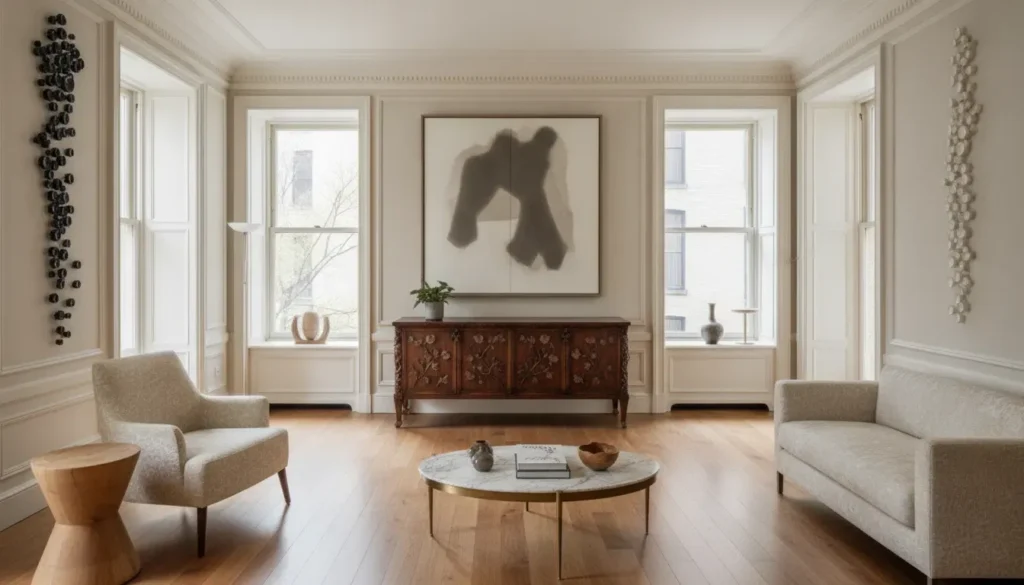
A bespoke interior design philosophy in New York begins with the recognition that no serious commission can be reduced to a prescribed look. At CW DESIGN, each interior develops from the client, the architecture, the art, and the particular life that will unfold within it. The result is not a formula, but a composed and lasting response.
Discuss a bespoke, art-led interior with CW DESIGN
For Catherine Weinstock, that response is shaped through close observation and sustained conversation. The practice brings together interior design, furniture restoration, and fine arts, allowing a commission to be considered as a complete environment rather than a collection of unrelated selections. This philosophy is especially relevant to New York homes, where distinctive architecture, layered histories, and serious collections often ask for more than a ready-made solution.
What bespoke philosophy means in practice at CW DESIGN
A bespoke philosophy means that the design is made for a particular client and property, not selected from a predetermined style. CW DESIGN studies the architecture, listens to how the client lives, considers the art and objects already present, and develops proportion, materials, furnishings, and details as one coherent composition.
Bespoke is therefore a method of working rather than a decorative category. It does not require every object to be newly fabricated, nor does it reject useful existing pieces. An antique, an inherited chair, a contemporary artwork, and a custom cabinet can belong together when each has a considered place in the larger narrative.
The distinction is in the starting point. A prescription-led project begins with an established look and asks the home to accommodate it. A bespoke commission begins with the conditions of the home and allows the design language to emerge from them. The process may include custom furniture, specialist restoration, carefully sourced antiques, or a restrained selection of finished pieces. What matters is that the decisions belong to the project.
| Design question | Prescription-led approach | Bespoke approach |
|---|---|---|
| Where does the work begin? | A familiar style, product range, or room formula | The client, property, collection, and lived requirements |
| How are pieces selected? | From available options that approximate the intended look | For their precise relationship to the architecture and whole composition |
| What is the role of art? | Often added after the principal scheme is established | Considered from the beginning as part of space, light, and movement |
| What is the measure of success? | Resemblance to a recognizable style | A singular interior that feels inevitable for its client and setting |
This way of working aligns with CW DESIGN’s timeless design philosophy. The objective is not to chase novelty, but to make decisions with enough clarity and craftsmanship to remain meaningful as tastes, collections, and daily routines develop.
How multidisciplinary training informs the design approach
Catherine Weinstock’s multidisciplinary training informs a design approach that moves between space, object, material, and artwork. Interior design establishes the architectural and functional framework; furniture restoration brings attention to construction and conservation; fine arts training strengthens visual judgment, composition, and the reading of a collection.
These fields do not operate as separate services in the mind of the designer. They create a more complete way of looking at an interior. A room can be assessed not only by its furniture plan, but also by the history of an object, the tension between materials, the direction of light, and the conversation between artworks across a space.
Furniture restoration is particularly instructive. To restore a piece responsibly requires patience, close examination, and respect for the evidence held in its structure and surface. That same discipline can shape the design of a new interior. Materials are not chosen only for immediate effect; their texture, aging, scale, and relationship to the home’s architecture are considered over time.
Fine arts training adds another form of attention. It encourages the designer to consider rhythm, negative space, visual weight, and the sequence through which a person encounters a room. In an art-led home, these questions affect where a painting is seen from, how a sculpture alters circulation, or how a quieter passage prepares the eye for a more concentrated work.
- Architecture: proportions, circulation, natural light, and the practical requirements of the property.
- Objects: construction, patina, scale, provenance, restoration needs, and everyday use.
- Art: sightlines, spacing, material sensitivity, relationships between works, and future acquisitions.
- Life: rituals, hosting, privacy, comfort, storage, and the client’s evolving priorities.
The result is a practice that can hold technical and poetic questions in the same conversation. It is also why a client with a significant collection or a complex whole-home project may benefit from a designer who understands both the environment and the objects that give it meaning.
Why every commission begins with listening and observation, not prescriptions
Every commission begins with listening and observation because a credible interior must reflect the person who lives there, not a generic idea of luxury. Before recommending a finish or furniture style, CW DESIGN seeks to understand the client’s habits, memories, collection, expectations of quality, and relationship to the property.
This first stage is active, not passive. Listening includes the words a client uses, but observation also reveals what may remain unstated. How does someone move through the house? Which rooms do they return to? What do they protect, display, or keep close? Do they prefer visual quiet, layered pattern, strong contrast, or the changing atmosphere of natural light?
New York properties add their own set of questions. A Brooklyn townhouse may have a long history, unusual proportions, or preservation constraints. A Tribeca apartment may be defined by volume, structure, and city light. A house in Sands Point may require a different relationship between interior rooms, landscape, and privacy. The point is not to apply a regional style, but to let the conditions of the property become useful design information.
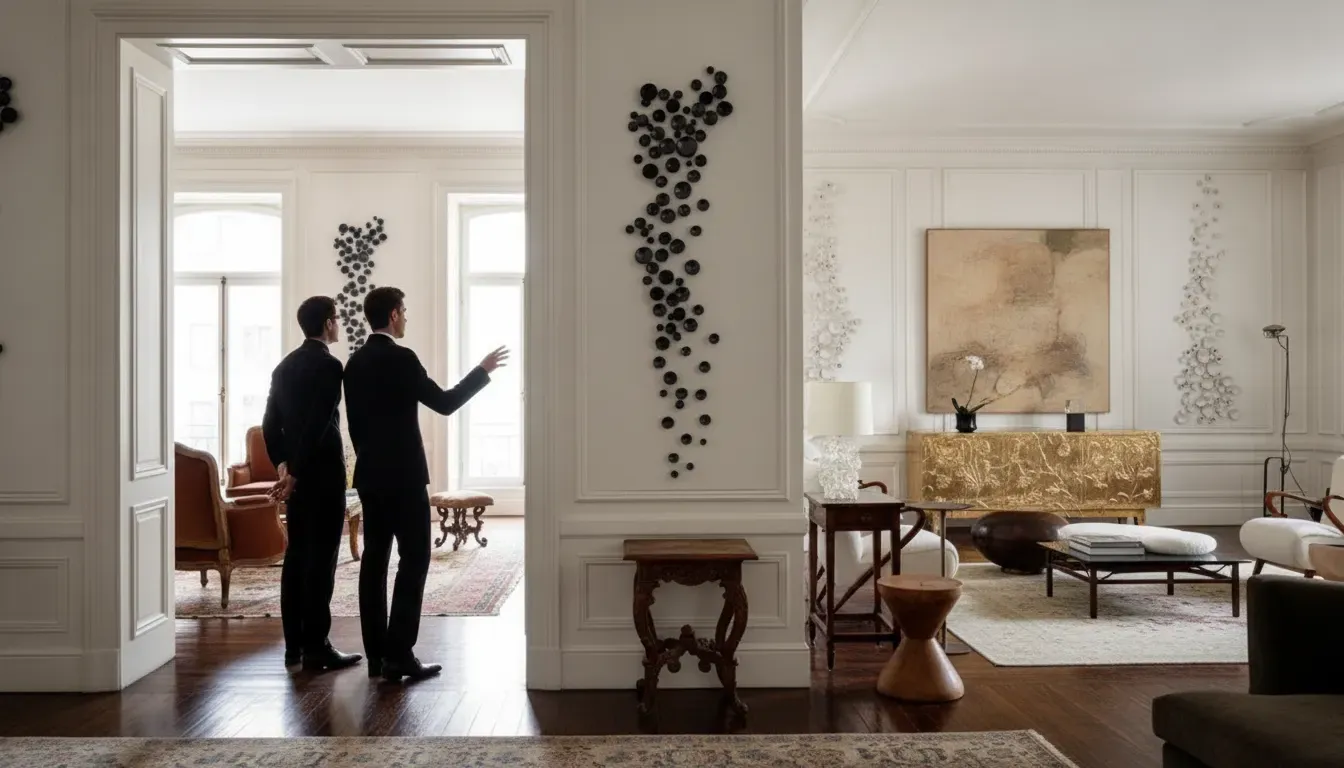
Observation also protects the design from premature certainty. Prescriptions can be efficient, but efficiency is not the same as insight. A fixed answer may overlook a treasured object, a difficult sightline, an unspoken need for quiet, or the way a family actually gathers. By delaying conclusions until the brief is understood, the designer creates room for a more precise and personal direction.
That patience is essential when the work involves a full apartment, house, or renovation. Decisions made early can influence architecture, lighting, storage, custom fabrication, and installation years later. A thoughtful beginning gives the whole commission a stronger internal logic.
Begin an on-site conversation about your home and collection
How the firm’s European design study credentials shape its philosophy
The firm’s European design study credentials shape a philosophy grounded in craft, history, and close looking. Catherine Weinstock’s study of interior design, furniture restoration, and fine arts in Europe, including formative work in Italy, provides an Old World respect for materials while leaving room for a contemporary and highly individual response.
European study is not used as a decorative shorthand. Its value lies in the habits it cultivates: seeing how materials age, understanding how furniture is made, recognizing the difference between surface effect and enduring construction, and placing new work in conversation with cultural memory. These habits are useful in New York, where historic buildings and contemporary lives frequently meet within the same commission.
The training also supports a more nuanced approach to sourcing. The right piece may come from a gallery, an established maker, an antique dealer, or a specialist workroom. CW DESIGN’s global artisan collaborations can bring a particular material, technique, or point of view into a project when an existing product cannot provide the required answer. A bespoke commission may therefore include a quiet room made more exact by one singular table, lamp, textile, or piece of joinery.
This is where craft becomes part of the design philosophy rather than an ornamental afterthought. A custom element should not exist merely to announce that it is custom. It should solve a spatial problem, deepen the connection to the collection, improve the way a room is used, or create a level of proportion and finish that standard options cannot provide.
Clients can see how this art-centered perspective operates in CW DESIGN’s approach to art and interiors. The collection is treated as an active participant in the composition, with the architecture, furnishings, and lighting supporting the relationships between works instead of competing with them.
The role of the client in a genuinely bespoke process
The client is not simply approving a sequence of selections in a genuinely bespoke process. The client provides the knowledge that makes the work specific: the way the home is used, the experiences that should be reflected, the pieces that matter, and the ambitions that may not yet have a visual form.
Collaboration does not mean asking the client to become a designer. It means creating an honest exchange in which preferences, concerns, and practical requirements can be examined without being forced into a ready-made style. A client may know that a room should feel calmer, that a collection needs more breathing room, or that entertaining should be easier without knowing which architectural or material decisions will accomplish it.
The designer’s responsibility is to translate that knowledge into a coherent environment. That may involve presenting alternatives, explaining the consequences of a decision, or gently challenging an assumption when it would compromise the whole. The best result is not a literal transcription of every initial request. It is a considered interpretation that feels faithful to the client’s identity while bringing a level of expertise the client should not have to supply.
A successful collaboration also depends on candor about the property. A historic detail may deserve preservation. An inherited piece may need restoration rather than replacement. A beloved artwork may require a different wall, light level, or viewing distance than first imagined. Discussing these realities early makes it possible to protect what matters while still moving the project forward.
For this reason, CW DESIGN prioritizes substantial, carefully considered commissions. Whole-home and entire-apartment projects allow the philosophy to be carried through the architecture, art, furnishings, and final installation. The work can develop with the depth required by a serious collection and a client who wants an interior that is personal rather than merely polished.
The practice’s multidisciplinary background and direct creative leadership support that continuity from first conversation through completion. It also reflects a central belief: a home becomes more compelling when its decisions belong to the people, place, and objects that make it unique.
Contact CW DESIGN to discuss a bespoke interior design commission
Frequently Asked Questions
What is a bespoke interior design philosophy?
A bespoke interior design philosophy treats each commission as a distinct response to a client, property, collection, and way of living. It avoids applying a fixed style and instead develops architecture, materials, furnishings, and details as a coherent whole.
How does CW DESIGN approach a new commission?
CW DESIGN begins with listening and observation. The practice studies the property, discusses the client’s daily life and collection, and identifies the practical and aesthetic conditions that should guide the work before prescribing finishes or furnishings.
Why is multidisciplinary training important in art-led interiors?
Interior design, furniture restoration, and fine arts each sharpen a different form of judgment. Together, they help the designer consider space, construction, patina, composition, light, and the relationships between artworks within one continuous design process.
Does bespoke design mean that every piece is custom-made?
No. Bespoke design may include antiques, existing furnishings, established works, and custom pieces. The defining quality is not that everything is newly made, but that every element is selected or developed for its precise role in the client’s interior.
Where does CW DESIGN work?
CW DESIGN is based in New York and works on-site. The firm’s geographic experience includes New York communities such as Brooklyn, Tribeca, and Sands Point, as well as selected projects and collaborations beyond the region.