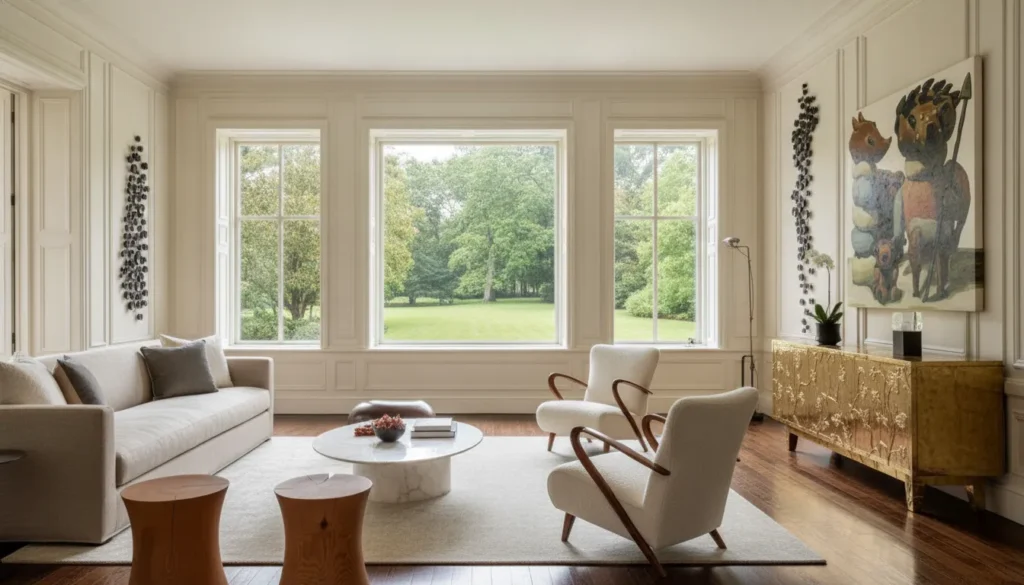
An estate in Sands Point asks more of an interior than a polished collection of rooms. Landscape, architecture, inherited character, and the way a family lives with art all have to belong to the same composition. For a substantial residential commission, the most successful decisions begin with observing the property and understanding the collection, not with selecting a decorative style.
A luxury interior designer sands point long island homeowners can trust should shape the entire residence around its architecture, landscape, and artwork, coordinating materials, furnishings, and installation with a discerning eye for how the home will be lived in.
Discuss your Sands Point or Long Island residence with CW DESIGN
CW DESIGN creates bespoke residential environments for art collectors and high-net-worth individuals, serving New York locations including Sands Point. Catherine Weinstock’s approach is quietly curated and enduring, with artwork informing the design from the beginning rather than appearing as a final layer. That perspective also shapes the firm’s timeless design philosophy, and it starts with understanding what the property itself is asking for.
What a Luxury Interior Designer in Sands Point and Long Island Considers First
An estate on Long Island asks different questions from a smaller, self-contained room project. The first visit should establish how the house meets its landscape, how its architecture directs movement, and what the property already communicates before furnishings or finishes are considered. Arrival matters: the sequence from drive to entry, the first interior vista, and the relationship between formal and private rooms all influence the eventual sense of welcome.
Scale is not simply a matter of filling generous rooms. It is a question of proportion, pacing, and continuity. A whole-home scheme should allow spaces to unfold without losing intimacy, while materials and furnishings give the residence a coherent character from one threshold to the next. For a client whose home includes an important collection, these early observations also help identify where art, daily life, and the architecture can exist in conversation.
Landscape is part of that reading. Views, mature planting, natural light, and the changing experience of the property through the day can inform where attention is held and how circulation is choreographed. The goal is not to impose a decorative style on the setting, but to develop a curated interior that feels native to its particular site.
Heritage may offer another layer of direction. The Library of Congress documents early twentieth-century mansion drawings associated with Sands Point, including an ink and graphite plan on linen from the period 1910 to 1920. A separate record identifies a 1917 Beacon Towers recreation-room perspective rendering in Sands Point, with Alva Belmont as client and Hunt & Hunt as architects in its catalog entry. These records do not prescribe a contemporary interior, but they demonstrate how architectural intent and room use can preserve a sense of place.
That balance between history and present life is central to a timeless design philosophy. The most thoughtful first questions concern what should be honored, what daily routines require, and where bespoke craftsmanship can make the residence feel distinctly its own.
How Estate Context Shapes a Bespoke Design Brief
A bespoke brief begins with the property itself, not a predetermined style. An on-site visit reveals how rooms connect, where natural light changes through the day, how the household arrives and moves through the home, and which architectural qualities deserve to remain visible. In an estate setting, those observations help establish a coherent direction for the residence rather than treating each room as an isolated project.
The conversation also needs to include daily life. A collection, entertaining routine, family requirements, and moments of quiet all place different demands on the plan. The goal is an interior that feels composed and personal while remaining comfortable to inhabit. Existing architecture, the scale of the rooms, and the relationship between public and private spaces can guide decisions about circulation, furnishings, materials, and the degree of visual continuity from one area to the next.
For a comprehensive renovation, the brief must extend beyond decoration. CW DESIGN supports residential projects from concept through sourcing and installation, including coordination for large-scale work. That means establishing how design decisions relate to the architectural and renovation team, which elements need to be resolved early, and how finishes, furnishings, and artwork will come together as the project develops. The whole-home design commission process reflects this broader scope.
| Property cue | Design question |
|---|---|
| Scale and proportion | How should rooms unfold with continuity while retaining intimacy? |
| Landscape and light | Which views, transitions, and natural changes should guide circulation? |
| Architecture and heritage | What deserves to be honored while the home is made fit for present life? |
| Collection and daily routines | How can art, comfort, entertaining, and privacy belong to one composition? |
Sourcing is part of the design reasoning, not a final shopping exercise. Materials should suit the character of the property and the way it will be used, while furnishings can be selected or developed to establish proportion and continuity. Where the brief calls for something particular, artisan partners may contribute custom furnishings, woodwork, finishes, fixtures, or hardware. Installation then becomes the careful realization of the decisions made on-site, with attention to how the completed rooms support both the estate and the life unfolding within it.
How Do Art Collections Shape Long Island Residential Interiors?
In a collection-first interior, artwork informs the architecture of the experience rather than arriving as a finishing touch. The starting point is a close understanding of what the client owns, what they hope to acquire, and how each piece should be encountered across the home. CW DESIGN’s work for art collectors integrates existing collections into the interior and considers the relationship between artworks and everyday life. See the firm’s approach to interiors for contemporary art collectors.
That planning begins with sightlines. A painting might be understood from the entry hall, revealed at the end of a passage, or given a quieter setting where its scale and character can be appreciated without visual competition. In a Long Island residence, circulation is therefore more than a practical route between rooms. It becomes a sequence of encounters, with views carefully composed between the collection, the architecture, and the landscape beyond.
Lighting is considered alongside those relationships. The position of a work, the mood of a room, and the way a family moves through the house all influence the lighting strategy. Fixtures and sources should support the presence of the artwork while preserving the atmosphere of the interior, rather than making the room feel like a gallery installation. For a closer look at this design consideration, read about lighting artwork in a luxury home.
Scale matters just as much. A significant work may require breathing room, while a group of smaller pieces may call for a more intimate arrangement. Furniture, window treatments, wall finishes, and materials are selected in response, so the collection feels integrated rather than isolated. Texture and restraint can give a room depth without competing with the art; bespoke details can establish continuity from one space to the next.
Most importantly, the home must remain a home. Seating should invite conversation, rooms should support ordinary routines, and the collection should be part of daily life rather than protected from it by an overly formal presentation. This balance between display and use is central to a refined residential commission: art gives the interiors direction, while the interiors give the collection a lived and evolving context.
How CW DESIGN Approaches a North Shore Residential Commission
A North Shore residence deserves more than a decorative scheme applied room by room. Catherine Weinstock brings multidisciplinary European training in interior design, furniture restoration, and fine arts to each commission, allowing architectural character, materials, furnishings, and the client’s collection to be considered as one composed whole. Her background supports a practice grounded in close observation, discernment, and craftsmanship.
The relationship begins on-site. Visiting the property makes it possible to understand how rooms connect, how natural light changes through the day, and how the house is actually lived in. That direct experience matters when the brief involves an entire residence, a renovation, or a collection that must feel integrated into daily life rather than separated from it. Sands Point is among CW DESIGN’s stated New York service locations, although the firm does not present a specific completed Sands Point case study.
A bespoke point of view
CW DESIGN approaches residential work selectively, with an emphasis on personal discovery and a high-touch relationship. The goal is not to reproduce a signature look or follow a seasonal trend. It is to develop an interior with a subtle, enduring logic: a considered relationship between the architecture, the landscape beyond it, the owner’s habits, and the works of art that give the home meaning.
That perspective extends to the details that make a residence feel singular. When a standard piece cannot express the intention of a room, custom furnishings, woodwork, finishes, fixtures, or hardware may be developed with artisan partners. Explore the firm’s bespoke furniture and artisan commissions to see how craftsmanship can become part of the design language, rather than an afterthought.
For a North Shore commission, the result is a process shaped by the property and the people who inhabit it. The work remains curated, collaborative, and attentive from the first visit through the decisions that give the completed home its lasting character.
How to Begin a Bespoke Commission for a Sands Point Property
The first step is an on-site conversation at the property. A visit allows the design relationship to begin with the house itself: its proportions, light, circulation, architectural character, and the way the rooms are actually used. CW DESIGN works on-site, not through a remote or virtual process, because the experience of a place is essential to understanding its possibilities.
- Visit the property and observe its architecture, light, landscape, and circulation.
- Discuss the collection, household routines, and the atmosphere the home should convey.
- Define the residential or renovation scope and the teams already involved.
- Identify the rooms, materials, furnishings, and artisan details that deserve early attention.
Come prepared to discuss the collection as well as the household. Which works are central to the way you live? Are there pieces that need a particular setting, a different rhythm of viewing, or a more considered relationship to adjoining rooms? Artwork is treated as a starting point for design, while comfort, entertaining, privacy, and daily routines remain equally important. The conversation should make room for both personal priorities and the less obvious qualities that make a home feel enduring.
Define the commission as a whole
Clarify whether the brief concerns a single interior, an entire residence, or a broader renovation involving several spaces. Comprehensive residential projects may require coordination from concept through sourcing and installation, so it is useful to identify the architectural team, contractors, galleries, fabricators, and other consultants already involved. Where a project is still taking shape, that early coordination can help establish a coherent direction before decisions become fragmented.
It is also helpful to identify the decisions that matter most at the outset: the treatment of significant rooms, the integration of existing furnishings, the balance between restoration and new work, or the need for custom elements. A bespoke commission may involve collaboration with artisans on furnishings, woodwork, finishes, fixtures, or hardware, depending on the character of the brief. The whole-home design commission process offers further context for this scope of work.
From there, the next conversation can establish whether the property, collection, and ambitions are aligned with the practice. Engagements are bespoke and capacity is intentionally limited, with room reserved for work that benefits from sustained attention and careful curation.
Talk with CW DESIGN about your Sands Point property
Frequently Asked Questions
What should be considered first when designing a Sands Point estate?
The first consideration is the property as a whole: its architecture, scale, circulation, setting, and the way your household lives. An on-site conversation also establishes which rooms, collections, furnishings, and renovation priorities should guide the commission.
Does CW DESIGN take on whole-home residential commissions?
Yes. CW DESIGN supports comprehensive residential projects from concept through sourcing and installation, including large-scale renovations, townhouses, holiday houses, and multi-residence properties. The scope is shaped around the property and the level of coordination it requires.
How are existing art collections integrated into the interior?
Artwork is considered at the beginning of the design rather than placed at the end. The collection informs spatial planning, sightlines, lighting, materials, and furnishings, while the finished rooms are planned to support both the art and everyday life. Learn more about interiors for contemporary art collectors.
Does CW DESIGN work on-site in Sands Point?
Yes. CW DESIGN works on-site, because understanding the property in person is essential to a thoughtful commission. A visit allows the design conversation to include the architecture, existing conditions, collection, and the atmosphere you want the home to convey.
How do I begin a bespoke commission for a Long Island property?
Begin with a conversation about the property, your collection, the intended scope, and any renovation or architectural work already under consideration. CW DESIGN’s engagements are bespoke and capacity is intentionally limited, so the next step is to contact CW DESIGN with the essential context for your project.
Ready to Discuss a Bespoke Sands Point Commission?
A thoughtful conversation can clarify how your property, collection, and residential priorities might shape the next stage of the design process. If you are considering a bespoke commission in Sands Point or elsewhere on Long Island, share a little about the home and the scope you have in mind.