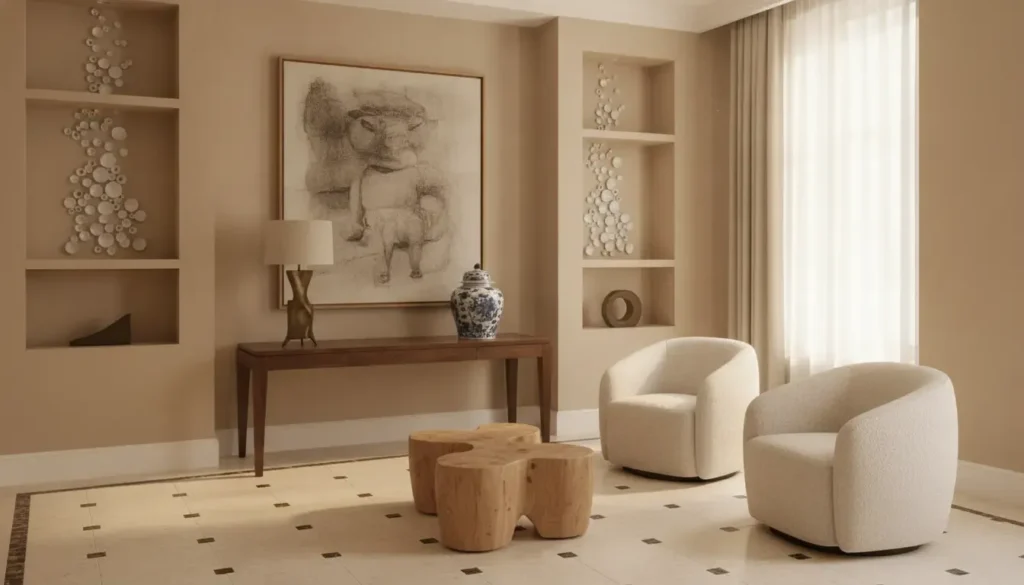
Choosing a luxury interior designer in New York is not simply a matter of comparing attractive rooms. The right designer should understand the architecture, the collection, and the way a client wants to live, then bring those elements into a coherent whole. For a serious homeowner or art collector, the decision is about judgment, trust, craftsmanship, and the ability to lead a complex commission with discretion.
A useful starting point is to understand the difference between a designer who supplies a recognizable look and one who develops a deeply personal interior. CW DESIGN’s timeless design philosophy offers one helpful lens: enduring work is built through proportion, materiality, comfort, and considered relationships between objects, rooms, and people.
Discuss your New York interior design project with CW DESIGN.
What separates a luxury interior designer from a mid-market firm
Luxury interior design in New York is distinguished by the depth of thinking behind the finished room. A luxury designer coordinates architecture, art, furniture, materials, lighting, and execution as one design problem, rather than treating decoration as a final layer applied after decisions have already been made.
The difference is often visible in the process before it is visible in photographs. A serious studio will spend time understanding the property, the client’s collection, daily rituals, and long-term plans. It will also be prepared to make clear recommendations instead of presenting an endless menu of disconnected options.
- A complete point of view: The studio can articulate what guides its work without forcing every project into the same signature style.
- Material intelligence: The designer understands how wood, stone, metal, textiles, paint, and light will age and interact in a real home.
- Art and object fluency: Artwork and furniture are considered as part of the architecture, not as accessories selected at the end.
- Executional depth: The team can coordinate architects, makers, galleries, fabricators, and installers across a demanding project.
- Selective service: The firm has the capacity to give a substantial commission genuine attention rather than moving clients through a high-volume system.
These qualities matter particularly in New York, where a project may involve historic details, landmark considerations, compact transitions between rooms, or the careful adaptation of a pre-war apartment. They also matter when a residence must feel collected rather than newly assembled.
| Consideration | Bespoke luxury studio | Volume-oriented service |
|---|---|---|
| Design starting point | Property, collection, and client narrative | Predefined style or product selection |
| Material approach | Curated materials chosen for the specific commission | Standardized selections with limited variation |
| Project relationship | Direct, close, and shaped around the whole home | More standardized handoffs and packages |
| Best fit | Clients seeking a distinct, enduring environment | Clients seeking a faster, more uniform solution |
The credentials and training that define a top-tier New York designer
The most useful credentials are not merely decorative lines on a biography. They should explain how a designer sees, researches, specifies, and solves problems. For a luxury New York commission, look for a combination of formal design training, practical experience, cultural literacy, and evidence that the principal can work across disciplines.
Catherine Weinstock brings an unusually broad foundation to CW DESIGN. Her training spans Interior Design, Furniture Restoration, and Fine Arts, including intensive study in Italy, alongside her University of Pennsylvania background. That combination is relevant when a project requires both a sophisticated spatial plan and sensitive treatment of furniture, objects, and artwork.
When reviewing a designer’s background, ask:
- Does the education support the kind of property and collection I own?
- Can the designer discuss craftsmanship, conservation, and materials with precision?
- Has the principal led work that combines architecture, furnishings, and art?
- Is the design direction personal and considered, or mostly dependent on recognizable products?
- Does the designer have a network of trusted artisans, galleries, and specialist makers?
CW DESIGN’s About page describes this multidisciplinary foundation, while the studio’s approach is shaped by the belief that artwork can be the beginning of a home’s design. For an art collector, that distinction is meaningful. It signals that the designer understands the emotional and spatial importance of a collection before specifying a sofa, wall finish, or decorative object.
How to evaluate a designer’s portfolio for genuine bespoke commissions
A strong luxury interior design portfolio should show more than polished photography. It should reveal how a designer responds to different architecture, cultures, scales, collections, and ways of living. Look for a consistent standard of judgment, not repetitive rooms that appear to have been assembled from the same visual formula.
Begin by studying the relationship between the room and the objects within it. Are artworks given enough space, light, and visual authority? Do furniture and materials support the collection, or compete with it? Are circulation, comfort, and use considered alongside atmosphere? The most convincing projects feel inhabitable and intellectually coherent at the same time.
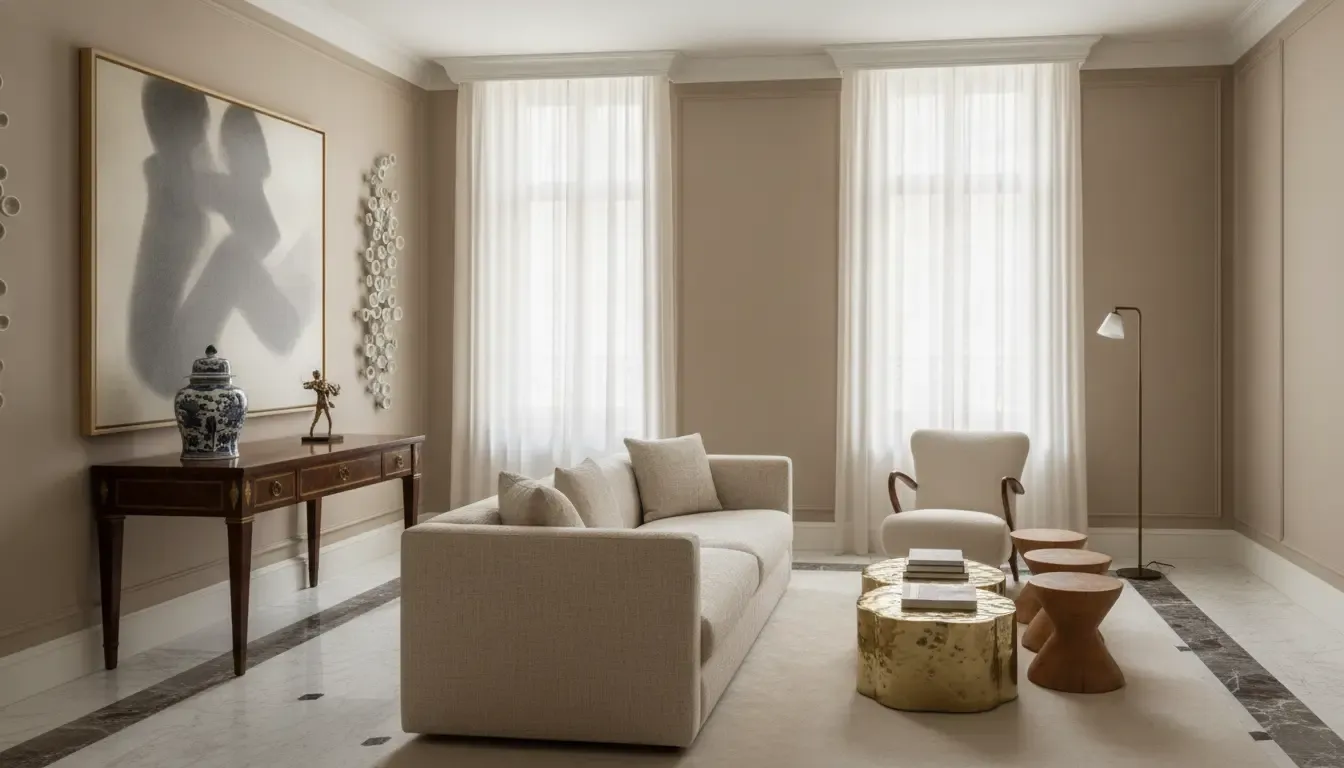
Then look for range with a clear point of view. CW DESIGN’s portfolio includes New York townhouses and lofts, show house installations, and residences in international settings. The work demonstrates that a designer can adapt to place without losing an underlying commitment to proportion, craftsmanship, and personal expression. Explore the CW DESIGN project portfolio, then open individual projects and ask what decisions make each one specific to its architecture and client.
Evidence of bespoke work can include:
- Custom furniture, woodwork, hardware, or architectural details made for the property.
- Art placement that creates a dialogue between pieces rather than filling empty walls.
- Materials selected for tactile quality, durability, and their relationship to natural light.
- Historic elements preserved or reinterpreted with care.
- Rooms that feel connected as a residence, while still giving each space its own character.
Also check whether the portfolio explains the thinking behind a project. A caption that names a room is less revealing than a case study that describes the challenge, the design response, and the way the completed environment supports the client’s life.
Why the consultation process reveals more than the portfolio
A consultation reveals whether a designer can listen deeply, ask useful questions, and lead with judgment. The best initial conversation is not a performance in which the designer imposes a style. It is a focused exchange about the property, the collection, the client’s habits, and the level of involvement required to make the commission succeed.
Pay attention to the questions the designer asks. Does the conversation move beyond favorite colors and reference images? A thoughtful designer will want to understand how rooms are used, what should be preserved, how art is acquired and lived with, which pieces are non-negotiable, and what the client hopes the home will feel like over time.
For a New York residence, the discussion may also need to address the building’s history, existing architectural details, the relationship between public and private rooms, and the practical realities of working in the city. For an art collector, it should include display, viewing distance, daylight, security, conservation sensitivities, and the possibility that the collection will evolve.
Arrange an on-site conversation about a bespoke New York residence.
The questions a serious luxury designer asks before accepting a commission
A serious designer evaluates fit in both directions. Before accepting a commission, the studio should understand the property’s scope, the client’s ambitions, the collection’s role, the desired level of service, and the working relationship required. Those questions protect the quality of the work and help ensure that the project is appropriate for the firm’s way of working.
You should expect questions such as:
- What is the property, and what condition is it in today?
- Is this a single-room intervention, a full apartment, a townhouse, or a broader property commission?
- Which artworks, antiques, or inherited pieces must be integrated or restored?
- How do you want to live in the home, and who else uses the spaces?
- Are there architectural, landmark, building, or schedule considerations?
- How involved would you like to be in selections and approvals?
- Do you want a designer-led process with clear recommendations and direction?
- What does a successful finished home need to make possible for your life and collection?
The quality of these questions matters more than the number. A designer who asks only about style may be able to create an attractive room. A designer who asks about meaning, use, architecture, and the future of the collection is more likely to shape a residence with lasting integrity.
This is where the difference between a room stylist and a full-service design partner becomes clear. A complex commission may require collaboration with architects, artisans, galleries, conservators, and fabricators. The designer’s ability to bring those relationships together is part of the value of the appointment.
How to approach an inquiry with a top New York interior design firm
The strongest inquiry is concise but substantive. Introduce the property, its location, the broad scope of the work, and why you are considering the studio. If art or collectible furniture is central to the project, say so. Include any relevant architectural history, photographs, plans, or a short description of the collection when appropriate.
You do not need to arrive with a finished brief. A good designer can help clarify the brief, but the initial message should make the project’s seriousness and setting clear. It is also useful to explain whether you are considering a whole-home commission, a renovation, a new residence, or a collection-led rethinking of an existing interior.
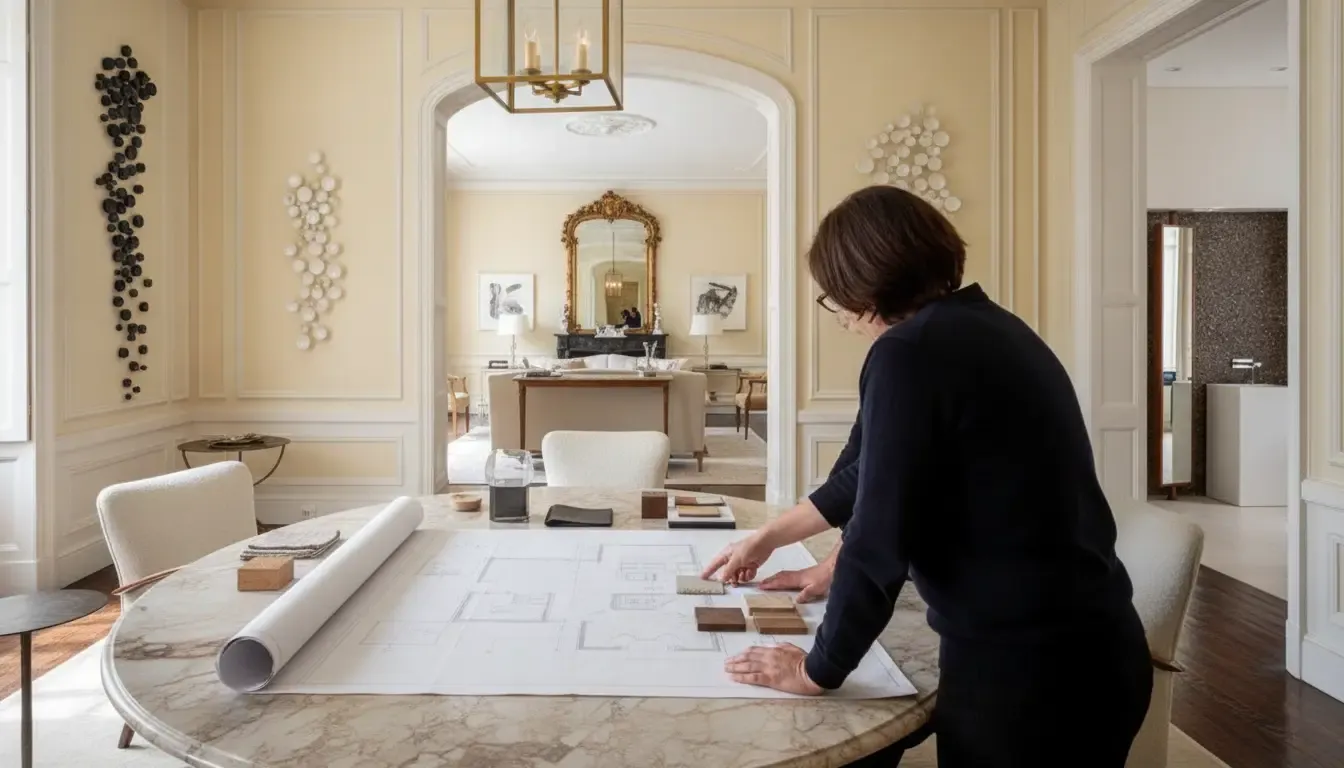
CW DESIGN works with clients who value bespoke, art-oriented, and highly considered interiors. The studio’s approach to art-centric design and its full-service renovation work provide useful context before an inquiry. A visit to the space is essential for understanding its character, proportions, light, and potential, so an on-site conversation should be part of the early process rather than an afterthought.
The goal is not to find the designer with the loudest portfolio or the longest list of capabilities. It is to find the studio whose standards, experience, and way of thinking match the property and the life that will unfold inside it. For clients seeking an enduring home, that alignment is the foundation of a successful commission.
For further context on creating a home that remains relevant beyond a design cycle, revisit the CW DESIGN guide to timeless interiors.
Contact CW DESIGN to discuss a private New York interior design commission.
Frequently Asked Questions
What should I look for in a luxury interior designer in New York?
Look for a designer with relevant training, a portfolio showing genuine bespoke work, strong art and material knowledge, and a consultation process built around your property and way of living. The right fit should also include clear design leadership, excellent project coordination, and a willingness to work on-site.
How is a luxury interior designer different from an interior decorator?
A luxury interior designer may shape the relationship between architecture, planning, lighting, materials, furnishings, art, and execution. An interior decorator may focus more narrowly on finishes and furnishings. The distinction varies by practice, so review the actual scope of services and completed projects rather than relying only on the title.
Should an art collection influence the interior design process?
Yes. When art is important to the client, the collection can inform planning, lighting, sightlines, material choices, and the sequence of rooms from the beginning. Designing around the collection helps the artwork feel integrated into daily life rather than added after the interior has already been resolved.
What should I include in an initial inquiry?
Include the property’s location, its general scope, whether the work involves renovation or furnishing, the role of artwork or collectible furniture, and any key architectural or timing considerations. A concise description and a few relevant images can help the studio understand the nature of the commission before an on-site conversation.