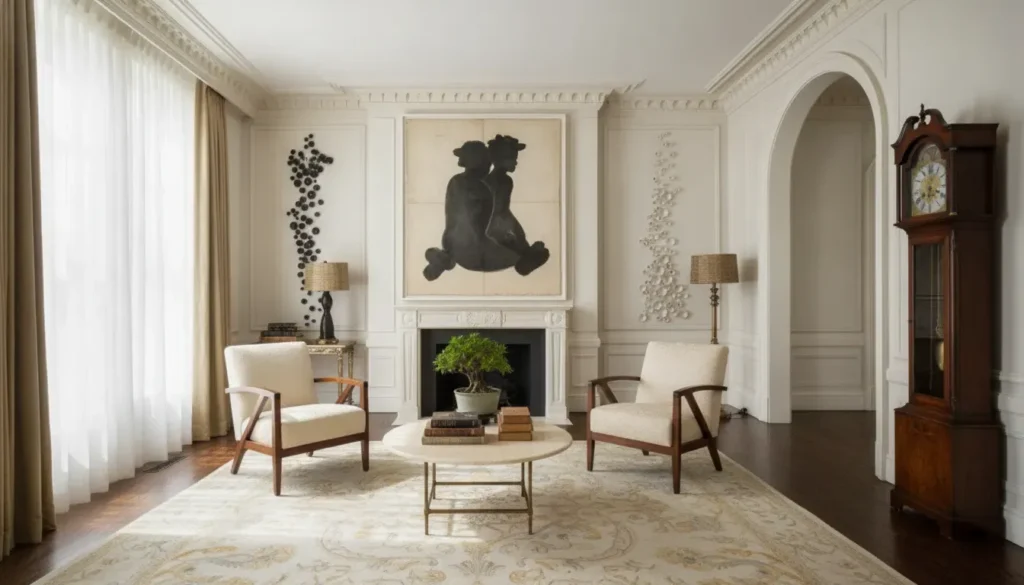
An interior design commission is a formal, bespoke engagement in which a client entrusts a designer with the creation or transformation of a specific space, from the initial brief through design development, sourcing, coordination, and installation. It is a working relationship shaped around the property, the people who live there, and the level of craftsmanship the project requires.
For a collector or homeowner planning a whole-home project, a commission offers continuity. One design vision can guide the architecture, interiors, furnishings, lighting, art placement, artisan collaborations, and final details instead of treating each room as an isolated decorating exercise. The approach aligns with CW DESIGN’s timeless design philosophy, in which a home is developed around lasting quality and the character of its owner.
Speak with CW DESIGN about a considered, on-site interior design commission.
What is an interior design commission?
An interior design commission is a defined client-designer engagement to create a cohesive interior around a particular property, collection, and way of living. The designer is responsible for translating the brief into a complete design direction, then carrying that direction through documentation, sourcing, fabrication, coordination, and installation.
The word commission describes the work entrusted to the designer. It does not, by itself, describe a particular fee structure. The important question is what the engagement includes and how the designer will protect the design intention as the project develops.
- A specific property: The work responds to the actual proportions, architecture, daylight, circulation, and constraints of the space.
- A specific client: The design reflects how the client lives, entertains, collects, and wants to feel at home.
- A complete design direction: Materials, furnishings, color, lighting, art placement, and custom work are considered as parts of one environment.
- Ongoing stewardship: The designer carries the vision through decisions that may involve architects, contractors, galleries, makers, and installers.
For CW DESIGN, the commission is especially suited to art-oriented projects that require a level of detail and curation. Catherine Weinstock’s training across interior design, furniture restoration, and fine arts supports a process in which artwork, furniture, architecture, and function can enter into a deliberate dialogue.
How does a commission differ from a standard decorating project?
A standard decorating project may focus on selecting furnishings, finishes, and accessories for a defined room. A bespoke interior design commission takes a wider view: it establishes the relationship between the property, the collection, the client’s life, and the craftsmanship needed to make the whole environment feel coherent.
The distinction is not a judgment about scale. A smaller project can still require careful design thinking. The difference is the level of responsibility and integration. A commission is built around a shared design brief and a sequence of decisions, rather than a quick list of products or a room assembled from disconnected choices.
| Consideration | Bespoke commission | Standard decorating project |
|---|---|---|
| Starting point | The property, client, lifestyle, art collection, and long-term vision | A room brief, existing furnishings, or a defined decorative update |
| Design scope | May connect architecture, interiors, custom pieces, lighting, art, and installation | Usually concentrates on furnishings, finishes, and decorative decisions |
| Working rhythm | Phased collaboration with review points and ongoing coordination | A shorter sequence focused on a limited set of deliverables |
| Best suited to | Whole-home, collection-first, renovation, or highly individual projects | A contained refresh with a more defined decorative outcome |
A commission is valuable when the client wants the parts to reinforce one another. The result should not look like a collection of purchases made at different times. It should feel edited, proportioned, and personal, with enough flexibility to accommodate life and future additions to the collection.
What are the stages of a full interior design commission from brief to installation?
A full interior design commission moves through a series of connected stages: inquiry and discovery, concept development, documentation, sourcing and fabrication, coordination, procurement, installation, and refinement. The stages may overlap, but each protects a different part of the design’s quality and practical execution.
- Inquiry and fit: The client shares the property, location, project ambitions, and desired level of involvement. The first conversation establishes whether the project and the studio’s approach are aligned.
- On-site discovery: The designer visits the space to understand its proportions, light, circulation, architecture, existing materials, and relationship to the client’s art and furnishings. CW DESIGN does not approach interior design as a remote or virtual service; the space must be experienced in person.
- Brief and concept: The design team clarifies priorities, develops a narrative, and establishes the direction for color, materiality, furniture, lighting, and art placement.
- Design development and documentation: Drawings, elevations, specifications, samples, and schedules turn the concept into coordinated decisions that other professionals can understand and execute.
- Artisan sourcing and custom work: Bespoke furniture, fixtures, finishes, and restoration needs are identified. Global makers and galleries may be brought into the project when their craftsmanship serves the design.
- Coordination and procurement: The designer communicates with architects, engineers, contractors, trades, vendors, galleries, and workshops. Decisions are tracked so that the intended relationship between materials, furnishings, architecture, and art is not lost.
- Installation: Furniture, lighting, textiles, objects, and artwork are placed on site. The final arrangement is assessed in the actual rooms, where scale, sightlines, and light can be judged accurately.
- Refinement: A considered commission allows time for adjustments. The last layer may involve moving a piece, revising a finish, correcting a detail, or balancing a room so that it feels composed rather than overworked.
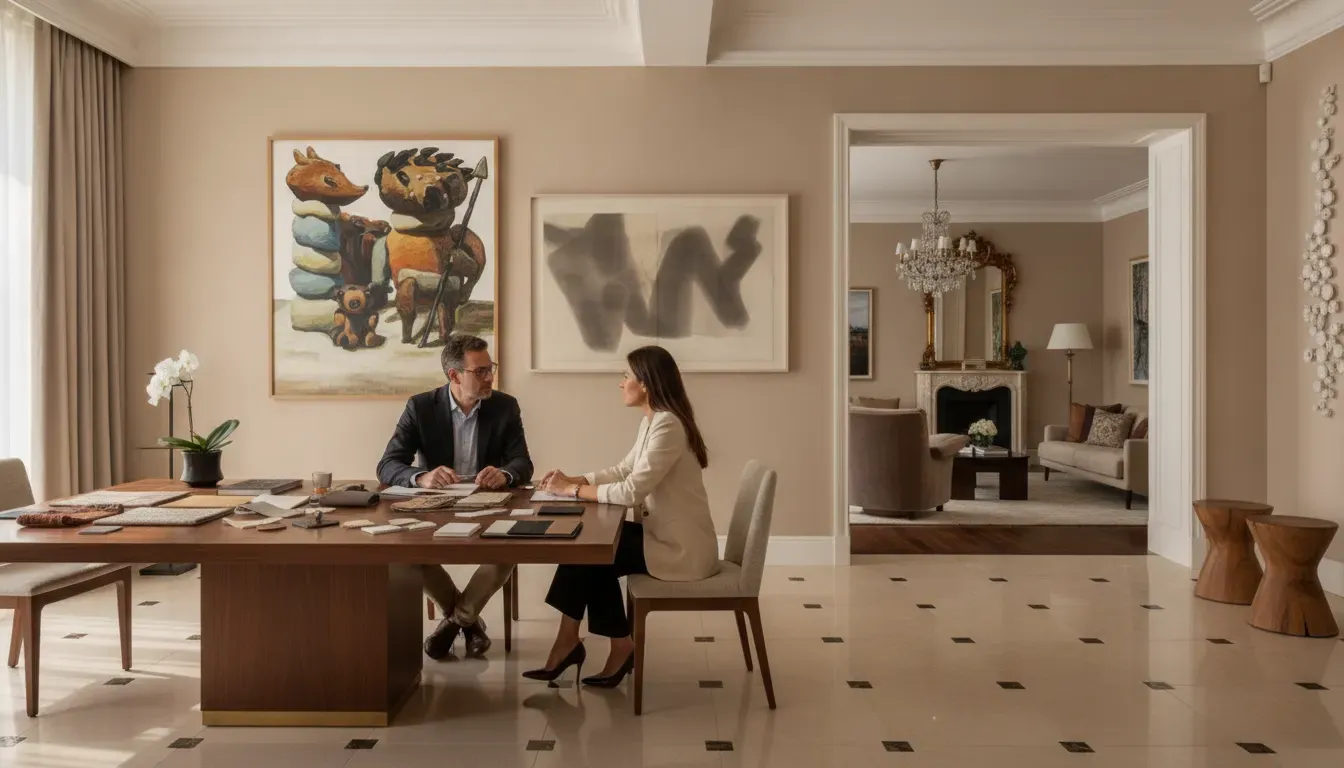
For a renovation, this sequence may also include architectural coordination, approvals, systems work, and construction decisions. CW DESIGN’s full-service renovation management addresses that more specific delivery context. This article’s focus is the commission as the complete client-designer relationship that holds those decisions together.
What is the client’s role during a commission?
The client’s role is to provide direction, access, decisions, and honest responses throughout the engagement. The designer leads the design process, but the most successful commission is collaborative: the client shares the experiences, objects, habits, and ambitions that make the work personal.
Clients are most helpful when they:
- Share the history and meaning of important artworks, furniture, and objects.
- Describe how each space needs to function, including entertaining, privacy, work, rest, and storage.
- Explain what they respond to and what they do not want to see in the finished environment.
- Attend agreed review points and make decisions within the project schedule.
- Allow the designer to visit the property and assess the work in person.
- Remain open to proportion, craftsmanship, and a solution that may not be obvious at the beginning.
Collaboration does not mean the client must select every detail alone. It means the designer has the information needed to make strong recommendations and the client has clear opportunities to respond. For art collectors, this exchange can be particularly rich because the collection often provides the emotional and visual starting point for the home.
The client’s work also includes communicating changes in circumstances. A new acquisition, a construction discovery, a change in how a room will be used, or a decision to restore an existing piece can affect several related choices. Early communication gives the design team a chance to protect the overall composition.
How long does a whole-home commission typically take?
A whole-home commission typically takes longer than a single-room decorating project because it involves more decisions, more collaborators, and more opportunities for custom work. A major residential commission may extend over a year or longer, especially when renovation, restoration, international sourcing, fabrication, or detailed installation is involved.
There is no responsible universal schedule for every project. Timing depends on the condition and size of the property, the extent of construction, the availability of artisans and materials, approvals, shipping, fabrication, and the pace of client decisions. A bespoke engagement is not made better by rushing a decision that affects the entire home.
Good planning still creates momentum. At the beginning, the designer can identify long-lead items, separate decisions that need to happen early from those that can wait, and establish review points. Clear documentation helps the broader project team work from the same design direction.
For clients considering an art-led home, the timeline should also leave room for judgment. Artwork may need conservation, a wall may need to be strengthened, a sightline may need to change, or a custom piece may need several rounds of development. Those are not interruptions to the commission. They are part of making the finished interior feel exact and enduring.
How do you begin a commission with a bespoke design firm?
Begin by sharing the property, location, broad scope, art or furniture considerations, and the kind of relationship you want with the designer. The first conversation should make space for questions about the home and the client’s way of living, not only a list of rooms or products.
It is useful to prepare:
- The property’s location and current condition.
- A short description of the spaces involved and the intended outcome.
- Information about an existing art collection, antiques, or pieces that must remain.
- Any known architectural, construction, restoration, or timing considerations.
- Images or references that communicate the atmosphere you value, without treating them as a prescription.
CW DESIGN’s work is intended for serious, art-oriented projects that require detail and curation. Catherine Weinstock brings together interior design, furniture restoration, and fine arts, with an approach that is subtle, elegant, sophisticated, and curated rather than trend-driven. Her multidisciplinary background is relevant when a commission involves the relationship between a collection, a building, and the objects made for it.
A commission begins with fit and trust. If the project aligns with the studio’s approach, the next step is a more detailed conversation about the property and the work required. You can contact CW DESIGN to introduce your project.
Introduce your property and begin a conversation about a bespoke interior design commission.
Frequently Asked Questions
These questions address the practical meaning of a bespoke interior design commission for a homeowner or collector considering a new project.
Is an interior design commission the same as hiring a decorator?
No. A commission can include decoration, but it usually defines a broader relationship that may connect architecture, art, furnishings, custom work, sourcing, coordination, and installation. A decorating project may be more contained, while a commission is shaped around the complete design intention for a property.
Does an interior design commission include renovation?
It can. When a commission includes renovation, the designer coordinates the interior vision with the architectural, construction, engineering, and approval requirements of the work. The exact scope should be established during the initial conversations and documented before the project proceeds.
Does the designer need to visit the property?
Yes, an on-site visit is essential for a bespoke commission. Proportion, daylight, circulation, existing materials, and the relationship between the rooms and the art collection cannot be understood fully from photographs or a remote meeting alone.
Is a commission suitable for an art collector?
Yes. A commission can give the collection a role in the design from the beginning, allowing walls, lighting, circulation, furniture, and color to support the art rather than treating it as an addition at the end.
How should a client choose a design firm for a commission?
Look for a firm whose experience, working method, communication style, and craftsmanship match the project. Review completed work, ask how the firm coordinates the stages of design and installation, and choose a designer who is prepared to understand the property and your collection in person.
For a whole-home project, the right commission is less about following a preset style and more about creating a coherent environment that can become more meaningful with time.
Pingback: How Long Does Whole Home Interior Design Take? – CW DESIGN
Pingback: Boutique Interior Design Firms New York: A Fit Guide – CW DESIGN
Pingback: What Is Furniture Restoration? A Practical Guide – CW DESIGN
Pingback: Designing Circulation Around Art in an Open-Plan Home – CW DESIGN