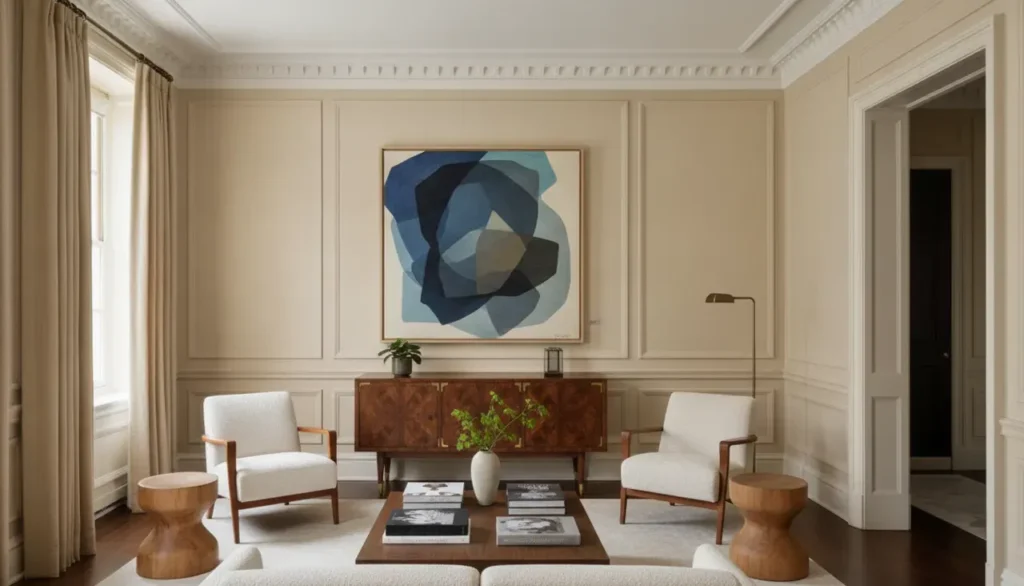
A growing art collection changes the design question. The goal is not simply to find a wall for the next acquisition, but to shape a residence that can absorb new works while remaining intimate, proportioned, and fully livable. Designing a home for a growing art collection calls for a whole-home view of space, sequence, light, furnishings, and future possibility from the very beginning.
For a collector, the residence is neither a private white box nor a static display. It is a personal environment that must support daily life and give the collection room to develop. A collection-first perspective, like the one described in CW DESIGN’s art-first design philosophy, starts with understanding the relationship between the works, the architecture, and the people who live with them.
Discuss a growing art collection with CW DESIGN and begin a private conversation about your home.
How should you approach designing a home for a growing art collection?
The first step is to plan for change without making the present feel provisional. A residence should feel complete when the current collection is installed, yet it should retain enough flexibility for a future work to alter the balance of a room. That requires decisions at the scale of the entire home rather than a series of isolated picture walls.
Begin by considering the collection as a living body of work. Some pieces will remain in prominent positions for years. Others may be rotated, placed in a more private room, or held in reserve until the architecture and furnishings create the right setting. The design should establish a clear hierarchy without assuming that every room must perform the same way.
A useful planning framework asks four questions:
- Which works define the character of the collection today?
- Which rooms could accommodate a future change in scale, color, or medium?
- Where can the home offer visual quiet so that a significant work has room to breathe?
- Which furnishings, finishes, and architectural decisions should remain adaptable?
This is the difference between decorating around an existing inventory and designing a home that can evolve with it. The latter approach protects the character of the residence while leaving space for the collector’s eye to develop over time.
What should a growing collection inventory reveal about the home?
A collection inventory is more useful when it is treated as a design tool rather than a list. Before a major residential commission begins, the inventory should help connect each work to the kind of setting it may need. Record dimensions, framing, weight, preferred viewing distance, and any known placement considerations. Also note which pieces are central to the collector’s daily experience and which may be moved or stored as the collection changes.
The inventory should be read alongside the architecture. A long wall may appear generous on a plan but feel interrupted by doorways, openings, radiators, or built-in elements. A room may have the right dimensions but lack an appropriate pause between the artwork and the next visual event. These observations are not a reason to make the home feel institutional. They are a way to see where proportion and rhythm can support the collection.
For a larger residence, map the collection across several kinds of experience:
- Arrival: Which work gives the first impression, and how does the entry prepare the eye for what follows?
- Conversation: Which rooms allow works to be seen in relation to one another without becoming visually crowded?
- Pause: Where can a quieter work or a less formal view give the home a moment of restraint?
- Private life: Which pieces should be encountered in rooms that are more personal and less ceremonial?
- Future capacity: Which spaces can change without requiring the whole design to be dismantled?
This kind of inventory does not prescribe a final hanging plan before the design begins. Instead, it gives the architect, designer, and collector a common language for making decisions as the residence takes shape.
A planning framework for a home with a growing art collection
| Planning stage | Question to ask | Useful outcome |
|---|---|---|
| Collection review | Which works and habits define the collection today? | A shared picture of priorities and future direction |
| Spatial review | Where can the home offer proportion, pause, and visual clarity? | A whole-home map of opportunities and constraints |
| Design sequencing | Which architectural and furnishing decisions must come first? | A decision order that protects future flexibility |
| Phased review | How should the plan be reconsidered as the design develops? | A residence that feels complete now and adaptable later |
How can you test whether a home’s spatial capacity is sufficient?
Capacity is more than the number of available walls. It includes the spaces between rooms, the balance of open and occupied surfaces, the visual distance needed to understand a work, and the ability to move through the residence naturally. A home with fewer but better-proportioned opportunities may serve a serious collection more gracefully than one with many disconnected display areas.
Review the residence as a sequence rather than a collection of rooms. From the entry, what is visible immediately? From the principal sitting room, where does the eye travel? Are there places where several works compete, and others where the architecture becomes empty without offering a meaningful pause? Looking at the home this way reveals opportunities to create dialogue without forcing every work into a single sightline.
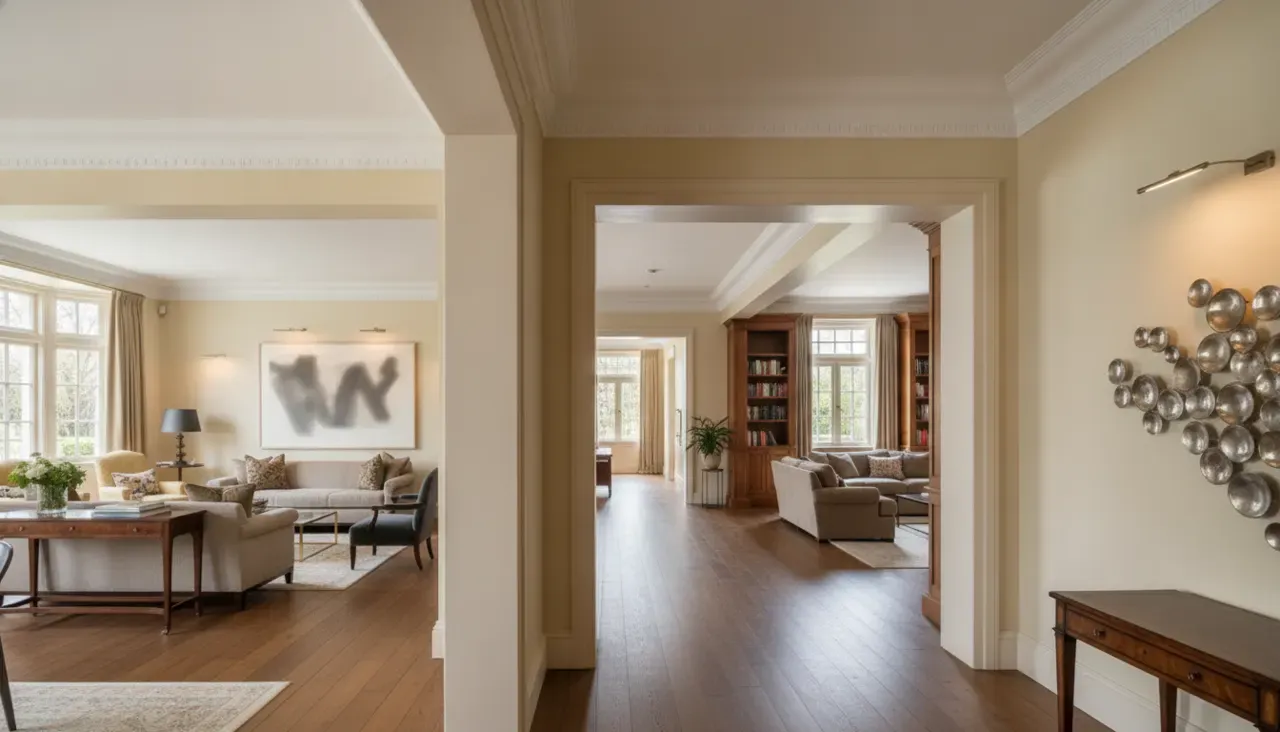
Leave room for the furnishings to support this capacity. Seating should not block the experience of a work, and cabinetry should not consume every quiet surface that might later become important. A restrained palette can provide continuity, but restraint does not mean that every room must be pale or empty. Materials, color, and custom pieces can give the residence its identity while allowing the collection to remain the visual center of gravity.
For collectors considering a substantial apartment or house commission, a bespoke interior design approach for art collectors can help translate this spatial review into a coherent whole-home direction. The point is not to create a gallery inside the residence. It is to make the home capable of holding a collection with confidence and ease.
Which decisions matter when designing a home for a growing art collection?
When a collection is expected to grow, the order of decisions matters. Choosing fabrics or decorative objects before understanding the architecture and the works can produce a room that looks resolved in isolation but cannot respond gracefully to the next acquisition. A stronger sequence protects the major relationships first.
A thoughtful order may look like this:
- Understand the collection: Review the current works, the collector’s habits, and the direction in which the collection may develop.
- Read the residence: Study proportion, movement, openings, natural light, and the relationship between public and private rooms.
- Establish the visual hierarchy: Decide where the home should offer intensity, conversation, quiet, and relief.
- Reserve flexibility: Protect selected walls, rooms, and circulation paths from decisions that would make future change difficult.
- Develop the material language: Choose furnishings, finishes, and crafted details that give the home character without competing with the art.
- Review the whole: Return to the collection and the architecture together before final specifications are made.
This sequence also makes the design more durable. The home is not asked to predict every future acquisition. It is given a clear framework so that a new work can enter into the conversation without making the original design feel obsolete.
How can a collector create flexibility without making the home feel unfinished?
Flexibility should be quiet. A home designed for future acquisitions does not need to advertise every possible change through visible hardware or an overly neutral scheme. It can feel finished through proportion, craftsmanship, and a deliberate relationship between architecture and furnishing, while selected elements remain capable of being reconsidered.
That balance often comes from distinguishing permanent character from changeable layers. Architectural proportion, a carefully developed material palette, and exceptional craftsmanship can give the residence its lasting identity. Furniture placement, selected color moments, artwork groupings, and certain decorative details can then adapt as the collection develops.
Storage is part of this composition. Works that are not currently on view should have a considered place rather than being treated as an afterthought. Concealed storage can help the public rooms remain composed, while a rotation plan can keep the collection active without making the interior feel busy. The best solution will depend on the works, the architecture, and the collector’s way of living.
The same principle applies to future rooms. A library, study, hall, or guest room may eventually become important to the collection, but it should still function as a room today. Designing for growth means giving each space a present purpose and a future possibility, not leaving it blank in anticipation.
What does phased planning look like for a long residential commission?
For a substantial residence, collection planning is often most effective when it is revisited at several stages. The initial review establishes the direction. The architectural and interior design development tests that direction against the actual rooms. Later decisions refine how the collection, furnishings, and daily life will coexist once the home is experienced as a whole.
A phased process can include:
- Collection and residence review: Understand the works, the home, and the collector’s priorities through an on-site conversation.
- Whole-home framework: Establish the relationship between rooms, key works, visual pauses, and future capacity.
- Design development: Test proportion, finishes, furnishings, and crafted elements against the collection rather than selecting them independently.
- Focused review: Reconsider the placement logic when the design becomes more tangible and the residence can be read as a connected sequence.
- Final integration: Refine the relationships between artwork, objects, furniture, and everyday movement so the home feels personal and settled.
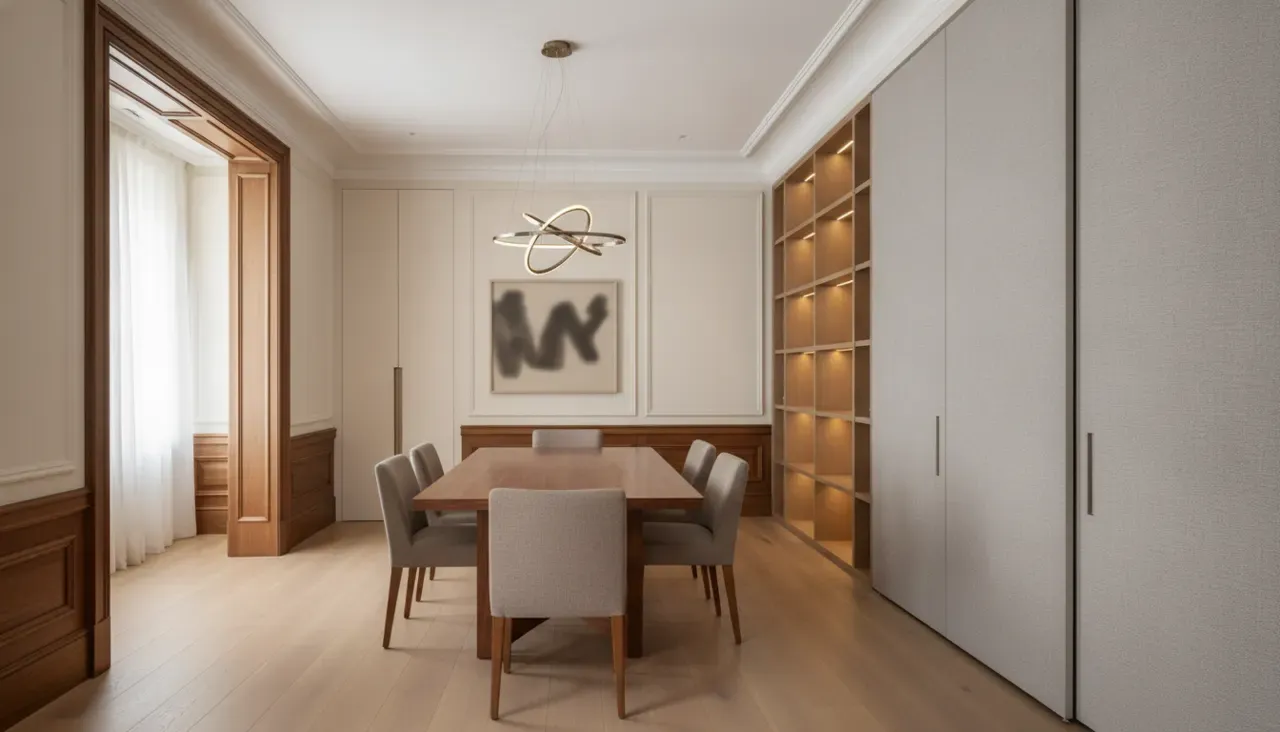
Because every residence has its own architecture, history, and collection, the process must remain attentive rather than formulaic. Catherine Weinstock’s background across interior design, furniture restoration, and fine arts supports a broad reading of the objects and the rooms. Her approach to art-led interior design treats the collection as part of the design’s beginning, not a finishing layer added after the decisions are made.
The relationship between objects and rooms has a long design history. The Guggenheim’s architecture and art education resource offers one historical example of art and interior architecture being experienced together. A private residence has different needs from a museum, but the underlying lesson remains useful: context affects how a collection is encountered.
For collectors considering a whole-home project, it can also help to understand how a whole-home interior design commission develops over time. The purpose is not to force a fixed timetable, but to recognize that thoughtful work benefits from a sequence of decisions, reviews, and adjustments.
When is it time to discuss a growing collection with an interior designer?
The right time is before the next room is finished around the collection. A conversation is worthwhile when the current home no longer offers a coherent way to live with the works, when a planned move or renovation will affect several rooms, or when new acquisitions are exposing the limits of the existing arrangement. It is also useful when the collector wants the residence to feel more unified without sacrificing the individuality of the collection.
CW DESIGN works on site because the residence must be understood as a real place. The architecture, light, movement, furniture, and collection all contribute to the design conversation. A first discussion can clarify the scope of the home, the character of the collection, and the kind of long-term framework that would serve both.
See CW DESIGN’s residential projects for examples of the studio’s broader design language, then consider what your own collection needs from the rooms around it. A growing collection does not require a home that feels like a museum. It requires a residence with enough intelligence, proportion, and craftsmanship to let the art and the life within it continue to develop together.
Contact CW DESIGN to discuss an on-site whole-home project for a growing art collection.
Frequently Asked Questions
Should a growing art collection determine the entire interior design?
It should inform the design from the beginning, but it does not need to dictate every choice. The most successful residence balances the collection with architecture, comfort, proportion, and the collector’s daily life. Art can establish the direction while the home remains warm, personal, and fully functional.
How much space should be reserved for future artwork?
There is no universal percentage or formula. The answer depends on the size and character of the collection, the architecture, the collector’s acquisition pattern, and the number of rooms. A useful review identifies selected areas that can adapt without leaving the present design incomplete.
Can a home feel complete if some walls are intentionally left quiet?
Yes. Quiet is part of composition. A considered pause can make an important work more legible and can keep the residence from feeling crowded. The goal is not to fill every surface, but to create a rhythm that allows the collection and the home to be experienced with clarity.
Why should collection planning happen before finishes are selected?
Finishes, furnishings, and architectural details affect how works are seen and how people move around them. Reviewing the collection and the residence first helps the design support those relationships rather than requiring the art to adapt to decisions made without it.