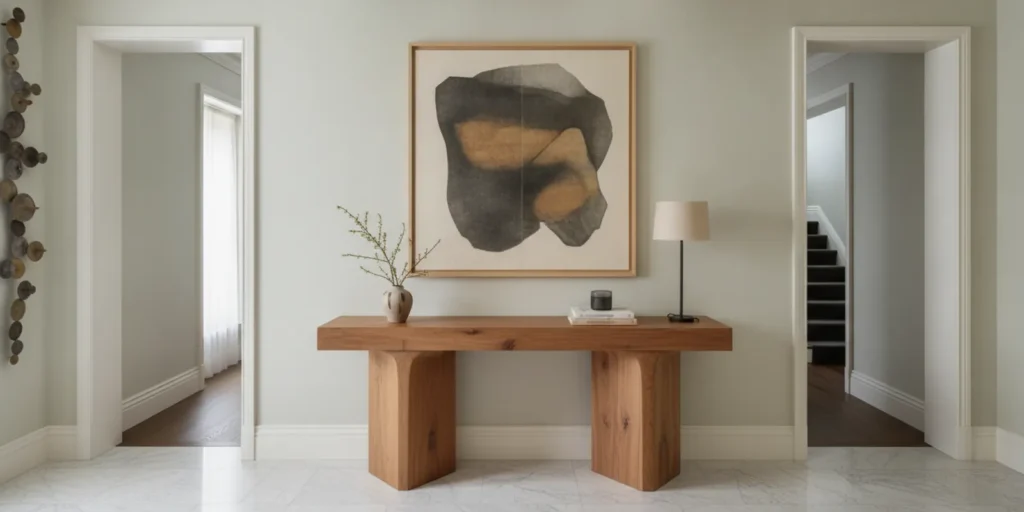
Bespoke furniture design in New York begins with a question larger than what shape or finish a room needs: how should a piece belong to this particular home, its architecture, and the art and objects collected within it? A custom table, cabinet, or upholstered form can answer that question with proportion, material, and purpose. It is not simply a more personal version of a catalog selection. It is an opportunity to make a piece that feels considered from the first drawing to its place in the finished residence.
Discuss a bespoke residential commission
What does bespoke furniture design mean for a New York luxury residence?
A bespoke piece is designed for a specific setting and way of living. Its dimensions respond to the room rather than asking the room to accommodate a standard size. Its silhouette can acknowledge a building’s character, while its finish and detailing contribute to the larger interior. In New York, where residences range from historic townhouses to pre-war lofts and contemporary apartments, context matters. A piece that suits one home may feel out of scale or character in another.
The design should also consider what the furniture needs to do. A console might organize an entry and provide a considered arrival. A dining table may need to support gathering while maintaining clear movement around it. A cabinet might hold books or objects and give a collection a quieter visual frame. Function is not separate from beauty; the two are resolved together through scale, structure, and detail.
For an art collector, furniture should have a thoughtful relationship with the collection. It may provide a visual pause beside a powerful work, echo a line or material without imitating the art, or help establish a natural viewing path through a room. The artwork remains an essential part of the design conversation from the beginning, not a finishing touch added after the furnishings are chosen. CW DESIGN’s approach to interior design places art and the character of a residence within that early conversation.
That is one reason bespoke furnishings are most meaningful when considered within the whole home. A singular custom object can be beautiful, but its strongest role may be as part of a considered sequence of rooms, materials, and collected pieces. For a broader look at custom furnishings, restoration, and artisan collaboration, explore bespoke fabrication and artisan craft.
Which materials shape bespoke New York furniture?
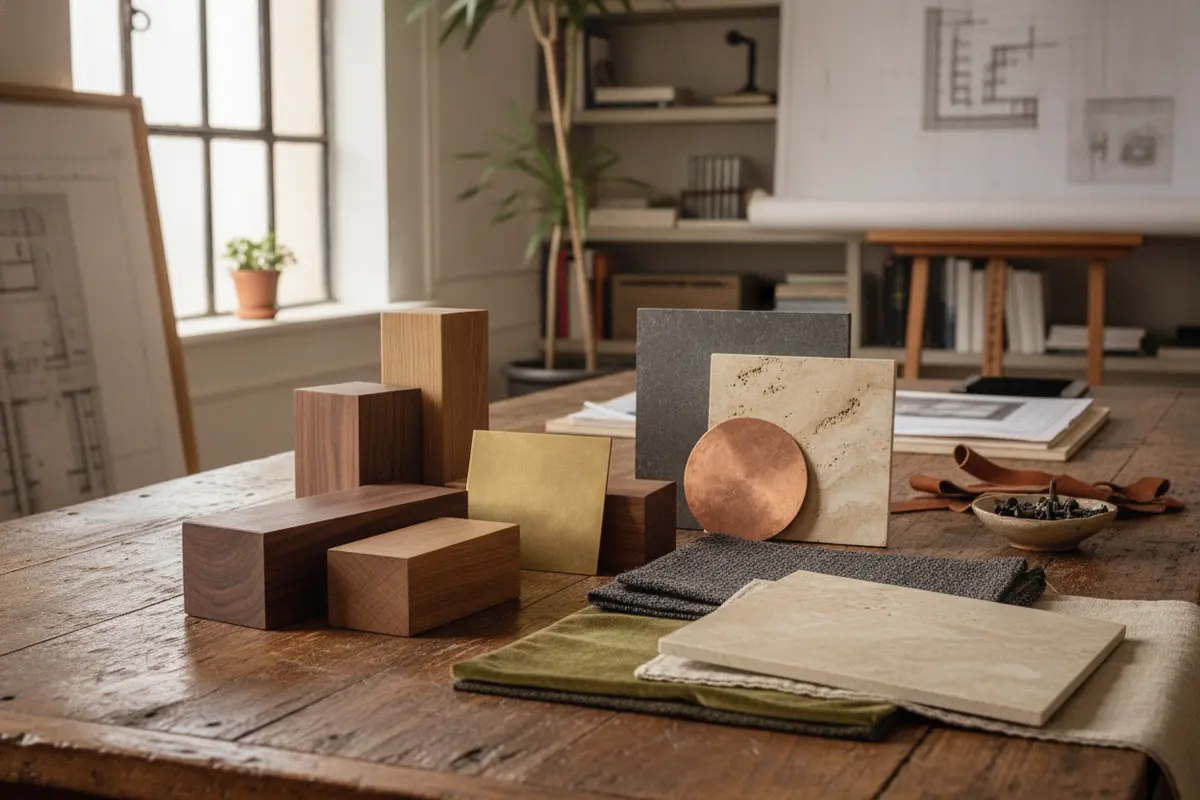
Material choices affect more than appearance. They influence how a piece feels in the hand, how it relates to the room’s existing finishes, and how it sits beside artwork. Wood, metal, stone, and textile each offer a distinct vocabulary. The right choice depends on the purpose of the piece and the larger design, rather than a rule that one material is inherently more luxurious than another.
| Material | What it can contribute | Questions to consider |
|---|---|---|
| Wood | Grain, warmth, and a sense of continuity with cabinetry or architectural details | How should the grain, tone, and finish relate to the room and nearby art? |
| Metal | Definition, a fine edge, or a contrasting note within a composed silhouette | Should the finish recede quietly or create a deliberate accent? |
| Stone | Visual weight, natural variation, and a tactile surface | Where can its mass and pattern feel balanced within the room? |
| Textile | Softness, color, pattern, and comfort in an upholstered piece | How will texture and color sit with the collection and the other materials? |
Wood can bring warmth and visual rhythm through its grain. A particular finish may connect a new object to existing woodwork, or deliberately distinguish it. Metal can introduce a fine line or a subtle contrast; its finish should be considered alongside hardware, lighting, and other reflective surfaces. Stone can anchor a composition through its natural variation and presence. Textile adds another register, from a quiet texture to a stronger pattern or color.
These materials can meet in one piece, but restraint matters. A composition does not become more thoughtful simply by using more finishes. The goal is to make choices that feel coherent with the architecture and give the art room to speak. RISD describes furniture design as an exploration of materials and the process of making furniture and objects, a useful reminder that material research is part of the creative work, not merely a final selection (RISD Furniture Design).
When considering a material, look beyond a small sample in isolation. Consider how it will read in the room’s light, beside nearby art, and in relation to the surfaces already present. If the piece is part of a larger renovation, materials can also be considered alongside architectural decisions. A Brooklyn townhouse project and the firm’s Tribeca loft offer examples of residences with distinct architectural contexts; the lesson is not to copy a look, but to begin with the character of the home itself.
How does CW DESIGN work with artisans on custom furniture?
Custom furniture design brings together the client’s needs, the home’s physical character, and the design of the piece. CW DESIGN’s work combines interior design, furniture restoration, and fine arts expertise. Catherine Weinstock’s training across these disciplines, including European study, informs an approach in which craftsmanship and the life of collected objects are part of the design discussion. Learn more about Catherine Weinstock’s background.
Artisan collaboration can help translate a design intention into a considered object. CW DESIGN works with artisans around the globe and develops custom furnishings, woodwork, fixtures, and hardware for particular projects. The collaborators and methods depend on the work; the purpose is to find a skilled response to the brief, not to apply a fixed signature detail everywhere.
A clear process begins by understanding the space in person. The room’s dimensions are only part of the picture. Sightlines, circulation, natural light, the presence of architectural details, and the way art is encountered all shape the brief. The designer can then identify what the furniture needs to accomplish, explore its scale and form, and consider materials and finishes in relation to the rest of the residence. CW DESIGN’s work is on-site; the space itself is essential to understanding the project.
From there, design decisions are developed and coordinated with the broader interior. A custom piece should not be treated as a disconnected purchase. Its footprint, function, finish, and relationship to neighboring elements need to make sense together. The firm’s residential projects show a range of settings and scales where a considered interior can bring architecture, furnishings, and art into a coherent whole.
What is the process and timeline for a bespoke furniture commission?
There is no single schedule that fits every custom piece. The scope, level of detail, material decisions, artisan coordination, and its place within a larger renovation all affect the work. A piece within a multi-room residential commission may need to be coordinated with other design and construction decisions. The most useful starting point is a clear brief and an understanding of how the furniture fits the residence as a whole.
- Understand the setting. Visit and study the room, including its architecture, light, circulation, and relationship to the art and objects already there.
- Define the purpose. Establish what the piece needs to hold, support, or make possible, and how it should contribute to the room’s atmosphere.
- Develop the design direction. Consider proportion, silhouette, materials, finish, and details as part of the interior rather than in isolation.
- Coordinate the making. Align the design with the appropriate artisan collaboration and with other relevant project decisions.
- Integrate the finished piece. Consider placement, clearances, and its relationship to lighting, art, and adjoining furnishings in the completed space.
For a whole-home project, these steps sit within a wider sequence of design and renovation decisions. A bespoke object may need to respond to architectural work, built-in elements, or the anticipated placement of art. Discussing it early allows it to become part of the composition instead of an afterthought. CW DESIGN’s Le Rêve residence is one example of a comprehensive interior project in which a home’s furnishings and character are considered as a larger design.
How can bespoke furniture anchor a whole-home commission?
A custom piece can give a room a point of focus, but its role can extend beyond one room. Repeated material notes, carefully varied forms, and a consistent attention to craftsmanship can create continuity across a residence without making every space identical. Each room can retain its own purpose while contributing to a larger, more personal composition.
For an art-filled home, a piece can also help create the conditions for looking. The correct scale may leave space around a work; a considered surface can support objects without competing with them; a placement can make movement through the room feel natural. These decisions call for attention to the collection as well as the furniture. CW DESIGN’s interior design for art collectors considers how a residence can support the art and the life lived around it.
In a full-home commission, the process can bring custom furniture into conversation with restoration, architectural details, and other furnishings. A restored object may carry personal or historical meaning, while a new piece addresses a practical need or a particular dimension. Together, they can create a home that feels collected over time rather than assembled from a single formula. The measure of success is not whether every object is custom. It is whether each decision belongs.
For a look at how material and furnishings can contribute to a specific residence, see the The Palm project. Each commission has its own context, and any design response begins by understanding that context on-site.
Begin a conversation about your residence
Frequently Asked Questions
What makes bespoke furniture different from a standard piece?
Bespoke furniture is designed around a particular home, purpose, and design brief. Its dimensions, form, materials, and details can respond to the room and its art collection rather than relying on a standard specification.
Can custom furniture be designed around an art collection?
Yes. The artwork and collection can inform scale, placement, color, material, and the way people move through a room. The aim is to create a thoughtful relationship between art and furnishings, not to make the furniture compete with the work.
Does every room need custom furniture?
No. A bespoke piece is most useful when it addresses a specific need, spatial condition, or design intention. A considered residence can combine custom furnishings, existing pieces, and restored objects.
How long does a bespoke furniture commission take?
Timing depends on the scope, design decisions, materials, artisan coordination, and whether the piece is part of a larger renovation. Those details are best discussed as part of the project brief rather than assumed in advance.
Bespoke furniture is most compelling when it is rooted in the architecture, art, and daily life of the residence. A thoughtful commission brings those elements together through considered proportion, material, and craftsmanship.