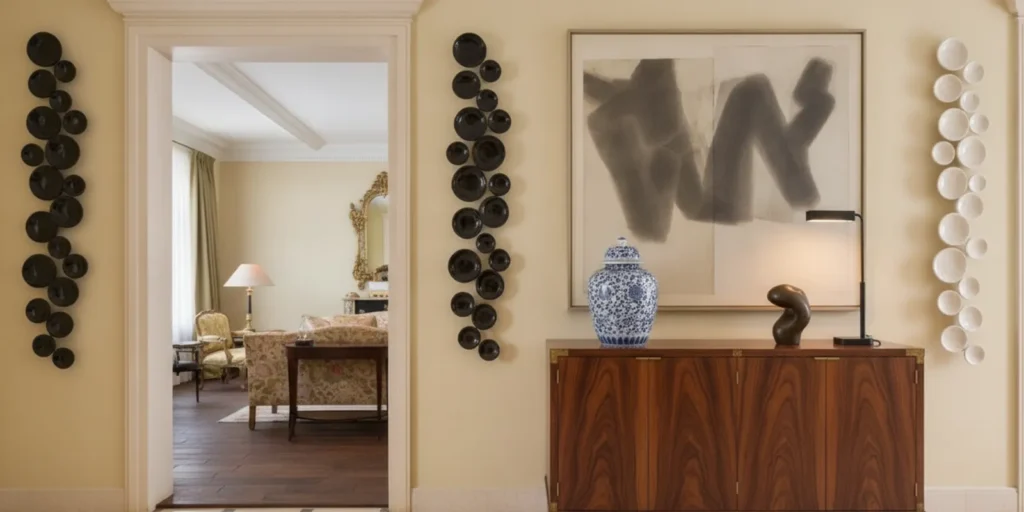
A Francesco Perini furniture artisan collaboration is a subject of interest for collectors who want furniture to feel considered alongside the art, architecture, and daily life of a home. In a collection-first interior, a bespoke piece is not simply an object to fill an empty corner. Its scale, material, and presence should contribute to the character of the rooms around it. This conversation belongs within the wider practice of bespoke fabrication and artisan craft, where a commission is shaped by its setting and purpose.
Discuss a whole-home design commission
Who is Francesco Perini, and what makes artisan furniture distinctive?
Francesco Perini is identified in this commission brief as an Italian artisan collaborator. Beyond that description, the particulars of an individual maker’s training, workshop, methods, or catalogue should be established directly for the project rather than assumed. That restraint matters. Artisan furniture is meaningful because of the particular design and making decisions behind it, not because a label can stand in for understanding.
For a collector, the useful question is not only who made a piece, but how its character belongs in the residence. Is it intended to serve as a quiet counterpoint to a vivid work of art? Does its form bring definition to a transitional space? Will a cabinet hold objects that are used, or act as a visual anchor? These practical and aesthetic questions help distinguish an intentional commission from a purchase made simply to complete a room.
Artisan work also asks for attention to detail that is easy to miss in a quick image: the relationship between proportion and construction, how surfaces respond to light, the feel of edges and hardware, and the way a piece meets the floor or wall. A serious conversation about a commission should make room for these particulars. The client and design team can discuss expectations and constraints before decisions are made, without presuming that every maker works in the same way.
CW DESIGN brings interior design, furniture restoration, and fine arts experience together under Catherine Weinstock’s creative leadership. Her European study informs a practice that values craftsmanship and a layered understanding of objects. The firm’s background and approach provide context for how those disciplines can inform a residential commission.
How can Perini furniture sit comfortably in an art-forward interior?
Start with the collection and the room, not with a furniture style. Art may already have a strong color, scale, material, or historical presence. The furniture can respond to those qualities without imitating them. A piece that is too assertive can compete with an artwork; one that is too slight may disappear in a large room. The aim is a thoughtful relationship, not a matching set.
Before selecting a location or form, consider how the collection is experienced from the main approaches to a room. What comes into view at the threshold? Where does the eye rest? Which works are meant to be encountered together, and which benefit from space around them? Furniture can help establish those rhythms by directing movement, framing a view, and giving a room a sense of balance. Take a slow walk through the residence and note the first view into each room, the sightlines from adjoining spaces, and the places where people naturally pause. Those observations offer a practical starting point for placement.
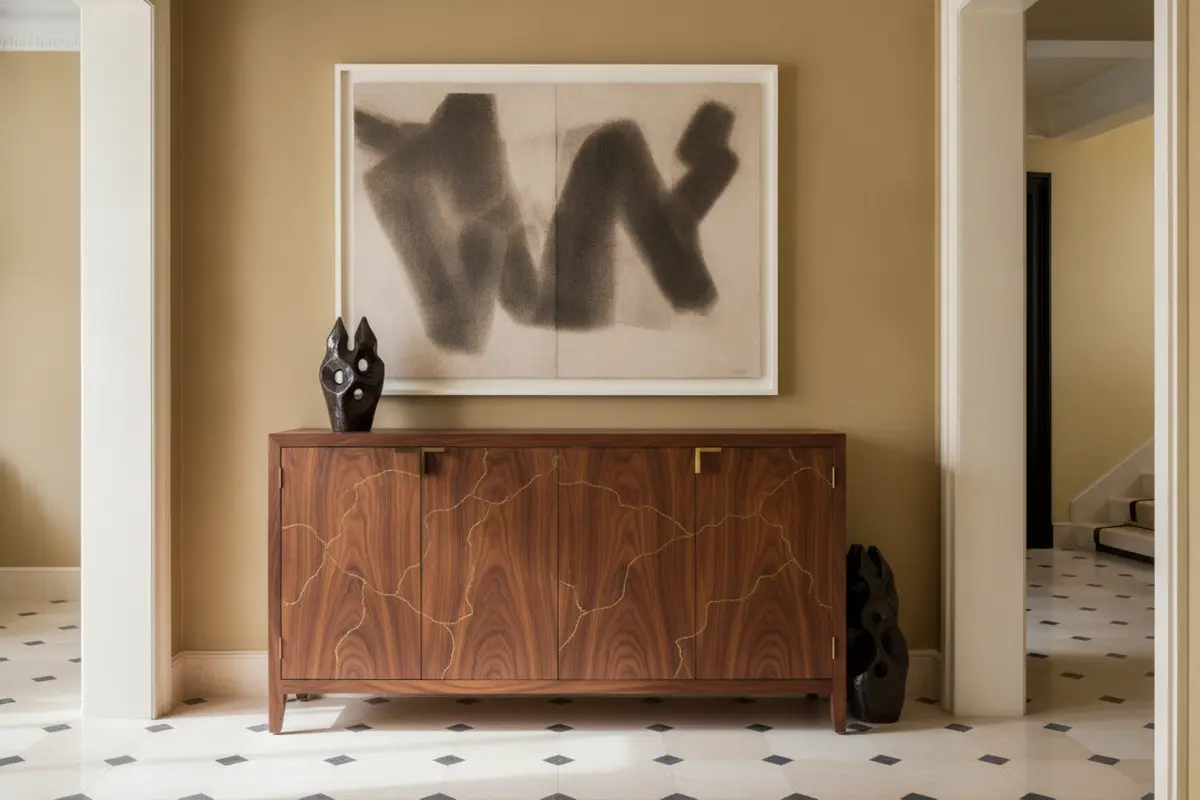
Scale should be assessed in the actual interior. A piece’s height and width affect the visual field around nearby art, while its depth can shape circulation and use. The room’s architecture matters too: ceiling height, openings, existing millwork, daylight, and the placement of doors all influence where a commission belongs. This is why CW DESIGN works on site; a visit allows the design team to understand the particular space rather than treating it as an abstract plan.
Material is another point of connection. Wood, metal, stone, textile, and finish each have a distinct visual weight. A restrained surface can let a painting hold attention, while a more expressive grain or form may create a considered dialogue with a collection. Neither approach is automatically right. Decisions should account for neighboring objects, the light in the room, and how the client wants the interior to feel over time. Bring samples and finish references into the room when possible. A surface that seems quiet under showroom lighting may appear more active beside a particular artwork or in strong daylight.
For a broader discussion of displaying fine art within a home, the central principle is to treat the work as part of the design conversation from the beginning. That does not mean every furnishing must defer to art. It means each element should have a reason to be present, and the composition should feel coherent when viewed as a whole.
It helps to compare possible placements at more than one distance. From across a room, a cabinet may read as a strong horizontal line; nearby, its joinery and surface may hold attention. A sculpture on a pedestal has a different relationship to sightlines and circulation than a painting above a console. Looking at the whole room as well as these closer encounters can reveal whether a proposed piece supports the collection or introduces unnecessary visual noise. Where possible, mark the approximate footprint and height in the room before finalizing a location. This simple exercise makes clear whether a piece might interrupt a route, obscure a view, or leave an artwork without enough visual breathing room.
Daily use should be considered with equal care. A furnishing intended for storage has practical demands that a purely sculptural object does not. Opening doors, reaching shelves, and moving around the piece all affect its placement. The design should bring these ordinary actions into conversation with the display, so the room remains inviting to live in rather than becoming a static backdrop for objects.
How does an Italian artisan collaboration take shape?
A collaboration begins with a clear brief. The brief describes the residence, the client’s priorities, the intended function of the piece, and the artworks or architectural features it must relate to. It should also identify what is known and what still needs discussion. A reference image can communicate mood, but it should not be mistaken for a complete specification or a promise that a maker will reproduce a particular design.
A useful brief is selective rather than overloaded. Include the measurements that are confirmed, photographs of the actual setting, and a short description of what the furniture must do. Separate fixed requirements from preferences. For example, a required storage function or a narrow passage is different from a preference for a particular silhouette. This helps the design team and maker understand where a solution must perform and where creative interpretation is welcome.
- Understand the setting. Record the dimensions and conditions of the intended location, including access, circulation, adjacent finishes, and the relationship to art. Site observation helps surface details that a photograph or room plan may not convey.
- Define the purpose. Clarify whether the furniture must store, display, support, divide, or simply anchor a space. Describe how it will be used and what role it should play in the room’s composition.
- Discuss the design direction. Share the relevant collection, architecture, and references. Identify what should be preserved, what may be reinterpreted, and which details are open to exploration.
- Resolve practical considerations. Confirm dimensions, access routes, installation needs, and the decisions that require approval before work proceeds. The team should communicate who is responsible for each confirmation.
- Review the finished relationship. Once the piece is in place, consider how it reads with the artwork, lighting, and surrounding furnishings. The success of the commission is judged in its actual setting, not only in isolation.
These are useful points of conversation, not a fixed production schedule. Every maker and commission has its own requirements. The design team can help coordinate the piece with the larger interior, while the maker’s specific capabilities and process should be discussed directly and documented as appropriate. CW DESIGN’s design approach places bespoke work within a considered residential vision rather than treating it as an unrelated purchase.
A wider commission may involve more than one custom element. A piece of furniture could relate to bespoke woodwork, restored furnishings, lighting, or the positioning of art. This is one reason a whole-home perspective can be valuable: decisions made in one room may affect sightlines, materials, and movement elsewhere. Explore the firm’s guide to bespoke interior design and its discussion of bespoke furniture fabrication for related context.
For a complex residence, the commission also needs coordination with the broader project. Confirm how the furniture’s dimensions relate to doorways, elevators, stair turns, flooring, and any work taking place nearby. A design that looks right on paper still has to reach its destination and sit safely in the room. Identify the approvals that must happen before fabrication or installation, and keep the current drawings and decisions together so the client, design team, and maker are working from the same understanding.
What should a client expect from an artisan-level furniture commission?
Clients should expect a sequence of conversations and decisions, not a generic formula. First comes a shared understanding of the piece’s purpose and setting. Then the design direction, materials, dimensions, and relevant practical requirements can be explored. The details will vary, and the choices should be made with the whole interior in view. The table below offers a framework for organizing those discussions; it does not prescribe a maker’s process.
| Stage | Questions to resolve | Why it matters |
|---|---|---|
| Brief and setting | Where will the piece sit, and what will it do? | Connects function, scale, circulation, architecture, and art. |
| Design direction | What qualities should the piece express or complement? | Establishes a coherent relationship with the collection and interior. |
| Material and detail | Which materials, finishes, and details are appropriate? | Clarifies visual character, use, and the level of craftsmanship expected. |
| Coordination | Who confirms dimensions, access, installation, and approvals? | Reduces ambiguity between the residence, design team, and maker. |
| Placement and review | How does the completed piece work in its intended room? | Checks the commission in the context for which it was designed. |
It is also useful to distinguish decisions that can be assessed visually from those that need written confirmation. A finish sample helps communicate appearance; a dimensioned drawing clarifies scale and fit. A written record of approved materials, dimensions, and intended use can prevent memory or informal references from becoming the only guide. The specific documents will depend on the commission, but clear records help everyone discuss the same version of the work.
For a home with significant existing furnishings, restoration may also be part of the discussion. A valued piece might be conserved or restored rather than replaced, while a new commission addresses a different need. These choices are not interchangeable: the history, condition, intended use, and design role of each object matter. CW DESIGN’s experience spans furniture restoration as well as interior design, so the conversation can consider both existing and newly made pieces in relation to the residence.
The firm’s documented projects illustrate how interiors can respond to different architectural contexts. The Palm residence features custom woodwork, while the Tribeca loft involves the preservation of pre-war character and art integration. These examples are not templates for another home; they show why design decisions are shaped by each project’s particular setting. Additional work can be viewed in the project portfolio.
When considering the whole home, map the relationships between rooms rather than viewing the commission in isolation. A piece may establish a transition between a gallery-like public space and a more intimate room, or echo a material already present elsewhere without repeating it exactly. The objective is not uniformity. It is a sequence of considered choices that allows individual rooms and objects to retain their character while belonging to one residence.
Why does provenance matter for a bespoke furniture piece?
Provenance is the account of an object’s origin and history. For a new commission, useful records may include the maker or workshop as confirmed by the project, the agreed design description, materials and finish as documented, and the date and context of the commission. Keep correspondence, drawings, approvals, and care information together with the object’s records. The appropriate documentation depends on the nature of the work and what the parties can substantiate.
Institutional catalogues offer one example of concise object documentation: the National Gallery of Art’s artist entry for Antonio Capellan presents biographical information and related publication details. It is not a source about Francesco Perini or a furniture commission; it illustrates why it is useful to keep an object’s verified identifying details distinct from assumptions.
Good records are valuable for reasons beyond future resale. They preserve the intentions behind the work and help a future owner or conservator understand what was commissioned. They can also distinguish original design decisions from later changes. Avoid making assumptions about a piece’s materials, construction, or authorship when those details have not been verified.
For collectors, this care is part of stewardship. A home may bring together works with different histories, periods, and modes of making. Bespoke furniture can contribute its own contemporary chapter without pretending to be an antique or borrowing a history that does not belong to it. Clarity about authorship and making allows the object to stand on its own terms and join the collection honestly.
Consider keeping a simple record with the final drawings, confirmed maker and workshop information, material and finish specifications, installation details, and any care guidance provided. Note which elements are confirmed and which remain unknown. If the piece is later altered, repaired, or moved to another residence, add the date and a short description of the change. This does not require embellishing the object’s story; it preserves a clear account of what is known.
Contact CW DESIGN about your project
Frequently Asked Questions
Is every artisan furniture commission made from a standard design?
No. The form and requirements depend on the brief, the setting, and the maker’s confirmed process. Discuss which decisions are possible for the specific commission rather than assuming that a reference image represents an available design.
Should furniture be selected before the art is installed?
Not necessarily. A project may begin with an existing collection, a planned acquisition, architecture, or a combination of these. The important step is to bring the relevant information into the design discussion early enough to coordinate scale, placement, and visual relationships.
Can existing furniture be considered alongside a new commission?
Yes. The design conversation can distinguish pieces that should be retained or restored from gaps that may call for a bespoke commission. Their condition, use, and relationship to the art and architecture help guide those decisions.
How can a client begin a whole-home conversation?
Share the property’s location, the scope under consideration, the collection or objects that are central to the project, and the questions you would like to resolve. CW DESIGN’s work is on site, and a first discussion can establish whether the project and the firm’s current engagement capacity are a fit.
A thoughtful artisan commission belongs to a larger story: the collector’s relationship with art, the character of the residence, and the care invested in every object that enters it.