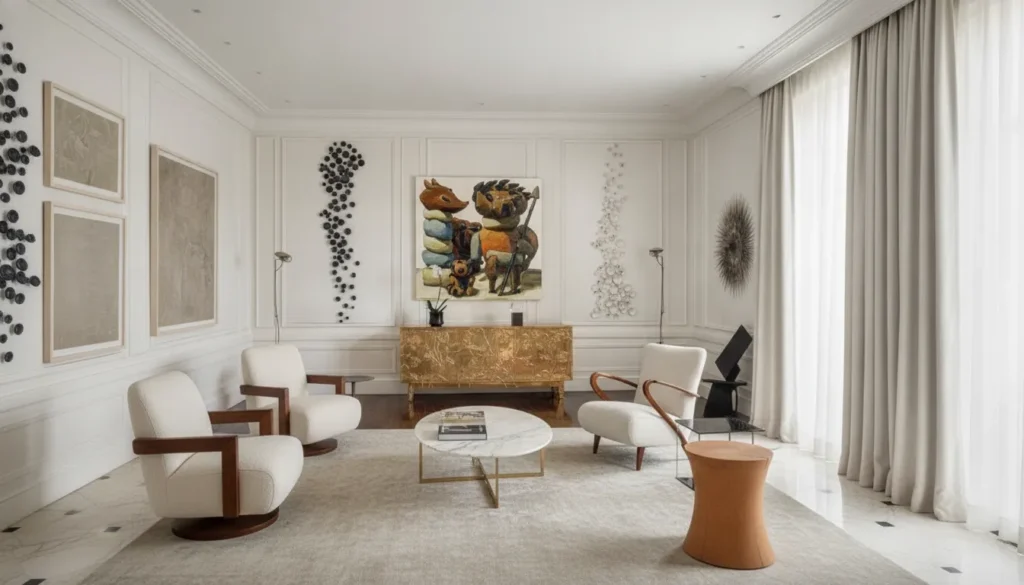
A room built around an art collection begins with attention, not acquisition. Before furniture, finishes, or decorative gestures are selected, the designer must understand how each work belongs to the architecture and how the collection speaks as a whole.
To understand how to design around an art collection, treat the artwork as the organizing principle: assess its scale, medium, placement, light, and relationships before shaping the rooms that support it.
This collection-first method creates interiors that feel composed rather than decorated. It allows circulation, sightlines, negative space, and furnishings to serve the art while preserving the comfort and intimacy of a home. CW DESIGN’s art-first interior design approach brings that sensibility to bespoke whole-home environments, grounded in an in-person understanding of the space. The first decision, therefore, is not which sofa belongs in the room, but why the collection should establish the room’s underlying order.
When you are ready to give your collection the considered interior it deserves, CW DESIGN can help you plan the rooms that support it.
Contact CW DESIGN to begin a consultation
Why the Art Collection Should Come Before the Furniture Plan
In a collection-first interior, the artwork establishes the room’s point of view before a sofa, table, or paint color is selected. It determines where the eye should travel, how much visual quiet the architecture needs, and which furnishings can support the experience without competing for attention. As CW DESIGN puts it, “Art is where the design begins, not an afterthought.” Explore our art-first design approach to see how this principle shapes a home.
That sequence matters because furniture purchased in isolation can force the collection into awkward compromises. A large painting may be crowded by a tall cabinet. A sculpture may lose its presence when placed beside overly assertive forms. Even a seemingly neutral seating plan can interrupt the sightline between works. Starting with the collection allows the designer to establish proportion, circulation, and pauses before those decisions become fixed.
Art gives the room its visual order
The goal is not simply to find a wall for each piece. It is to create relationships across the home, allowing color, scale, material, and provenance to form dynamic dialogues between works. A painting may be given the quiet space it needs to hold attention, while a nearby object creates a counterpoint from another room or an adjoining axis. This is the work of an art-centric interior designer: translating a collection into an environment in which each piece has both individual presence and a place within the larger composition.
Furniture then becomes supportive rather than dominant. Seating is oriented toward important works, tables preserve comfortable movement, and textiles or finishes can echo the collection’s texture without competing with it. Architectural details may also be planned around the art, including tailored lighting, alcoves, wall reinforcement, or shelving. The result is a residence that feels inhabited, not staged, while still giving the collection the care and clarity of a personal museum.
Why an in-person reading of the space is essential
A collection cannot be designed around from measurements alone. The designer needs to experience the rooms in person: their natural light, transitions. Ceiling height, materiality, and the way views open and close as one moves through the house. Catherine Weinstock has stated, “I will not work off site, first of all. I just always have to go to a place to get a feel for it.” That site-specific understanding informs where the collection should lead and where daily life should remain effortless. Read more about CW DESIGN’s approach to this kind of considered work.
Q: Why should art come before furniture in an interior design plan?
A: Art should come first because it establishes the room’s visual hierarchy, scale, circulation, and atmosphere. Furniture can then be selected to frame and support the collection while preserving the home’s comfort and function.
Assessing Your Collection: Size, Medium, Provenance, and Hanging Requirements
Before a furniture plan is drawn, each work should be understood as both an artwork and a physical object within the home. A painting, textile, photograph, sculpture, or fragile mixed-media piece will impose different requirements on the room. This assessment creates a practical record that protects the collection while allowing the architecture, furnishings, and circulation to respond with precision.
- Size and scale: Record the full dimensions, including the frame, plinth, or protective glazing. Consider the scale of the art in relation to nearby furniture and the wall that will hold it. A substantial work may need generous breathing room, while a smaller piece may belong in a more intimate grouping.
- Medium: Note whether the work is oil, watercolor, photograph, textile, paper, wood, metal, or another material. Medium affects glazing, light sensitivity, humidity concerns, and the type of support or mounting system required.
- Provenance and significance: Document the artist, date, origin, and any known relationship to the collector or the home. Provenance can guide the dialogue between a work, the architecture, and neighboring pieces rather than treating the collection as a random assortment.
- Hanging and mounting: Identify the weight, hardware, wall structure, security needs, and installation height for every work. In high-traffic areas, secure mounting protects both the art and the wall. Hidden hooks or specialized hardware may be appropriate where a standard picture hook is not.
- Three-dimensional requirements: Sculpture and other 3D works need placement that permits viewing from multiple sides. A pedestal pushed against a wall can erase the very spatial qualities that make the work compelling; allow for 360-degree viewing where the piece calls for it.
- Environmental protection: Avoid direct sunlight when it could damage delicate media over time. Window orientation, glazing, shades, heat sources, and ventilation should be reviewed before a location is finalized.
For framed wall art, approximately 57 inches from the floor to the center of the work is a useful eye-level starting point. It is not a rigid formula. The height should be adjusted for the room’s architecture, the furniture beneath it, the sightlines of seated and standing viewers, and the work’s scale. The goal is a considered visual relationship, not a row of measurements.
A detailed inventory also makes future decisions more coherent. It can reveal which pieces belong together, which require isolation, and where the layout needs flexibility for future acquisitions. For more context on displaying fine art, this assessment should remain part of a larger process of curation, conservation, and site-specific design.
Q: Should every piece be hung at exactly 57 inches?
A: No. The approximately 57-inch centerline is a helpful eye-level guide, not a universal rule. Adjust it to account for the art’s dimensions, the surrounding furniture, the room’s proportions, and how people actually move through the space.
Q: How should a sculptural work be evaluated before placement?
A: Consider its visual presence from every intended approach. Confirm that circulation is safe, the plinth is stable. And the work has enough space to be experienced from multiple angles without competing with essential movement through the room.
Balancing Negative Space with the Visual Weight of Significant Works
A significant artwork needs room to command attention without making the room feel crowded. Negative space is not an absence of design; it is the interval that allows scale, color, texture, and meaning to register. This is especially important with large-scale works, which can overwhelm a residential setting when every surrounding surface is equally active.
Begin by considering the visual weight of each piece. A monumental painting, densely patterned textile, or dark-toned work may carry more presence than its dimensions alone suggest. Give it a quieter field around it, then allow the architecture, furniture, and circulation to support its proportions. The result should feel composed rather than staged, with the eye able to pause before moving to the next work.
Use proportion as a guide, not a formula
Proportion guides can provide a useful starting point when a room feels visually unsettled. The 70/30 rule suggests allowing one element or family of elements to lead while the remainder supports it. The 2/3 rule offers a similar framing device: a dominant artwork or visual grouping may occupy roughly two-thirds of the composition, with the remaining third providing relief. These are practical guides, not rigid measurements. The character of the room, the architecture, and the collection must ultimately determine the balance.
| Guide | What it suggests | When it helps |
|---|---|---|
| 70/30 rule | One element or family of elements leads the composition while the rest supports it | When a room feels visually unfocused or cluttered |
| 2/3 rule | A dominant artwork or grouping occupies roughly two-thirds of the visual field | When a single significant work should anchor the room |
| 57-inch rule | Center of a hung work sits near average eye level | When establishing the baseline hanging height for wall art |
Vertical placement also shapes how a person experiences the space. The height of one work can draw the eye upward, while a lower piece can create a visual pause or lead the gaze toward an adjoining room. A thoughtfully arranged collection can therefore guide movement through the home, creating a quiet dialogue between works rather than a series of isolated displays.
Let the backdrop unify difference
When antique and contemporary works share a room, a neutral backdrop often gives them enough breathing room to belong together. Restrained walls and architectural finishes allow differences in period, palette, and medium to become deliberate contrasts. Neutral does not mean characterless. Subtle variation in plaster, stone, wood, or textile can add depth without competing with the collection.
This measured approach supports a timeless interior design philosophy: the room should endure because its relationships are considered, not because it follows a season’s trend. Negative space, proportion, and visual hierarchy make room for future acquisitions as well, preserving flexibility without weakening the composition.
Q: How much negative space should surround a large artwork?
A: There is no universal dimension. Provide enough visual and physical breathing room that the work remains the clear focal point, while considering the wall’s scale, nearby furniture, sightlines, and circulation.
Q: Is the 70/30 rule required for an art-focused room?
A: No. It is a proportion guide that helps establish hierarchy. A collection-first design should use it as a point of departure, then adjust the balance to suit the works and the architecture.
How to Design Around an Art Collection with Supportive Furniture
Once the collection has established the room’s visual priorities, furniture takes a supporting role. It should make the art easier to experience, not compete for attention. That means choosing each piece in relation to the works around it, the architecture of the space, and the way people will move through the home.
Seating is arranged first for comfort and conversation, then refined so important works remain visible from the places where people naturally pause. A chair or sofa can create a deliberate relationship with a painting, sculpture, or grouping of works. It should not, however, block a sightline or force the eye to negotiate around a tall back, an oversized arm, or an unnecessarily assertive silhouette. Clear circulation is part of the composition. Guests should be able to move through the room without brushing against furniture or losing the visual sequence of the collection.
Profile and proportion matter just as much. Low, tailored pieces often allow artwork to remain dominant, while subtle upholstery, tactile wood, or finely worked metal can echo the character of a collection without imitating it. The goal is not a room stripped of personality. It is a measured conversation between materials, forms, and works of art. Bespoke furniture and artisan details can provide depth, but their craftsmanship should reveal itself gradually rather than announcing itself before the collection.
Scale keeps the room in balance
Furniture that is too small can make a significant work feel lost, leaving the room visually top-heavy. Furniture that is too large can overwhelm the art and compress the breathing room around it. Scale is assessed across the whole room, including ceiling height, wall expanses, windows, doorways, and the visual weight of adjacent pieces. A substantial painting may need grounded, generous seating nearby, while a delicate work may call for quieter forms and more negative space.
Architecture can also be shaped around the collection. Purpose-built alcoves, shelving, niches, and carefully considered wall planes can give sculpture, objects, or works on paper a natural setting. These decisions are most successful when made as part of a whole-room or whole-home plan, rather than as a late decorative adjustment. The result feels cohesive because the architecture, furniture, and collection have been considered together.
For a deeper explanation of this relationship, explore what an art-centric interior designer brings to a collection-first project. The emphasis is on curation and craftsmanship, not on filling every room with more objects.
Q: Should the furniture match the artwork?
A: Not literally. Furniture should complement the art through scale, placement, texture, and restraint. Matching colors or motifs too closely can make the room feel staged and reduce the independence of the collection. A more enduring approach is to select pieces that support the works, preserve their sightlines, and create a comfortable setting for living with them.
Lighting Decisions That Serve Both the Art and the Occupant
Lighting in a collection-first interior must do two things at once: reveal the character of the artwork and make the room comfortable to inhabit. A painting may require precise illumination to bring out a subtle passage of color or the texture of its surface. While the people in the room need a softer, broader atmosphere for conversation, reading, and daily life. The most successful scheme respects both conditions rather than treating the room as either a gallery or an ordinary living space.
Layer the room instead of flooding it with light
Begin with ambient lighting that gives the room an even, welcoming foundation. This may come from carefully placed architectural fixtures, concealed sources, or decorative lighting selected as part of the overall composition. Its purpose is to support movement and living without competing with the collection.
Art-specific spots or track lighting can then be directed toward individual works. Adjustable fixtures are particularly useful when a collection includes different scales, mediums, or changing arrangements. A focused beam can draw out color depth and texture, but it should be calibrated to the work and viewed from the positions where people will actually sit. The goal is not maximum brightness. It is a considered relationship between the art, the architecture, and the occupant.
Protect the work while controlling glare
Harsh glare can flatten a painting, obscure the surface of a photograph, or make a reflective object difficult to see. Direct sunlight also deserves close attention, especially around delicate media that may be vulnerable to prolonged exposure. Window treatments, filtering strategies, fixture placement, and dimming controls can help manage the changing conditions throughout the day. These decisions should be made in the room itself, where reflections and sightlines are visible from multiple angles.
Light levels should remain adjustable rather than fixed. A quiet evening setting may call for a low, warm ambient level with selective emphasis on a few works. A gathering may need more generous illumination across the room. Dimming allows the atmosphere to change without asking the art to carry the entire visual experience.
Plan for a collection that continues to evolve
Collectors often rotate works seasonally or introduce new pieces as the collection develops. A curated lighting system makes those changes possible without rebuilding the room each time. Flexible track positions, adjustable heads, and discreet control zones can support a new arrangement while preserving the balance of the interior. The result is a room that feels composed, not static, with the art remaining central and daily life remaining effortless.
Q: Should art lighting be brighter than the room’s general lighting?
A: Not necessarily. Art may receive a more focused level of illumination, but the contrast should remain comfortable. Excessive brightness can create glare and make the surrounding room feel neglected.
Q: How can a room feel intimate while still showing the collection?
A: Use layered, dimmable lighting with a soft ambient foundation and selective accents. This keeps the room hospitable while allowing particular works to enter the conversation naturally.
When to Consult a Conservator Before Installing Major Works
A conservator should be part of the conversation before a particularly valuable, fragile, or unfamiliar work is transported, framed, or installed. This is not a sign that a piece is unsafe to display. It is a measured form of due diligence that protects the artwork and the design investment surrounding it.
Begin with a condition assessment. Existing cracks, lifting paint, loose veneers, fading, frame weakness, or evidence of earlier restoration may not be visible at a glance. A conservator can document the work’s condition before handling begins and recommend appropriate packing, transport, framing, mounting, and installation methods. That record also creates a useful point of comparison if the work is moved again in the future.
Provenance deserves similar care. Ownership history, artist attribution, and restoration records can affect how a work should be handled and displayed. When documentation is incomplete or an attribution is under review, verification should precede a permanent installation plan. The designer can then coordinate the room around what is known rather than making assumptions that may compromise the piece.
Which works need special environmental attention?
Fragile media and mixed materials often require more than a beautiful wall. Works on paper, textiles, photographs, wax, unfired materials, and certain painted surfaces can respond to humidity, temperature changes, direct sunlight, and excessive illumination. A conservator can identify the relevant sensitivities and advise on environmental monitoring, glazing, filtration, distance from heat sources, and placement away from strong sun. Those recommendations inform the architecture, window treatments, lighting, and circulation plan from the beginning.
This is where a multidisciplinary designer brings particular value. Training in Fine Arts, Interior Design, and Furniture Restoration supports a practical understanding of how materials age and how preservation concerns affect a room. The result is not a clinical gallery, but a composed interior in which art can be lived with thoughtfully. At CW DESIGN, the collection, the space, and the daily experience are considered together. You can see that relationship in the firm’s portfolio of projects.
Q: Will consulting a conservator limit the design?
A: Usually, it clarifies the design. Knowing a work’s environmental and handling requirements early allows the team to select appropriate finishes, lighting, furnishings, and protective measures without disruptive revisions later. Preservation becomes part of the design intelligence, not an obstacle added at the end.
As your collection evolves, so should the rooms that hold it.
Contact CW DESIGN about your project
Frequently Asked Questions
Should furniture be designed around art or vice versa?
In a collection-first room, furniture is selected in response to the art, architecture, and circulation. Seating should offer comfortable views of significant works without turning the room into a gallery. While tables, case goods, and upholstery support the composition rather than compete with it.
What is the 57-inch rule for hanging art?
The 57-inch rule is a practical starting point: place the center of a work approximately 57 inches above the floor, close to average standing eye level. Adjust it for the room, the work’s scale, nearby furniture, and the way people actually move through the space.
How do you curate an art collection for interior design?
Begin by cataloging each work’s size, medium, condition, provenance, framing, and hanging requirements. Then consider which pieces should share a visual conversation, which need breathing room, and how the collection relates to the architecture. The goal is not to display everything at once, but to create a measured sequence of encounters.
What is the 70/30 rule in art?
The 70/30 rule is a flexible proportion guide. Not a formula: roughly 70 percent of a room’s visual emphasis may support the principal design language, while 30 percent provides contrast or distinction. With art-led interiors, the balance should be tested against the importance and visual weight of the works, not applied mechanically.
Schedule a Private Consultation for Your Art Collection
A collection-first interior begins with seeing the works, the architecture, and the way the space is lived in as one connected composition. An on-site consultation can clarify how each piece should guide proportion, circulation, lighting, materials, and the atmosphere of the rooms around it. The goal is not to fill a home quickly, but to shape a considered setting in which the collection and daily life remain in dialogue.
CW DESIGN approaches substantial interiors with care, craftsmanship, and a preference for quality over volume. If you are planning a whole-home or entire-apartment project, the conversation begins with the collection and the space itself.
Schedule a private consultation to discuss how to design your home around your art collection.
Contact CW DESIGN to begin a thoughtful, on-site conversation about the next chapter of your home.
Pingback: How to Display Fine Art Collection at Home: A Guide – CW DESIGN
Pingback: How to Light Artwork in a Luxury Home – CW DESIGN
Pingback: Lighting a Mixed-Media Art Collection in a Private Residence: Lighting Mixed Media Art Collection Residence – CW DESIGN
Pingback: Natural Light and Contemporary Art in the Home – CW DESIGN