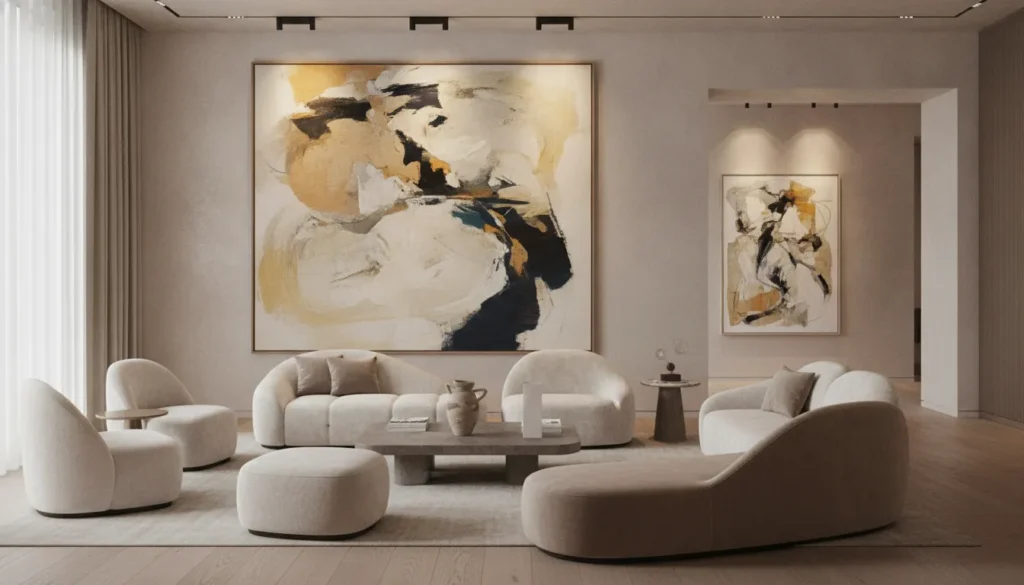
For a collector, a home is not a gallery with furniture added around it. It is a lived environment in which each work can be seen, experienced, and understood in relation to the rooms around it. That requires more than selecting complementary colors or finding an impressive wall for a painting. It requires a design approach that gives the collection authority from the first plan.
Begin with your collection. Contact CW DESIGN to explore how art can lead the design of your home.
An art-centric interior designer treats the collection as the foundation for the room’s layout, palette, furniture, and atmosphere, so furnishings and lighting support the artwork rather than compete with it. This approach draws on balance, proportion, rhythm, emphasis, and unity to create a composed, deeply personal interior (University of Nebraska-Lincoln design principles).
The result is not a static display, but a bespoke setting where art, architecture, craftsmanship, and daily life remain in conversation. Understanding the principles behind that relationship is the first step toward designing a collection-led home with lasting coherence.
What Is an Art-Centric Interior Designer?
An art-centric interior designer treats the collection as the beginning of the design conversation. Paintings, sculpture, photography, and works on paper are not selected after the furnishings are in place. They establish the room’s proportion, palette, circulation, lighting requirements, and atmosphere. The result is a space in which every bespoke decision. From the placement of a sofa to the finish of a cabinet, gives the artwork room to be encountered on its own terms.
Designing from the collection outward
This approach requires more than choosing a complementary wall color. The designer studies the character, scale, medium, and relationships within the collection, then considers how each work will live in the architecture. A monumental painting may call for generous breathing room and restrained furniture. A delicate work on paper may need controlled light and a quieter setting. Sculpture can influence circulation, sightlines, and the pauses that shape a visitor’s experience of the home.
In a conventional process, art may be treated as a finishing layer, brought in after the layout, palette, and furniture have already been decided. An art-centric process reverses that order. It uses the principles of balance, proportion, rhythm, emphasis, and unity to organize form, color, and texture, as outlined by the University of Nebraska Extension. Those principles create visual order without making the room feel prescribed or overly coordinated. Furniture and lighting support the collection rather than compete with it, allowing craftsmanship, materiality, and atmosphere to reinforce the art.
For collectors, this is ultimately a more personal and timeless way to shape an interior. The home becomes neither a showroom nor a backdrop, but a curated environment in which architecture, furnishings, and art remain in thoughtful dialogue. CW DESIGN’s art-centric approach begins with that dialogue, creating rooms that feel composed, enduring, and distinctly connected to the person who lives among the collection.
How an Art-Centric Interior Designer Thinks Differently
An art-centric practice begins before a palette is selected or a sofa is specified. The designer first asks how the collection should be experienced: which works deserve prominence. How their scale relates to the architecture, and what sequence of encounters will unfold as someone moves through the home. The result is not a room with art added to it, but a considered environment in which art, architecture, furnishings, and daily life belong to the same composition.
The collection becomes the design brief
Rather than treating artwork as a finishing layer, the designer studies the collection as a source of direction. A painting may establish the room’s chromatic temperature. A sculptural work may determine the openness of a passage or the view from a seated position. A group of works may call for restraint in the surrounding materials so that their distinctions remain legible. This approach gives the collection an active role in decisions that are usually made independently, from wall proportions and sightlines to upholstery, case goods, and finishes.
That does not mean every furnishing must disappear. It means each piece earns its place. A bespoke chair, an artisan table, or a restored object can provide contrast, scale, and tactility while preserving the authority of the work it accompanies. CW DESIGN’s art-centric design philosophy reflects this conviction: the room is developed around the collection, not arranged to compete with it.
Architecture frames the encounter
Circulation becomes part of the curatorial experience. A transition from one room to another can create anticipation before a significant work comes into view. A pause in a stair hall, a carefully protected negative space, or a long axis through the residence can give an artwork the visual clarity it needs. These choices are practical as well as aesthetic, helping residents and guests move comfortably without turning the home into a gallery that feels static or overly formal.
The organizing principles are precise: balance, proportion, rhythm, emphasis, and unity help coordinate form, color, and texture across the interior. These principles are identified in foundational interior design guidance from the University of Nebraska-Lincoln (source). In practice, they allow a quiet wall, a richly crafted furnishing, and a commanding painting to coexist without visual confusion.
The governing test remains simple: the room serves the art. Furniture and lighting should enhance rather than distract from the work, a principle articulated in this discussion of art-centric rooms (source). Explore CW DESIGN’s curated art and furniture collections to see how that relationship can be expressed through a complete, timeless interior.
How Do Designers Light an Art Collection?
Lighting should make a collection feel intentional, never theatrical or overexposed. The most refined schemes are layered, allowing each work to be encountered clearly while preserving the atmosphere of the room. A ceiling source establishes ambient light, picture lights direct attention toward individual paintings, and accent lamps create quieter points of focus among furniture and objects.
For artwork, LED fixtures with a high color-rendering index, ideally 95 or above, help preserve the subtleties of a painting’s palette. A color temperature near 2700K offers a warm, residential quality while rendering color accurately. LED technology also produces less heat, ultraviolet radiation, and infrared radiation than many older sources, which makes it a considered choice for a collection displayed at home. Christie’s guidance on museum-quality lighting at home echoes that point. Fixture quality and placement still matter. Even a technically appropriate lamp can flatten a composition or create an unwanted reflection.
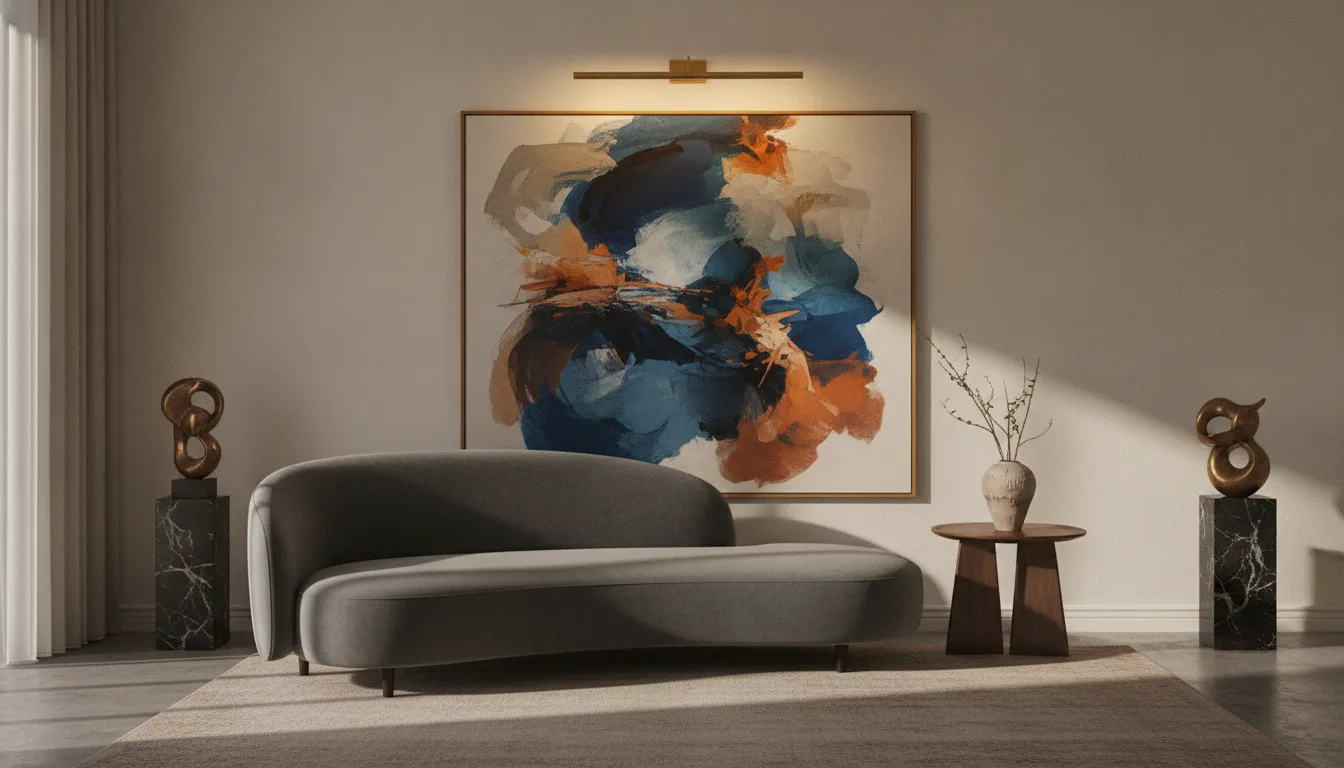
Shape the light around the work.
Paintings often benefit from illumination from above, which reveals texture and detail without competing with the image, a technique emphasized in curator-focused guidance on lighting art like a professional. Picture lights should be selected and positioned according to the frame, scale, and surface of the piece. The aim is an even, controlled wash rather than a bright spot at the center.
Sculpture requires a different approach. Directional light can emphasize volume, while carefully placed shadow or restrained backlighting gives a three-dimensional work depth. A uniformly lit room can erase those distinctions, making every object appear equally important. An art-centric interior designer instead varies intensity and direction so the lighting supports the hierarchy of the collection.
Protect the atmosphere and the artwork
Glare is both a visual distraction and a sign that the scheme needs refinement. Test fixtures from the principal viewing positions, particularly across glass and glossy surfaces. Direct natural-light spots should also be avoided, since sunlight can introduce glare and expose artwork to unnecessary heat and radiation. Window treatments, dimming, and carefully angled fixtures allow the room to remain luminous without asking the collection to compete with the outdoors.
The final effect should feel effortless: the room holds its atmosphere, while each work receives the attention its scale, material, and placement require.
How Do Designers Hang and Place Art?
Placement gives a collection its visual order. An art-centric room should feel composed rather than crowded, allowing each work to be encountered on its own terms while still contributing to the atmosphere of the whole.
- Establish the hierarchy of the works. Begin by identifying the pieces that should lead the room, whether because of scale, rarity, color, or emotional importance. These works become anchors. Smaller or quieter pieces can then support them instead of competing for attention. The principles of balance, proportion, rhythm, emphasis, and unity offer a useful framework for organizing form, color, and texture throughout the interior. Read more about these foundational design principles.
- Plan placement before the walls are finished. Art should be considered alongside architecture, millwork, outlets, lighting, and furniture, not after every surface has been completed. Test elevations and sightlines early, and account for the dimensions, weight, framing, and installation requirements of each work. This protects the collection from awkward compromises and allows the room to be tailored around it.
- Respect sightlines and circulation. Stand where the work will be viewed: from an entry, a seating group, a hallway, or the far side of an adjoining room. Keep important pieces visible without placing them where doors, furniture, or movement interrupt the experience. The best arrangement creates discovery as one moves through the home, while maintaining comfortable viewing distances.
- Group and scale pieces thoughtfully. A salon arrangement can create rhythm, but it needs a deliberate edge, spacing, and center of gravity. Contrast can be powerful: an overscale painting set against carefully curated furniture creates drama without requiring visual excess, as illustrated by examples of art and furnishings working at different scales.
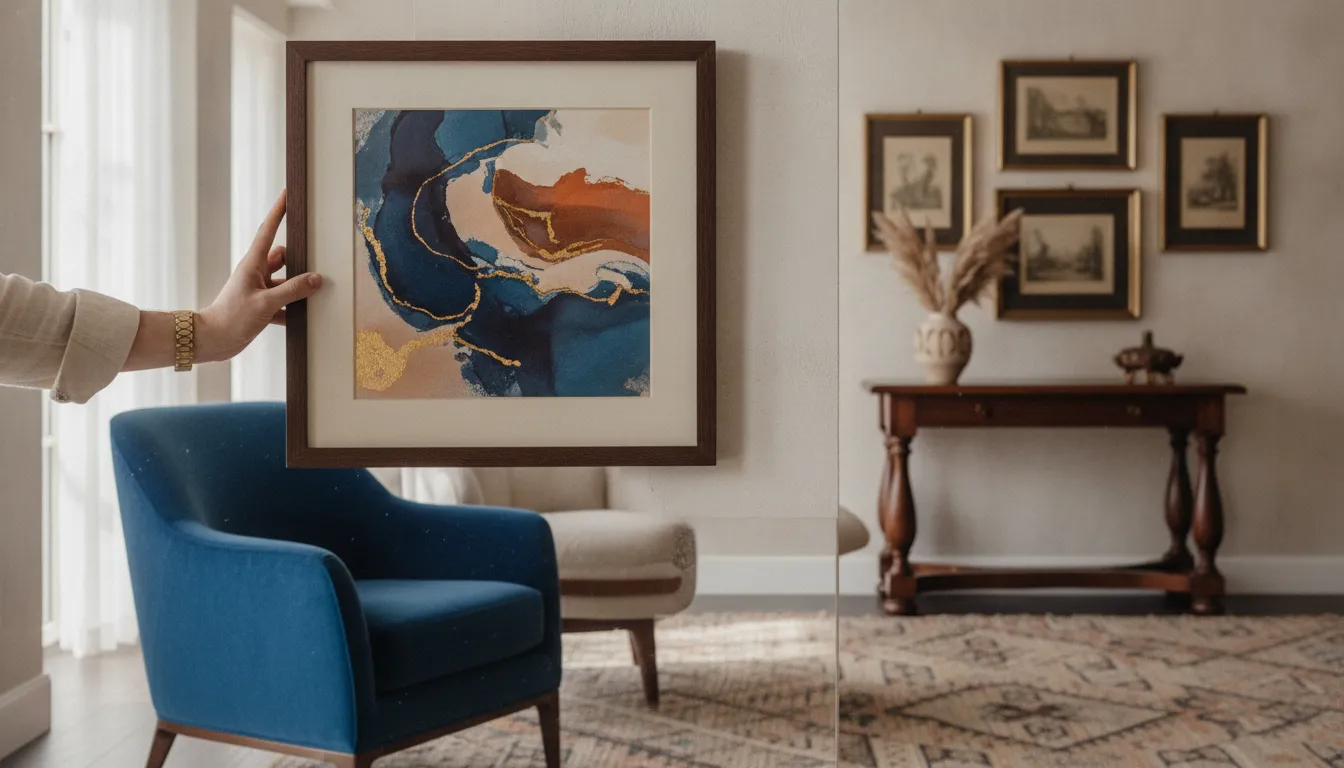
- Layer color and material as a backdrop. Wall finishes, textiles, wood, stone, and upholstery should frame the work without announcing themselves first. Consider how texture and tonal contrast clarify the art, then let restraint provide room for its details to emerge.
- Revisit placement as the collection grows. A home collection is not static. New acquisitions may alter balance, emphasis, or the dialogue between styles. Abstract works, prints, sculpture, and furniture can converse across a room when their relationships are reviewed over time. Repositioning is not a failure of the original plan; it is part of caring for a living, evolving collection.
What to Look for When Hiring an Art-Centric Interior Designer
Evaluate the designer’s relationship with art, not just the portfolio.
A compelling portfolio is useful, but it should not be the sole measure of an art-centric interior designer. The right professional understands that a collection is personal, evolving, and central to the character of a home. During an initial conversation, notice whether the designer asks about the works you own. How you live with them, and what you want each room to convey before presenting a signature look.
Look for fluency across disciplines. A designer with grounding in fine arts can discuss composition, proportion, scale, and the dialogue between contrasting works. Training in furniture restoration and a strong craftsman network add another layer of discernment: furnishings should be selected. Adapted, or commissioned to support the collection rather than compete with it. Catherine Weinstock’s fine arts training, alongside her study of interior design and furniture restoration in Europe, illustrates the kind of multidisciplinary foundation collectors may wish to investigate.
| Look for | Common red flag |
|---|---|
| Fine-arts fluency, with a thoughtful grasp of composition, proportion, and the relationship between works. | A decorator-only approach that treats art as a finishing accessory or color accent. |
| Questions about your collection, habits, and priorities before proposing a visual direction. | A presentation built around a preselected look, with little curiosity about your particular works. |
| Lighting, wall conditions, sightlines, and conservation considerations addressed from the beginning. | Art placement deferred until the room is nearly complete, leaving awkward scale, glare, or visual competition. |
| Access to skilled artisans, restorers, and bespoke sources capable of responding to unusual pieces. | Catalog-only sourcing that limits the room to interchangeable, mass-produced furnishings. |
| Willingness to collaborate with an art advisor when sourcing new work that complements the project’s direction. | A rigid division between the art collection and the interior, with no coordinated curatorial point of view. |
Art advisors and interior designers can collaborate when sourcing pieces that complement a project’s spatial or conceptual direction, so ask how prospective partners communicate. The strongest process remains bespoke: the designer should protect the individuality of the collection while creating a timeless setting in which each work can be encountered on its own terms.
How to Work With a Designer When Your Collection Keeps Growing
A growing collection calls for a room that can evolve without losing its sense of order. Rather than fixing every wall, a designer can establish a flexible framework. Lighting tracks or discreet picture-light infrastructure can be adjusted over time. Wall finishes remain sympathetic to new acquisitions, and furnishings allow works to change prominence as the collection develops.
The plan should also include what is not currently on display. Proper storage, handling protocols, and a rotation strategy protect the integrity of the collection while giving the home a renewed visual rhythm. A painting may move from a private study to a more public room; a sculpture may become the focal point of a newly completed space. This approach avoids turning the residence into a frozen museum layout. The home remains lived-in, while the collection continues to be encountered on its own terms.
Collaboration beyond the design studio can be equally important. Art advisors often work with interior designers to source pieces that complement the spatial, conceptual, or thematic direction of a project. This collaborative sourcing model can help a collector consider scale, medium, palette, and placement together, rather than treating each acquisition as an isolated decision. It is especially valuable when a new work must enter an already composed interior without weakening the larger conversation among art, architecture, and furnishings.
For CW DESIGN, that conversation extends to global artisan relationships, including Francesco Perini, Patrick Naggar, and Gallery Fumi. These collaborations can introduce bespoke furniture and objects with the craftsmanship and presence to stand beside serious collections. The firm’s art-centric design philosophy keeps those choices connected to the collection from the outset, while its limited room for engagements preserves the high-touch attention an evolving home requires.
Frequently Asked Questions
How do you design a room around an art collection?
Begin by assessing the collection as a whole, including scale, palette, medium, and the way each work should be experienced. Use those observations to guide the room’s proportions, circulation, materials, furniture, and lighting. The strongest schemes give each important piece visual breathing room while creating a coherent dialogue among the works.
What is the role of art in interior design?
In an art-led interior, art establishes the room’s atmosphere and helps determine the supporting design language. Furniture, color, texture, and lighting should enhance the work rather than compete with it. Balance, proportion, rhythm, emphasis, and unity provide a practical framework for organizing these elements, as described in the University of Nebraska-Lincoln extension guide: design principles help organize form, color, and texture.
How do you place art in interior design?
Place each work according to its scale, sightlines, viewing distance, and relationship to nearby architecture and furnishings. Consider how someone moves through the room and whether the work needs quiet space around it. Group related pieces with intention, but avoid treating every wall as a display surface. Placement should make the collection feel considered, not crowded.
Why hire an art-centric interior designer?
A specialist can translate a collection into a complete, livable environment without reducing the art to decoration. Look for someone who understands composition, conservation-conscious presentation, furniture, architecture, and the practical demands of daily life. An art advisor may also collaborate with the designer to source pieces that complement the project’s spatial or conceptual direction.
What makes a home feel like a personal museum?
It is not the quantity of art, but the quality of the experience. A personal museum-like home gives important works thoughtful placement, appropriate light, and enough context to be encountered on their own terms. It still feels welcoming because the circulation, seating, materials, and proportions support living rather than imitating a public gallery.
Ready to Begin With Your Collection?
When artwork is the starting point, a thoughtful design conversation can bring greater clarity to the relationship between each piece. Its setting, and the way the home is lived in. To begin a considered conversation about designing around your collection, contact CW DESIGN. Share what you are collecting, what you want the rooms to express, and where you would like the design process to lead.
Pingback: Art Collection Interior Designer Brooklyn: Collector’s Guide – CW DESIGN