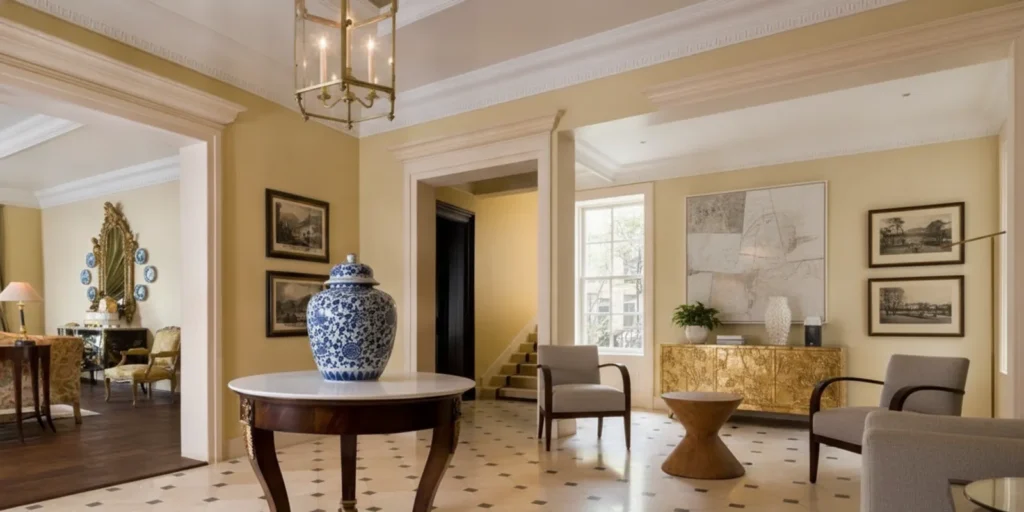
Luxury Interior Design for Fine Art Collectors in New York begins with the collection and the life around it. A residence should give art room to be seen, while remaining comfortable, personal, and fully lived in. For a collector considering a whole-home commission, the work is a considered process: understanding the space in person, learning what matters to the household, and shaping architecture, furnishings, light, and art into a coherent environment.
Begin a conversation about your residence
What should you expect from the first conversation?
The first conversation is a chance to discuss the property, the collection, and the desired scope. It should establish whether the project calls for a comprehensive approach rather than a series of disconnected room decisions. A whole-home plan considers how arrival, movement, gathering, privacy, and display relate across the residence.
Collectors can prepare by describing what they hope the home will feel like, which works are central to the collection, and whether there are practical changes ahead. A move, renovation, growing family, or new pattern of entertaining can all influence the brief. Images, dimensions, and notes are useful starting material, but they cannot replace experiencing the actual rooms.
For CW DESIGN, on-site understanding is essential. The proportions of a room, its natural light, its approach from adjoining spaces, and the character of its materials are difficult to judge in isolation. An initial discussion can clarify the aims; seeing the residence gives the designer a feel for how the interior works as a whole. This distinction matters when a painting, sculpture, or significant piece of furniture needs to be considered in its real architectural setting.
It is also useful to be candid about the collection’s needs and the household’s routines. Are there works that should command a first view? Are there objects that require a quieter setting? Which rooms need to support conversation, reading, or entertaining? These questions form a practical brief without reducing the home to a gallery.
Why should the collection lead the design?
In an art-led residence, artwork is not a finishing touch selected after the furniture. It is part of the design’s beginning. The scale, color, surface, subject, and emotional presence of each work can affect room proportions, sightlines, lighting decisions, and the character of nearby materials.
That does not mean every wall must become a display wall. A considered plan gives important works appropriate presence and allows other areas to rest. It can also bring different kinds of art and objects into thoughtful conversation without forcing them into a single visual formula. The aim is a home that feels collected over time, rather than staged around a repeated motif.
An inventory can help turn a broad collection into useful design information. It need not be a formal catalogue at the outset. A working record might include photographs, approximate dimensions, medium, framing, known installation requirements, and whether a work is currently on display, in storage, or expected to join the residence later. Note which pieces are fixed priorities and which may rotate.
The designer can then consider the collection in relation to the residence: which pieces need more visual space, where a sequence might be experienced, and how one work appears from another room or the entrance. This is a spatial question as much as a decorative one. A composition should make sense from the places where people actually encounter it.
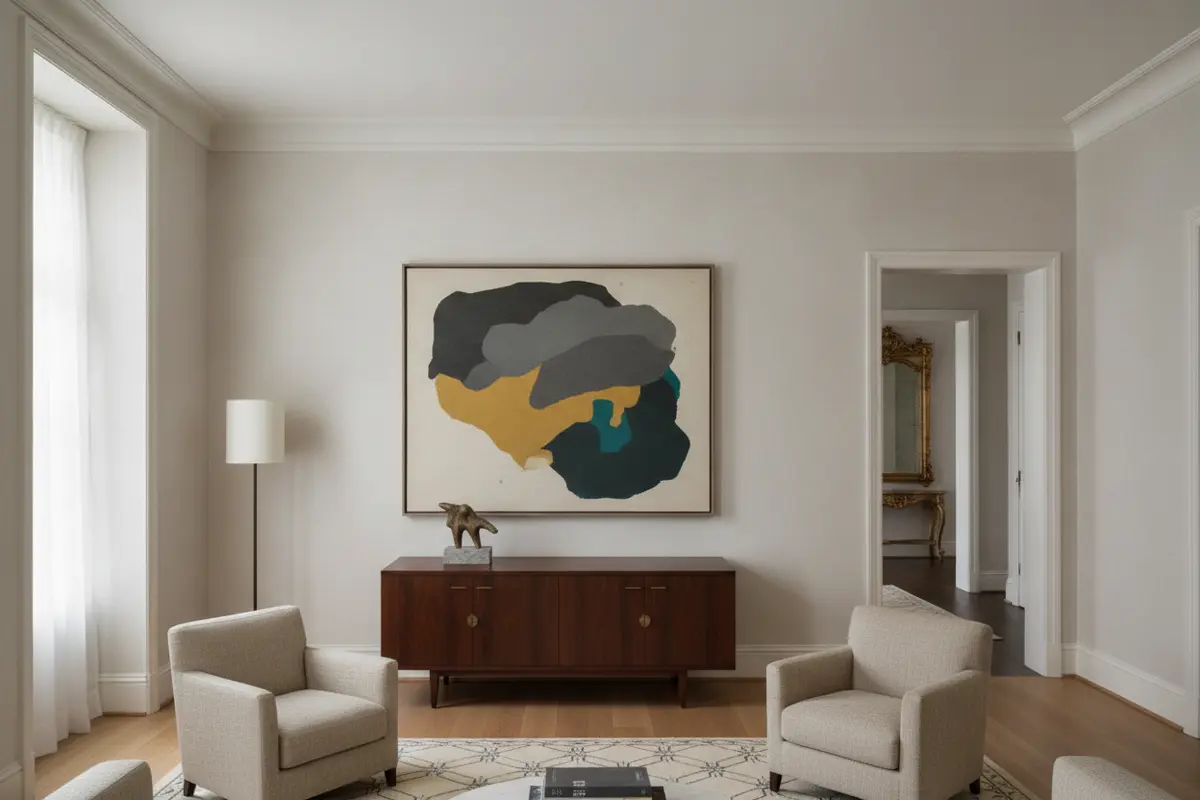
Collectors interested in the broader principles can explore this guide to designing around an art collection and the discussion of interior design for art collectors. Each home still needs its own response; a useful principle is not a substitute for seeing the actual work and space together.
How do architecture and daily life shape the plan?
The residence is more than a container for art. Its architecture establishes volumes, openings, circulation, and existing character. A pre-war apartment, a townhouse, and a new residence each raise different questions. The design should respect what is distinctive about the property while making it work for the people who live there.
Begin with movement. Consider the route from the entry through the main rooms, where a visitor naturally pauses, and how family members move through the home during an ordinary day. Art can be placed to reward a view without narrowing a passage or making a room feel like a corridor. For a broader look at this issue, see planning circulation around art in an open-plan home.
Then consider the rooms in relation to one another. A vivid work may anchor a principal room, while a more intimate piece may suit a study or library. Transitions matter: adjoining rooms need not match, but their finishes, colors, and sightlines should feel intentional. A whole-home approach helps avoid the sense that every room has been designed independently.
Daily use should inform the placement and furnishing plan. Seating can support conversation while preserving a view of a work. Storage can keep practical items accessible without competing visually. In a room used for both entertaining and quiet time, flexible arrangements may be more appropriate than a composition designed for one photograph. The art remains central, but the home must still support its owners.
How do light and finishes support fine art?
Light changes how a work is seen and how the room feels. Begin by observing daylight at different times, including how it shifts across walls and surfaces. Window orientation, shades, nearby buildings, and reflected light can all affect a display decision. The placement of a work should be considered alongside the room’s actual light, not just a plan drawing.
Artificial lighting should be part of the wider scheme. The goal is legibility and atmosphere, not a spotlight on every object. Glare, reflections, shadows, and the visual comfort of people in the room deserve attention. The appropriate solution depends on the work, glazing, location, and existing conditions, so decisions should be made in context. See how artwork lighting can be planned in a luxury home for related considerations.
Wall finishes and surrounding materials set a visual register. A quiet surface can let a complex work hold attention; a nuanced material can add depth without competing. There is no universal rule that art requires blank white walls. Instead, compare the specific work against samples in the room and consider how color, texture, and reflection change under daylight and evening light. The decision should serve both the artwork and the residence.
Finishes should also make sense beyond the display area. A home may contain a mix of collected objects, architectural details, and contemporary furnishings. When materials are selected with care, they create continuity without flattening the differences that give a collection character.
What role do bespoke furnishings and artisan collaborations play?
Some residences benefit from furnishings made for a particular space or purpose. Bespoke work can address an unusual proportion, create useful storage, or give a room a counterpoint to an important artwork. Its value is not novelty for its own sake. A custom piece should solve a real design need and feel at ease alongside the architecture and collection.
Artisan collaboration can bring a high level of material knowledge and handwork to an interior. The design process may involve considering form, finish, scale, and how a piece will be used, then aligning those choices with the larger scheme. Materials and workmanship should be assessed for their character and suitability rather than selected because they are fashionable.
Catherine Weinstock’s multidisciplinary training in interior design, furniture restoration, and fine arts, together with European study, informs an approach attentive to both objects and rooms. Furniture restoration can also be relevant when a collected piece carries history or has a place in the new composition. Whether an object is restored, adapted, or simply positioned with care depends on its condition and the owner’s aims.
For examples of how custom elements can be integrated into a larger residence, explore the Palm project and the Brooklyn townhouse project. They illustrate distinct settings rather than a template to repeat. A bespoke response should arise from the particular home, collection, and client.
How can gallery relationships inform the project?
Collectors may already work with galleries, advisors, conservators, or other trusted specialists. These relationships can provide useful context about a work’s dimensions, medium, framing, handling, and intended display. With the owner’s direction, relevant information can be brought into the design conversation so spatial decisions reflect the piece rather than assumptions about it.
A gallery relationship does not remove the need to assess the residence itself. The design team still needs to understand where the work may be experienced, how people move around it, and how its presence relates to neighboring objects and furnishings. Similarly, a proposed acquisition may be considered as part of the home’s future composition, while leaving room for the collection to evolve.
Communication is most useful when roles and information are clear. Identify who can confirm dimensions or installation considerations, who is coordinating the artwork, and which decisions remain with the owner. This keeps the process respectful of existing relationships and focused on the requirements of the commission.
For a general professional-design context, the American Society of Interior Designers provides a professional association resource. The particular needs of a fine art collection, however, should be addressed in relation to the specific works and residence.
How should you compare design approaches?
Different levels of planning can answer different needs. A collector preparing for a whole-home commission can use the comparison below to identify which questions should be settled together. It is not a ranking; it shows why the broader scope often calls for decisions to be coordinated across rooms.
| Approach | Primary focus | Useful when | What to consider |
|---|---|---|---|
| Single-room refresh | A defined room, its furnishings, finishes, and selected artwork | One space has a clear, contained need | Check how the room connects to adjacent spaces and the wider collection |
| Collection-led room plan | One or more key works and the spaces around them | A particular artwork or grouping needs a considered setting | Assess scale, viewing distance, light, circulation, and neighboring objects together |
| Whole-home commission | Architecture, collection, daily life, furnishings, finishes, and movement across the residence | The home or collection requires a coherent, coordinated transformation | Agree on priorities, project scope, sequence, and how future acquisitions may fit |
The table is a starting point, not a substitute for a conversation about the actual project. Some decisions that look local affect other rooms: changing a wall treatment may alter an artwork’s setting, and moving a major piece may change a sightline through the home. A whole-home perspective helps those relationships remain visible.
What is a useful sequence from consultation to installation?
Every commission is shaped by its own property and brief, but a clear sequence can make complex decisions easier to follow:
- Establish the brief. Discuss the residence, household, collection, priorities, and intended scope. Identify what should be preserved, changed, or resolved first.
- Review the space in person. Observe room proportions, natural light, architectural features, circulation, and the relationships between connected spaces.
- Understand the collection. Gather useful information about key works and objects, their dimensions and display considerations, and the pieces expected to rotate or join the home later.
- Develop the whole-home direction. Coordinate the placement of art with furnishings, finishes, lighting, storage, and the experience of moving through the residence.
- Resolve bespoke elements and sourcing. Determine where a custom piece, restoration, or artisan-made element serves a defined purpose, and evaluate it in relation to the rest of the design.
- Coordinate decisions through installation. Keep the intended composition in view as pieces and finishes come together, making sure the final arrangement serves both the collection and the household.
The sequence does not imply that design is a mechanical checklist. Some questions return as the project develops. A newly understood architectural detail may affect a placement, or a work may require a different setting once its scale is considered in the room. The value of a coordinated process is that those decisions can be revisited in relation to the whole.
Which decisions benefit from an on-site review?
Questions of scale, light, proportion, and circulation depend on the lived space. A painting that seems modest in a photograph may dominate a narrow room; an apparently large work may feel balanced against a high ceiling. A sculpture’s position can change how an entrance is experienced, and a seating arrangement can interrupt or strengthen an important sightline.
Samples and plans are useful working tools, but they should be interpreted in the setting they are meant to serve. Check how a finish looks against the actual architecture, how light behaves at different hours, and whether a proposed arrangement feels comfortable from the room’s usual points of view. An on-site review also helps make practical issues visible before they become part of the finished composition.
CW DESIGN’s work centers on bespoke residential environments, with an emphasis on art, craftsmanship, and a considered relationship between interior and collection. The firm takes on a limited number of engagements. That selectivity supports close attention to complex projects; it is not a promise of a particular schedule or outcome. Learn more about the firm’s design approach and its background and practice.
Discuss your art-led interior design project
Frequently Asked Questions
Should the artwork be chosen before the interior design begins?
Not necessarily. An existing collection can guide the design from the outset, while future acquisitions can be anticipated as the plan develops. The useful first step is to understand which works are central, what may change, and how the household wants to live with the collection.
Does every room need to display art?
No. A residence can give selected works prominence while allowing other rooms and walls to remain quieter. The right balance depends on the collection, the architecture, the household’s routines, and the experience of moving through the home.
Can a design plan account for future acquisitions?
Yes. A brief can distinguish works that are fixed priorities from pieces that may rotate or be acquired later. This helps create a flexible framework without pretending to predict the exact size, character, or placement of every future work.
Why is an on-site review important for a collector’s home?
An on-site review reveals how art, architecture, light, materials, and movement relate in the actual residence. Those conditions influence choices that cannot be settled reliably from an isolated image alone.
For a fine art collector, a well-designed home is not simply a display setting. It is a coherent residence in which the collection, architecture, and daily life are considered together, with room for the owner’s point of view to remain unmistakably present.