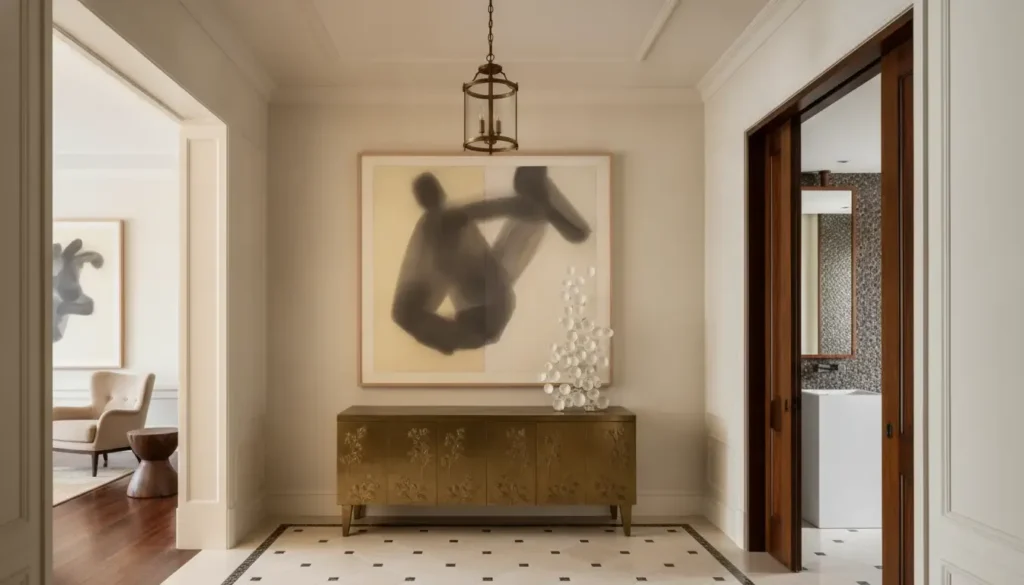
Interior design for contemporary art collectors begins with a different question from conventional decorating: not which style is in fashion, but how will the home give each work room to live, change, and enter into conversation with the collection around it? Contemporary art can be monumental, kinetic, light-based, digital, materially fragile, or deliberately confrontational. The residence must therefore be composed as both a setting for daily life and a flexible framework for serious collecting. CW DESIGN’s art-first design philosophy treats the collection as a starting point, not a finishing layer.
Discuss your contemporary art collection with CW DESIGN
How Contemporary Collections Change the Design Brief
Contemporary collections ask an interior to accommodate movement, scale, technology, and future acquisitions while retaining the warmth of a home. The most successful design does not compete with the art or imitate a commercial gallery. It establishes proportion, light, material restraint, and circulation so that each piece can be experienced clearly and the collection can evolve over time.
A traditional collection may include framed paintings, works on paper, antiques, or sculpture with relatively established display requirements. A contemporary collection can include any of these, but often introduces more variables:
- Scale: A single large canvas may determine the height, width, and visual quiet of an entire room.
- Material: Wax, textiles, untreated wood, metal, pigment, and found objects may each respond differently to light, humidity, dust, and handling.
- Time: Video, sound, projected light, and kinetic pieces may change the atmosphere of a room throughout the day.
- Installation: An artwork may require anchoring, power, clearance, structural support, or a carefully choreographed route through the house.
- Growth: The next acquisition may be unlike anything currently on the walls, so permanent decisions should not eliminate future possibilities.
The result is not a white box. It is an interior with enough discipline to let demanding works remain legible and enough character to support the collector’s life. Furnishings, finishes, and architectural details should be selected for their relationship to the art, rather than arranged around a predetermined decorative formula.
What Does Large-Scale and Installation-Based Art Require?
Large-scale and installation-based art require the designer to think in three dimensions before selecting finishes or furniture. The key considerations are the work’s physical footprint, its viewing distance, the route by which it enters the home, and the way people move around it. A drawing may need intimacy, while a monumental painting needs distance and a sculpture may need to be encountered from several directions.
Early planning prevents a common failure: choosing a wall or room after the architecture is complete, only to discover that the work feels compressed, visually interrupted, or difficult to install. A collection inventory should record dimensions, weight, medium, framing, power requirements, preferred viewing height, and any instructions from the artist, gallery, conservator, or lender. It should also identify works that may be rotated seasonally or moved when the collection grows.
Architecture and furniture then become tools for framing experience. A long sightline can make a single work a destination at the end of a hall. A lower seating arrangement can preserve a broad field of view. A custom plinth can give a sculpture presence without turning it into an obstacle. Concealed storage can protect works that are not on display while keeping the public rooms composed.
For ambitious renovations, the practical questions are equally important. Can the entry, lift, stair, and doorways receive the work? Does the structure support the intended mounting? Can electrical and data services be placed without compromising the room? Will window light, heating, ventilation, or glare affect the work? These questions belong in the design conversation early, alongside the aesthetic direction.
How Should a Home Accommodate Media-Diverse Art?
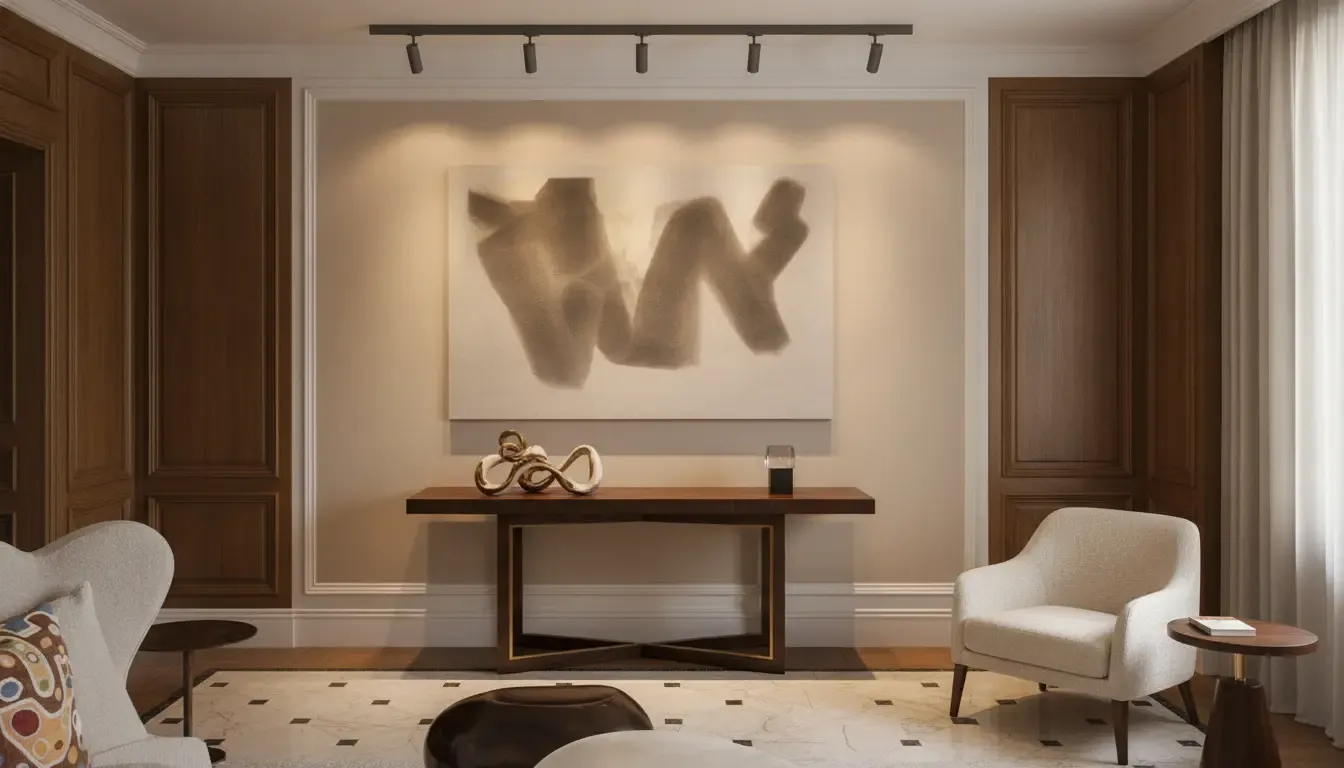
Media-diverse art needs an interior systems plan as much as it needs a visual concept. A painting, video work, sound piece, and light installation may all occupy the same residence, but they should not be treated as interchangeable objects. Their technical and environmental needs should be mapped against the architecture, daily routines, and desired mood of each room.
| Work type | Design question | Useful response |
|---|---|---|
| Large painting | What distance and wall proportion allow it to be read? | Reserve visual breathing room and plan mounting before final finishes. |
| Sculpture | How will it be seen from different approaches? | Protect circulation while creating more than one intentional view. |
| Video or digital work | How should equipment, sound, and daylight be controlled? | Coordinate power, data, acoustic comfort, and light levels discreetly. |
| Installation | How will the work be assembled, maintained, and eventually removed? | Document access, structural requirements, service points, and storage. |
The aim is discretion. A screen should not become the visual center when the work is not running. Speakers, projectors, cables, and controls should be integrated into the architecture or furniture wherever possible. At the same time, concealment must not make operation unnecessarily difficult. A collector should be able to activate, service, or rotate a work without disturbing the room’s composition.
Lighting deserves special attention. The principles described in CW DESIGN’s guide to lighting artwork in a luxury home apply particularly well to contemporary pieces: accurate color, controlled glare, and a hierarchy that allows the work to lead. The correct solution may involve several scenes rather than one fixed setting, especially when a room serves as both a living space and a place for viewing.
Plan a collection-led residence with CW DESIGN
Flexibility Versus Permanence in a Growing Collection
A growing collection needs an interior that can change without appearing unfinished. Flexibility does not mean leaving every wall blank or filling a residence with movable furniture. It means distinguishing between the elements that should endure and the elements that should remain adjustable.
Permanent decisions may include the architectural proportions of a room, the quality of a stone or timber, the alignment of doors and openings, and the infrastructure that supports lighting, power, data, climate, and security. These decisions should create a calm, durable envelope.
Adjustable decisions may include display heights, furniture groupings, plinths, track or gallery lighting, modular shelving, curtains, and the location of smaller works. A thoughtful plan can also reserve future walls, provide discreet storage, and establish more than one route for a large piece to enter the house.
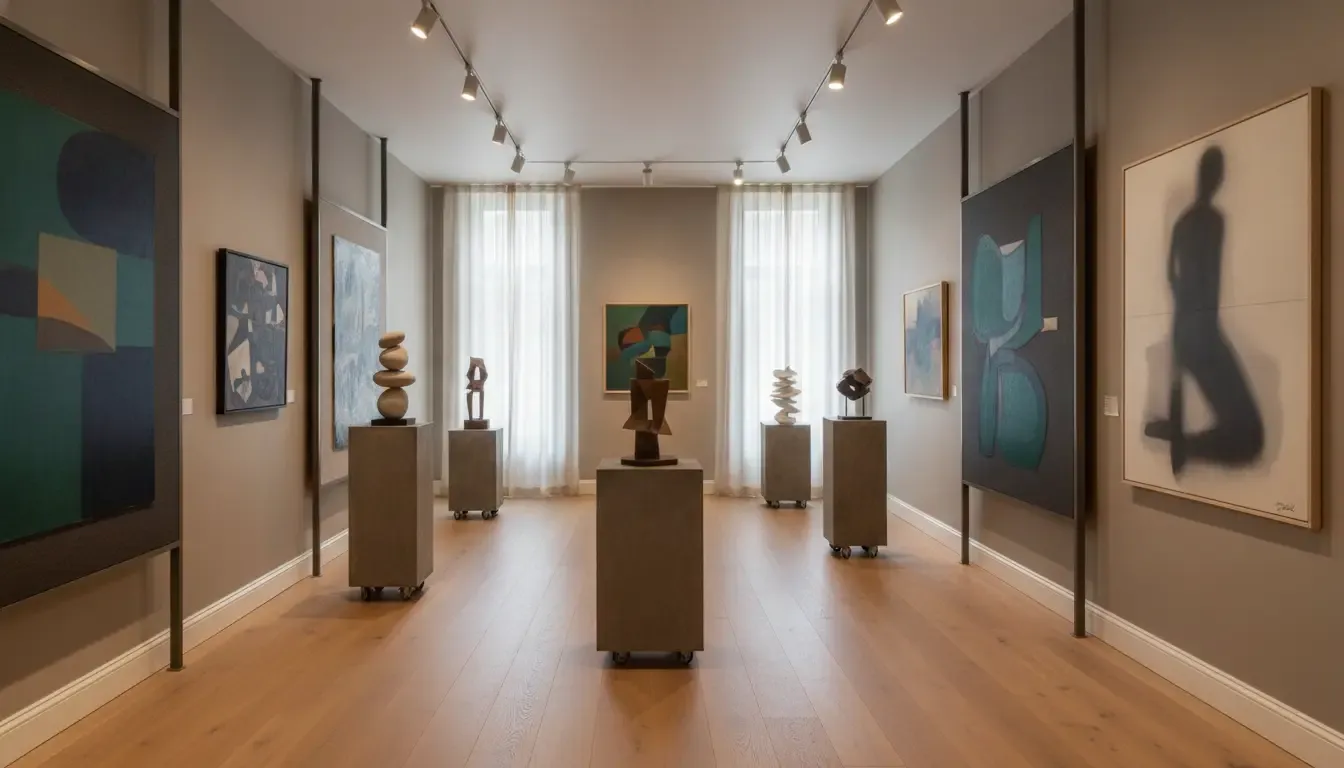
Before a major acquisition, the collector and designer can test the proposed work against the existing composition. That review may lead to a new wall color, a different light scene, a furniture move, or a decision to place the work in another room. The value lies in making the change intentional. A home should be able to receive something unexpected without requiring a complete reinvention.
What Should Collectors Look for in a Design Partner?
Interior design for contemporary art collectors calls for more than an ability to produce a polished room. Look for a designer who can discuss the collection with precision, ask practical questions early, and translate the collector’s priorities into architecture, furnishing, lighting, and installation decisions.
- Collection literacy: The designer should be comfortable discussing medium, scale, provenance, condition, framing, and the emotional importance of individual works.
- Spatial judgment: They should understand sightlines, negative space, circulation, viewing distance, and how a work changes the balance of an entire residence.
- Technical coordination: They should bring architects, lighting specialists, fabricators, installers, and conservators into the process when a project requires their expertise.
- Material knowledge: They should be able to specify finishes and furnishings that support the art without creating a sterile or overly literal gallery.
- Long-term thinking: They should design for the collection the client has now while leaving room for acquisitions, rotations, and changing patterns of life.
CW DESIGN is led by Catherine Weinstock, whose multidisciplinary training spans Interior Design, Furniture Restoration, and Fine Arts, including study in Europe and Italy. That background informs a practice in which art, furniture, materials, and architecture are considered together. The firm’s approach to art and interiors is especially relevant to collectors seeking a residence that feels curated rather than themed.
Why Provenance and Conservation Belong in the Conversation
Provenance and conservation are not administrative details to address after the interior is complete. They affect how a work is handled, installed, lit, stored, insured, documented, and eventually moved. A design team should respect the information supplied by the owner, gallery, artist, lender, or conservator and avoid presenting assumptions as conservation advice.
For a private collection, a practical record may include the work’s artist, title, medium, dimensions, framing, installation instructions, condition notes, preferred environment, and current location. The record can also note which pieces are most sensitive to daylight, vibration, humidity changes, dust, or repeated handling. This information helps the design team make responsible choices without reducing the art to a checklist.
Conservation-minded design is often quiet. It may appear as filtered or carefully controlled light, a stable environment, secure mounting, a clear cleaning protocol, or storage that keeps a work protected and accessible. It may also mean deciding that a piece should not be placed above a heat source or in a high-traffic passage. When specialist advice is needed, the interior designer should coordinate with the appropriate conservator rather than offer a diagnosis.
CW DESIGN’s combined perspective on furniture restoration and fine arts gives collectors a useful point of reference when interiors include historic furnishings alongside contemporary work. The objective is not to make every object look new. It is to create a setting in which age, material, authorship, and use can remain legible.
Frequently Asked Questions
What is interior design for contemporary art collectors?
Interior design for contemporary art collectors is the planning of a residence around the scale, medium, installation, technical, and conservation needs of a changing art collection. It coordinates architecture, lighting, furnishings, materials, circulation, and storage so the home supports both daily life and serious viewing.
How is a contemporary art collection different from a traditional collection?
A contemporary collection may include large-scale, installation-based, kinetic, video, sound, light, or materially sensitive works alongside paintings and sculpture. These pieces can require more planning for power, data, structural support, viewing distance, service access, and future changes to the display.
Can a private residence have gallery-quality art display without feeling cold?
Yes. A residence can use disciplined sightlines, controlled lighting, and thoughtful negative space while retaining warmth through authentic materials, comfortable furnishings, collected objects, and rooms designed for living. The goal is a home with clarity, not a commercial gallery replica.
How should a collector prepare for a new acquisition?
Share the work’s dimensions, medium, weight, framing, installation instructions, condition information, and any environmental requirements with the design team early. Review its entry route, mounting, lighting, viewing distance, and relationship to nearby works before the piece arrives.
Why should conservation be considered during interior design?
Conservation considerations can influence light levels, heat exposure, humidity stability, mounting, storage, cleaning, and handling. Addressing them during design allows the team to coordinate responsibly with qualified conservators and protect the collection without compromising the character of the home.
Begin a conversation about your collection and residence
A contemporary collection is never entirely finished, and the most considered residence acknowledges that fact. With a calm architectural framework, carefully coordinated infrastructure, and a design partner who understands both art and life at home, each new acquisition can become part of an evolving whole. Explore CW DESIGN’s residential projects or learn more about Catherine Weinstock and the studio.