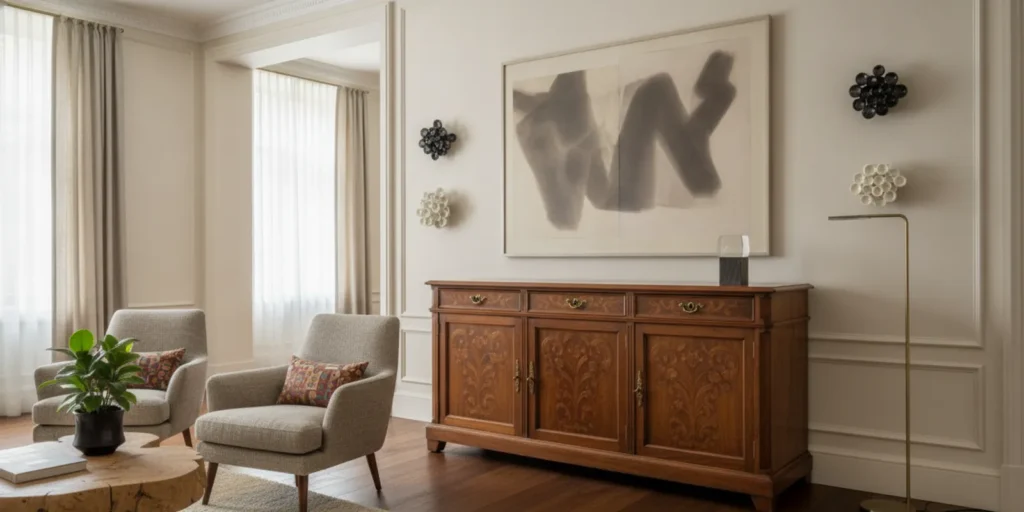
Heirloom furniture restoration interior design is the work of keeping a family piece in a modern home without turning it into a replica of something new. The piece may be a table, a cabinet, or a chair that still carries a relative’s use. The room around it may be quieter, lighter, and organized around art. Both can stay intact if the first decision is about the object, not about a trend.
CW DESIGN treats that decision as part of a whole home, not as a shopping errand. For the wider practice of custom work and craft, see bespoke furniture fabrication and artisan craft. This guide stays with one question: what should happen to a family heirloom before it is asked to live with contemporary art and daily use.
Discuss an heirloom-led interior with CW DESIGN
When an heirloom is worth restoring
An heirloom is worth restoring when its structure, materials, and meaning still support the life the household wants from it. Age alone is not the test. A loose joint or a dull finish is not, by itself, a reason to discard a piece. Sentiment alone is not a reason to strip it either.
Start with what the object still does. A dining table that a family still gathers around has a different case from a fragile desk that cannot take weight. Ask who used it, which marks matter, and whether anyone still wants to sit, store, or simply look. A modest table can matter more than a formally important antique if the memory is real.
Then look at construction. Hand-cut joints, a particular grain, and old repairs are part of the object. So is damage that has gone past character into risk: a split that is moving, a leg that rocks, or a finish that is lifting in sheets. Those are reasons to pause, not reasons to sand.
Replacement is the honest choice when the piece cannot be used safely. When earlier repairs have removed most of the original material, or when the household no longer wants it in the room. Restoration is the better path when a limited intervention can keep the object recognizable and useful. The goal is not a showroom surface. A trace of wear often gives a new room its depth.
In a home built around collected art, furniture joins that conversation. Catherine Weinstock trained in interior design, furniture restoration, and fine arts, including study in Europe. That mix is why a family piece is read as material history, not as a prop that must match the sofa.
What a heritage piece adds to a modern room
A heritage piece adds memory and material at once. It can hold a family story. It can also hold grain, joinery, proportion, and a finish that new production rarely repeats. A good room keeps both, instead of treating the object as either a shrine or a style accessory.
The piece does not need the rest of the interior to copy its period. It can be one steady point among contemporary art, current lighting, and the way people actually live. Old and new feel deliberate when scale, color, and placement are chosen together. They feel accidental when the antique is dropped in to add character and then ignored.
Visible wear is only part of the story. A surface may have been stripped once already. A repair may hide a weak joint. A finish may be more fragile than it looks. The National Park Service Museum Handbook puts the ideal relative humidity for wooden objects, in most of the country, at about 50 percent, plus or minus 5 percent. Below about 30 percent, glue can dry out, joints can loosen, and finishes can turn brittle. That is a care fact, not a design opinion.
Place the object against the art and the architecture, not against a catalog. A carved cabinet can answer a quiet wall. A small desk can sit beside one painting and make a pause in a larger room. Shared tone or a clear difference in scale is enough. Exact matching usually flattens both.
For the art side of that balance, read how a fine art collection is displayed and an art-first approach to a New York interior. The furniture decision should follow the collection, not compete with it.
Conservation or restoration for a family piece
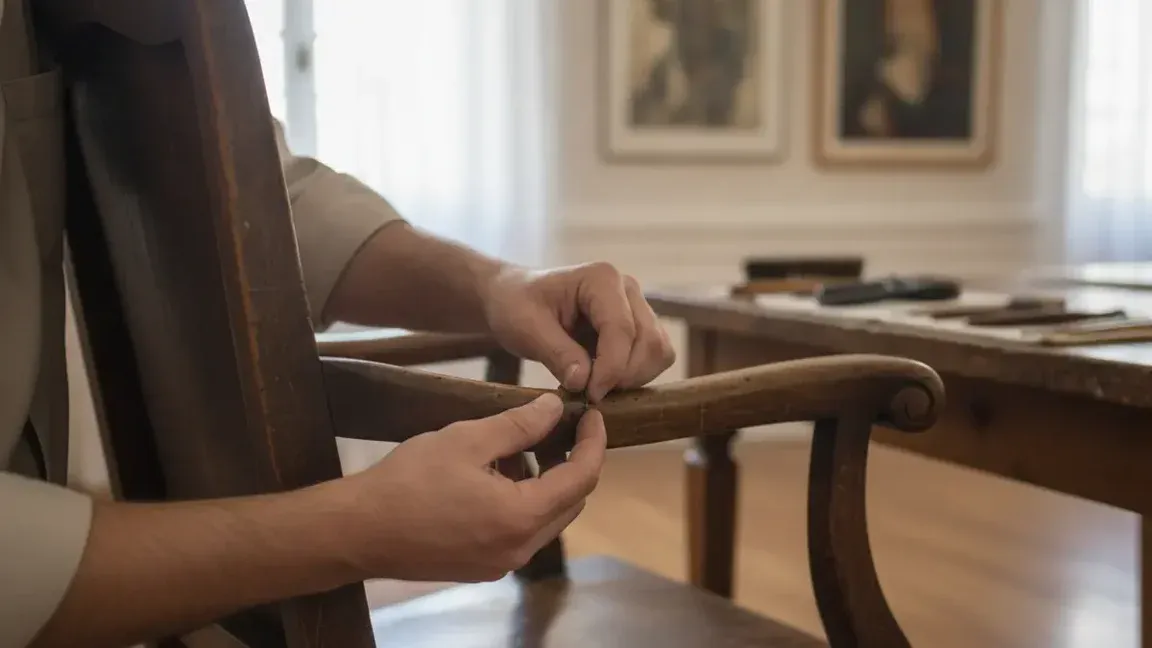
Conservation and restoration are not the same job. Conservation tries to keep original material and stop further loss. Restoration may repair selected damage or return a chosen function, while still leaving the object’s history readable. For a family piece, the right one depends on condition, on what the family wants to keep, and on whether anyone will use it.
Neither word means making it look new. A fragile finish with a clear family history may need almost no touch. A chair that people will sit in may need a stable joint. Even then, the repair should follow the original construction. A professional look, in person, is what separates necessary work from optional cosmetics.
| Question. | Conservation-led care. | Restoration-led work. |
|---|---|---|
| Main aim. | Keep existing material and stop further loss. | Repair a chosen look or use, and keep the history readable. |
| First question. | What is at risk if nothing is done? | What should this piece look like or do next? |
| Typical work. | Gentle handling, notes, and limited stabilization. | A joint repair, a missing part, or careful finish work. |
| Main caution. | Even light cleaning can harm a fragile surface. | Many changes cannot be undone. Agree the scope first. |
Read each row as a briefing aid, not as a diagnosis.
Restoration here does not mean stripping, bleaching, or replacing every worn part. Before any work, name what stays as found, what may be repaired. How visible the repair will be, and whether the piece is for display, rare use, or daily use. If the finish or the history is unclear, ask a qualified furniture conservator rather than testing products at home.
The same National Park Service note describes patina as the worn, warm, satin look of an older finish. It also draws a line between that look and a finish that is actually failing. Protect the unstable surface. Do not sand it away because a newer room prefers a blank plane. The case for a timeless interior is the same idea at room scale: keep what has lasted, and do not chase a surface that will date.
Heirloom furniture restoration interior design in a modern room
A restored piece belongs in a contemporary interior when its place follows the room: architecture, art, walking paths, and daily life. The aim is not to make old and new furniture match. The aim is a clear order, so the heirloom keeps its identity and still helps the room.
Look before you arrange. Note proportion, light, the art already on the walls, and how people move. A large piece needs air. A small one can have presence if it is not buried in a group. The object should meet daily life without losing the reason it was kept.
Color can relate the piece to the room without a perfect match. A warm wood may echo a frame or a floor. A quieter contrast can let the furniture stand alone. Nearby forms can stay simple so a detailed antique is readable. Art and light can carry the conversation across periods.
Use decides place. A chest can hold things and still anchor a wall. A delicate object should sit away from bumps, sun, heat, and harsh cleaning. Doors and drawers should work, and the path around the piece should work too. Those are questions for the person caring for the object and for the designer, especially if the piece will be used every day.
In a collection-first house, not every object leads. Some set the rhythm. A restored heirloom can be the quiet anchor that lets newer art feel continuous rather than staged. See also displaying a fine art collection at home. The furniture should support that display, not shout over it.
How an heirloom is assessed
An heirloom assessment joins the object, what is known about it, what the family wants, and the room it may enter. It should say what is known, what is still uncertain, which changes are needed, and how the piece will be used. That record keeps a sentimental object from being altered before anyone understands it.
Bring what you have: who owned it, how it was used, whether it was repaired, and which features must stay. Old photographs help. Gaps are normal. The point is not to invent a provenance. The point is to hand over real clues before anyone proposes work.
- Name the concern. Write down a wobble, a crack, a stain, a changed finish, or a clash with the intended use. Do not repair it first.
- Rank what matters. Original material, stability, daily use, and a particular look can all matter. A ranked list makes the trade-offs visible.
- Ask for an in-person look. Finish and structure are hard to judge from a photo. CW DESIGN also reads a home by being in it. The room and the role of the piece belong in the same visit.
- Agree the scope. Ask what will be done, what will be left, what is uncertain, and how the result will be reviewed. Keep those notes as the work proceeds.
- Plan the place. Scale, access, light, neighboring art, and real use should be decided together. The setting should help the object last, not only help it photograph.
Custom fabrication is a different decision, covered in CW DESIGN’s guide to bespoke furniture and interior design. An heirloom assessment is about a piece that already exists. Local specialist selection for antique work in New York is a separate question, owned by the studio’s antique furniture restoration guide. This article does not repeat that hiring brief.
What to leave alone
Some of the best care is refusal. A family piece can lose more in an afternoon of enthusiastic cleaning than it lost in fifty years of ordinary use. If you are not sure what the surface is, do not oil it, wax it, or try to revive it with a hardware-store kit.
Sun, heat, and a dry winter are quiet threats. Direct light fades stain and makes a finish brittle. A radiator or a sunny bay can pull moisture out of a panel until a joint opens. The National Park Service notes that a rise in relative humidity, from about 30 percent to about 70 percent. Can move wood enough to split a panel, lift veneer, or open a joint. A townhouse with strong seasonal swings needs that fact in the plan, not as a footnote after the damage.
Hardware tells its own history. Old pulls, locks, and keyholes are often original evidence. Replacing them with new copies can erase the clue that dated the piece. Dust gently. Leave corrosion and repairs to someone who can say whether the metal is stable.
Upholstery is a separate decision from the wood. A worn seat may be the comfortable, honest surface. A failing frame under that seat is a safety issue. Do not assume that new fabric is an upgrade. Ask whether the structure underneath can take another generation of use.
Write the limits down before anyone starts. A short note can say what stays as found, which joints may be tightened, and that the finish is not to be touched. It can also require a review in the room before the work is called done. That note protects the object and the people responsible for it. It gives the interior a stable fact to design around, instead of a moving target.
CW DESIGN does this work on site, in the home. Because a photograph cannot show how afternoon light hits a finish or how a door swing meets a chair. The studio takes a small number of whole-home commissions, not a queue of single-chair touch-ups. If the heirloom is one object inside a larger collected residence, that is the right scale for the conversation.
Let the history stay in the room
A family piece does not have to set the style of a whole room. It also should not be changed just to look flawless. The careful future might be a light stabilization, a limited repair, or simply a place where its age can be seen. The choice has to hold condition, meaning, and how the household lives.
The larger opportunity in a bespoke interior is to let old and new read as one story. That takes attention to the object, the collection, and the room. It is not a formula. An on-site process can settle where the heirloom sits and what about it should remain unmistakable.
Start a conversation about a collected home
Frequently asked questions
Should every family heirloom be restored?
No. Care and memory are reasons to look closely, not reasons to treat every piece. Condition, materials, use, and the family’s priorities decide. Some objects should be left almost alone. Others can take a limited repair.
Does restoration mean making furniture look new?
No. It can fix selected damage or use while keeping age and character. Agree the result, and the limits, before any work starts.
Can an antique piece work in a modern room?
Yes. Scale, place, light, materials, and the art nearby can relate objects from different periods. They do not have to match.
What should I prepare before an assessment?
Gather the history you know, list what you can see, and say what you hope to keep or change. Do not clean or repair the piece with unfamiliar products before a qualified person has seen it.