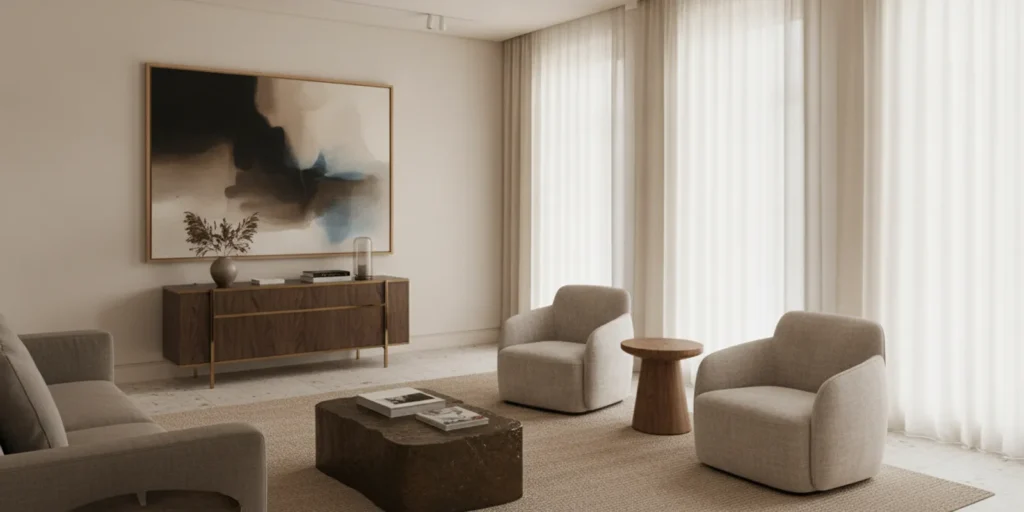
In a home shaped around a collection, daylight can give a room an immediacy that artificial illumination alone cannot. It also changes over the course of a day and across the seasons. A thoughtful natural light contemporary art home is therefore planned around the relationship between the windows, the works, the architecture, and the way people live in the space—not around a single photograph or a fixed arrangement.
Discuss your home and collection with CW DESIGN
Why should daylight be considered alongside the collection?
Natural light is not simply a decorative effect. It shapes how color, texture, scale, and atmosphere are perceived at different times. A painting may feel quiet in the morning and more vivid later in the day. A sculpture can cast changing shadows. Reflections in glazing may appear or disappear as the sun moves. Those shifts can be part of the pleasure of living with art, provided they are understood in advance.
The first step is to consider the works themselves. Medium, materials, condition, glazing, and the collector’s priorities all influence how a piece should be situated. A work intended to anchor a principal room may call for a different setting from a piece that is more comfortably viewed in a quieter study. There is no universal window distance or orientation that suits every object and every home.
Begin by looking at the collection as a whole: which works are central to the home, which can move, and which have particular conservation or handling considerations? A considered plan for designing around an art collection gives the rooms a coherent starting point. The architecture and furnishings can then support the art while preserving the character of the residence.
How can you understand the light in a room?
A room’s orientation is useful, but it does not tell the complete story. Nearby buildings, trees, balconies, window depth, exterior surfaces, and the height of a floor can all affect how daylight enters. Interior finishes matter, too: pale walls may distribute light differently from a deep, reflective surface, while a reveal or curtain can alter the way light reaches a wall.
Observe the room at several points in the day rather than making a decision from one visit. Notice where direct sun falls, how long it remains, and whether the brightest area shifts across the walls or floor. Repeat the observation in another season if possible. The angle and duration of daylight change, and a room that seems evenly lit on a cloudy day may behave differently in stronger sun.
- Map the windows. Note their direction, dimensions, glazing, exterior obstructions, and any existing shade or curtain.
- Watch the light move. Record the time and location of direct sun, glare, reflected light, and strong contrast.
- Notice the viewing position. Stand where people will sit, enter, and pass through. A bright window behind a viewer can affect the experience of an artwork.
- Observe the room in use. Consider when the room is occupied and whether curtains or shades are likely to be drawn.
- Identify sensitive works. Ask a qualified conservator for object-specific advice when material, condition, or provenance calls for it.
This observation is not an attempt to reduce a room to measurements alone. It helps distinguish a pleasant wash of daylight from a concentrated patch of sun, and an attractive change in atmosphere from a recurring distraction. For collectors, this kind of early attention can inform the broader interior design approach for an art-filled home.
What does daylight mean for the artwork itself?
Light exposure deserves care because different materials and finishes may respond differently. It is unwise to assume that every work can tolerate the same conditions, or that a window treatment alone resolves every concern. A conservator familiar with the particular work can advise on its needs. The American Institute for Conservation is a professional resource for learning about conservation and finding guidance from conservation specialists; see the American Institute for Conservation.
For a home design discussion, the useful question is not simply, “Is this room bright?” Ask instead: where does the light fall, how predictable is it, and what is known about the work? Consider whether a piece is framed behind glazing, whether reflections interfere with viewing, and whether the room’s use makes consistent filtering practical. Do not make a conservation decision based only on appearance or on a general rule of thumb.
There is also a distinction between protecting a work and experiencing it. A room that is too visually controlled may lose the open, inhabited quality the owner values. The aim is to understand the trade-offs and make deliberate choices: perhaps a principal work belongs on a wall away from direct sun, while other objects can occupy a brighter transition area. This decision should follow the collection and the individual spaces, not a formula.
How can you filter daylight without flattening a room?
Window treatments can moderate brightness, soften contrast, and contribute to the room’s composition. Their role is not purely technical. A translucent layer may give a room a gentle, shifting glow; an adjustable shade can offer more control; a lined treatment may help create a distinct evening atmosphere. The appropriate solution depends on the window, the artwork, privacy needs, and the interior as a whole.
Consider how a treatment will work in daily life. Can it be adjusted easily? Does it cover the area of glass that creates the strongest glare? Will it obscure an important view or interrupt architectural detail? A beautiful treatment that is difficult to operate may not be used consistently. Conversely, a simple control that fits naturally into the routine can make a room more adaptable.
| Approach | What it can contribute | Questions to resolve |
|---|---|---|
| Sheer or translucent curtain | Softens the view of a bright window and can diffuse incoming daylight. | Will it provide enough control at the brightest time? Does its color or texture suit the room? |
| Adjustable shade | Allows the level of daylight to change with the time of day and use of the room. | Is the control easy to reach and operate? How does the shade look when raised or lowered? |
| Layered window treatment | Offers more than one setting, from filtered daylight to greater privacy or shade. | Can the layers be coordinated with the architecture and used without visual clutter? |
| Artwork placement away from direct sun | Can reduce direct exposure while keeping the work within the room’s visual composition. | Does the alternate wall provide a strong viewing experience and suit the work’s scale? |
| Object-specific conservation advice | Helps inform decisions for a work with particular material or condition needs. | Has a qualified conservator considered the actual object and its display context? |
These approaches are not interchangeable prescriptions. The table is a way to frame the conversation, not a substitute for considering the specific room and artwork. Window coverings can also affect the perceived color of daylight and the visual balance of a wall, so samples and in-room review are more useful than choosing from a description alone.
How should room planning support both art and daily life?
A work of art is experienced from particular places: the entrance, a chair, a dining table, or a passage through the home. The intended viewing distance, the height and scale of the work, and the room’s circulation all matter. Daylight should be considered from these actual vantage points. A window may appear beautifully bright in a floor plan while producing distracting reflections from the seat where the owner spends the most time.
Think about the room’s different uses before fixing the art plan. A living room might need to feel open in the morning and intimate in the evening. A dining space has a different rhythm from a hallway. A collection may include works of varied scale and medium, and not every piece needs to compete for the same visual prominence. The composition of the home can allow moments of focus and quieter intervals.
Furniture placement can help establish those relationships. A seat may turn toward a work without blocking circulation; a table can leave a comfortable viewing distance; a tall object can be positioned where its silhouette has room to read. Existing architecture may suggest a natural focal point, but the collection may call for another arrangement. The goal is not to make each room look like a gallery. It is to create a home in which art and daily life inform one another.
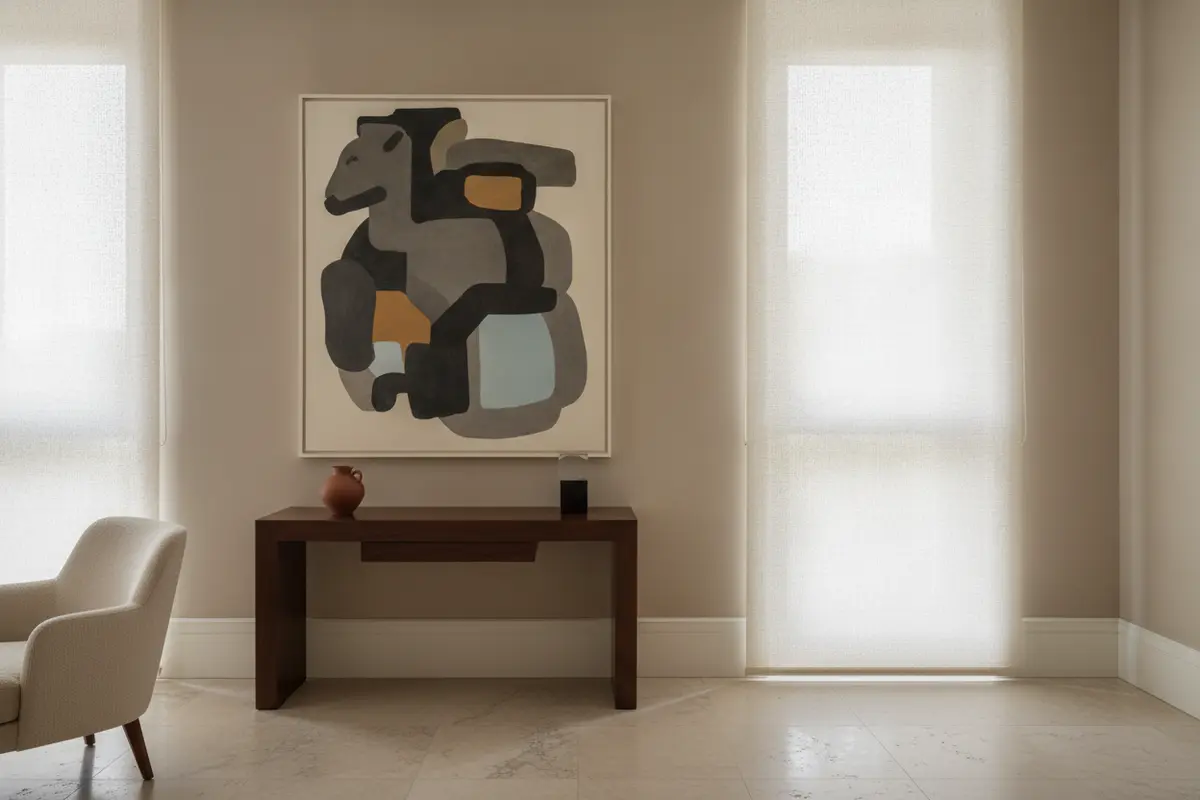
For a whole-home commission, this requires looking beyond a single wall. The relationship among rooms, thresholds, and views can influence where the strongest work belongs and how the collection unfolds. CW DESIGN’s design approach begins with an understanding of the space itself, rather than treating the artwork as a final layer. Examples of a broader residential transformation can be seen in the Tribeca loft and Brooklyn townhouse projects.
Which decisions are best made on site?
Some questions are difficult to settle through photographs or plans alone. A visit makes it possible to see the quality and movement of daylight, notice reflections, understand the proportions of a room, and experience the views from its principal positions. It also helps connect the home’s architecture to the owner’s collection and habits. This is particularly important when a project involves several rooms or a full residence, where one decision can affect the sequence and balance of the whole.
For that reason, the design conversation should include the actual space. Bring the collection into the discussion through an inventory, photographs, dimensions, and any known conservation information. Identify which works are essential to the project and which arrangements remain open. If a work is especially light-sensitive or its condition is uncertain, consult a conservator before deciding on a display location.
Then assess the room in person at useful times, consider how the windows and furnishings interact, and compare possible arrangements. This on-site process can address what a static image cannot: how the room feels as daylight changes and how the artwork reads in everyday use. To understand how the firm’s work brings together objects, architecture, and interiors, explore CW DESIGN’s residential projects and its design perspective.
What is a practical sequence for planning?
A clear sequence keeps the decisions connected instead of treating window coverings, artwork, and furniture as separate choices. Use these steps as a starting point for a collection-led discussion:
- Clarify the collection. Identify the works that shape the project, their dimensions and media, and any specific care information already available.
- Read the residence. Review the windows, architecture, views, existing finishes, circulation, and the rooms’ primary uses.
- Observe daylight. Note direct sun, changing brightness, glare, and reflections at different times rather than relying on a single impression.
- Establish viewing priorities. Decide where the most important works should be encountered and from which positions.
- Develop room arrangements. Test how placement, furniture, and circulation can support both a considered view and comfortable use.
- Choose light controls in context. Consider treatments and other interventions as part of the architecture and the owner’s daily routine.
- Seek specialist guidance when needed. Ask a conservator about the needs of a particular work before relying on generalized advice.
- Review the whole composition. Revisit the decisions across rooms so the home feels coherent rather than like a series of isolated displays.
This sequence is especially useful when art, architecture, and furnishings are being considered together. It does not promise that every work can occupy any preferred wall; instead, it makes the reasoning visible and helps the owner decide where flexibility matters most.
How does daylight planning fit into a larger home commission?
In a substantial residential project, art and light decisions affect more than display. They can influence the palette, surface choices, window treatments, furniture arrangement, and the way one room leads into another. The collection may determine which views should remain open, where a quiet pause is needed, and how the home’s character develops from public rooms to more private spaces.
Catherine Weinstock’s background spans Interior Design, Furniture Restoration, and Fine Arts, supported by European study. That multidisciplinary perspective is relevant when a home calls for careful coordination of art, existing furnishings, materials, and architectural context. Her work is grounded in the understanding of a particular place; CW DESIGN does not offer remote or virtual interior design. Learn more about Catherine Weinstock and CW DESIGN, or see the firm’s Hempstead House project for another example of a room shaped around art and objects.
The best result is not necessarily the brightest room or the most controlled one. It is a home where the collection can be encountered with care, where daylight contributes to the experience without overwhelming it, and where practical choices feel integral to the design. A collection-first design perspective keeps those priorities in view across the residence.
Start a conversation about your residence
Frequently Asked Questions
Should contemporary art be placed near a window?
It depends on the work, the window, and the quality of light in that location. A window-side position may contribute to the room’s atmosphere, but direct sun, reflections, and the artwork’s materials should be considered. Review the specific work and room, and seek conservation advice when appropriate.
Is indirect daylight always safe for artwork?
No single description of light is enough to determine what is appropriate for every work. Materials, condition, duration of exposure, glazing, and the room all matter. Ask a qualified conservator for object-specific guidance rather than relying on a universal placement rule.
Can window treatments solve every daylight concern?
No. Treatments can help manage brightness, glare, privacy, and atmosphere, but they should be selected in relation to the window and the work. A different artwork location or specialist advice may also be needed.
When should daylight be considered in a renovation?
Consider it early, while the collection, room use, furnishings, and architectural decisions are still being coordinated. Early observation can reveal where light changes and help keep artwork placement from becoming an afterthought.
When daylight, architecture, and a collection are considered together, a residence can feel both richly personal and thoughtfully composed. The guiding decisions should respond to the actual works, the actual rooms, and the life the owner wants to lead there.