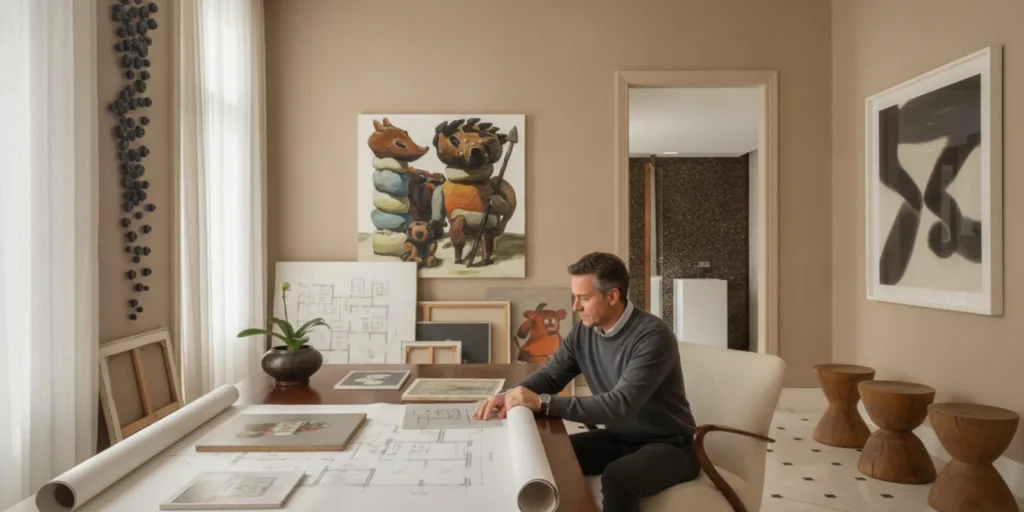
An interior design brief for an art collection is not simply a list of favorite colors, rooms, or objects. It explains how the collection, the residence, and the way you live should inform the design decisions ahead. A focused brief helps a designer understand what must be protected, what needs to change, and what questions should be resolved early, before the project moves into detailed planning.
Discuss your collection and residence with CW DESIGN
What should an interior design brief for an art collection help a designer understand?
The brief should give a clear account of the relationship between the art and the home. It is not a complete design or a demand that every answer be settled in advance. Instead, it gives the designer a reliable starting point for a conversation and a framework for making choices.
Begin with the collection’s character and significance. Describe the kinds of works you own, how you acquired them, and what matters most about living with them. A concise description is more useful than a long inventory without context. For example, note that a group of works needs to be seen together, or that one particular piece has a strong personal history. The point is to explain the relationships and priorities that may affect the rooms.
Then connect those priorities to the residence. A brief should say which spaces are involved, how the household uses them, and what the project is expected to address. A whole-home commission may involve circulation, architectural features, furnishings, lighting, and the placement of art in conversation with one another. Distinguish the essential outcomes from preferences that can remain open to design development.
CW DESIGN’s approach to bespoke interior design begins with the individual space and the people who live in it. A useful brief supports that on-site understanding; it does not replace a visit or try to prescribe a finished scheme from a distance.
How do you describe the collection without turning the brief into an inventory?
Record enough information to help the designer recognize the collection’s scale, variety, and important connections. You do not need to document every work with museum-level detail before a first conversation. Start with what influences the design most.
- Types of work: Note whether the collection includes paintings, works on paper, photography, sculpture, or objects, and whether any pieces have unusual physical requirements.
- Scale and grouping: Identify a few larger or especially important works, as well as groups that you see as related. Approximate dimensions are helpful when available.
- Priority: Say which pieces should anchor the experience of a room, which should remain visible in everyday life, and which may rotate or be stored.
- Meaning: Explain a work’s personal or cultural significance when that meaning affects how you want it encountered.
- Known care needs: Share any conservation guidance or handling concerns you already have. Do not guess at technical requirements; flag questions for the appropriate specialist.
Choose a small set of representative images rather than attaching an unedited archive. Include a view of each work and, where useful, a photograph showing its present setting. Label images with the artist or maker, title if known, approximate size, medium if known, and the room where the work currently lives. Mark uncertain details as unknown instead of filling gaps with assumptions.
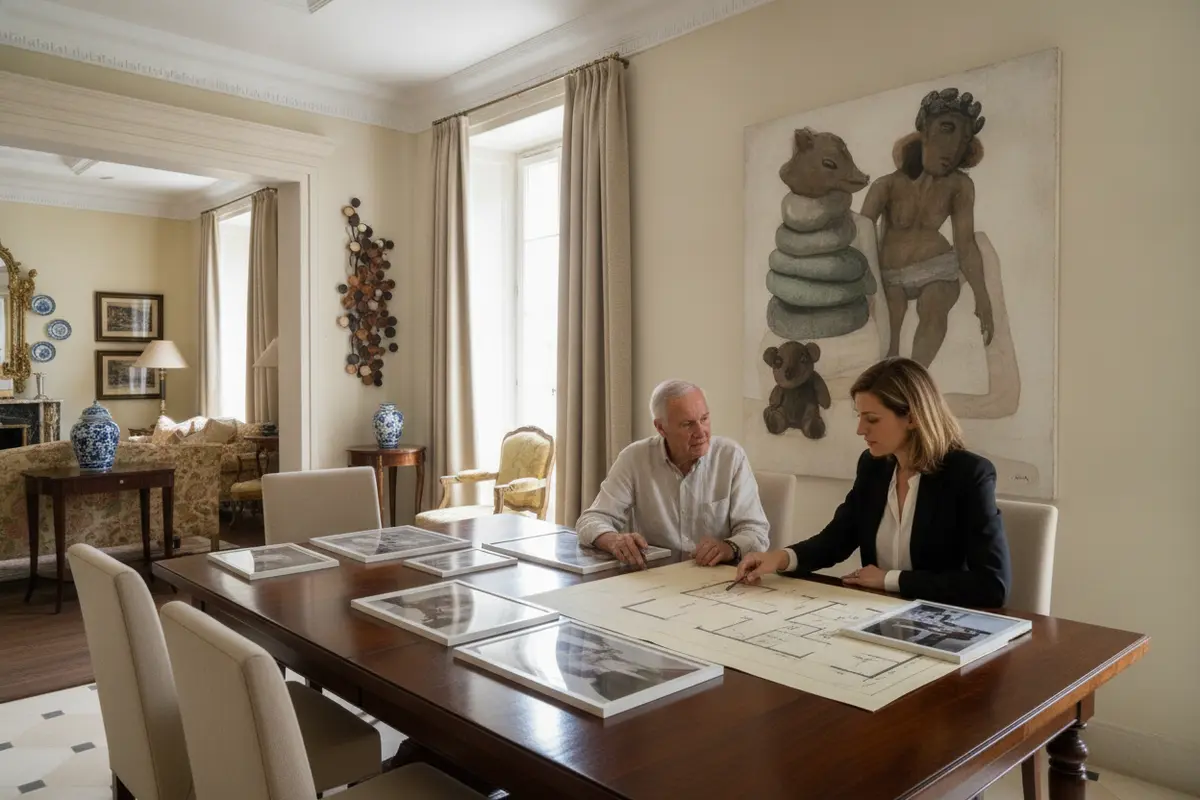
For visual references beyond the collection, separate artwork you own from images that express a mood, material, or spatial quality. Keep the origin of reference images clear, and explain what you are responding to in each one. A reference should communicate an idea, not be mistaken for a request to reproduce another interior.
What information belongs in an interior design brief for an art collection?
A collection-first brief still has to describe the home as a place to live. Share the property type and the areas under consideration, but also explain how the rooms connect. An artwork may be experienced from a doorway, across a living room, or along a daily route. That context can matter as much as the wall where it hangs.
List architectural features you value and those that may need attention: original details, ceiling heights, windows, built-ins, transitions between rooms, or views. If you have existing plans or photographs, they may help orient the discussion, but they are not a substitute for an in-person assessment. The designer needs to understand the actual proportions, light, circulation, and character of the home.
Make clear whether the project involves a whole residence or a defined group of spaces, and note any known renovation work or coordination questions. If the home is occupied during work, explain the practical implications. Avoid assuming that an art-related decision can be made in isolation from construction, furnishings, or the way a room functions.
Relevant examples can make the brief more concrete. CW DESIGN’s Tribeca loft project reflects the meeting of pre-war architecture and art integration, while the Brooklyn townhouse illustrates a larger residential transformation with historic context. These are reference points, not templates: your brief should explain what your own home and collection require.
How should daily life shape the design brief?
Describe ordinary use, not only how the home looks on a special occasion. Who lives there? Which rooms are used most? Do you entertain, work at home, read, listen to music, or need particular areas to remain quiet? Are there children, pets, accessibility needs, or household routines that affect circulation and the placement of objects? Include only details that are relevant to the project, but be specific enough to make them actionable.
Consider how you want to experience the collection throughout a typical day. Do you want to encounter certain works on entering the home? Is there a room where you prefer a more contemplative atmosphere? Are there pieces you would rather enjoy privately than display prominently? These answers help explain how the collection should participate in the life of the home instead of being treated as a static arrangement.
It can help to distinguish three levels of preference:
- Must preserve: Essential relationships, pieces, functions, or architectural features that should guide the work.
- Would welcome: Qualities you hope to achieve but are open to refining with the designer.
- Open question: Decisions where you want professional judgment, such as whether a piece belongs in a particular room or how a space should be rebalanced.
This distinction protects the collection’s priorities without closing off thoughtful alternatives. It also helps the designer see where you are seeking a considered recommendation rather than simply asking for an existing preference to be repeated.
Which early decisions should the brief clarify?
A strong brief flags decisions that can affect the entire project. It does not need to settle them all. Identify the questions you believe should be examined early, then share any useful background so the designer can assess them on site.
| Brief area | What to record | Why it matters early |
|---|---|---|
| Collection priorities | Anchor works, connected groups, pieces with special meaning | Helps frame how spaces and sightlines may relate to the art |
| Residence | Rooms involved, valued features, known renovation context | Connects collection decisions with the actual architecture |
| Daily life | Routines, room uses, entertaining, privacy, household needs | Keeps the home functional as well as visually considered |
| Care and installation questions | Known handling guidance, unusual dimensions, unanswered concerns | Surfaces issues that may require specialist input or coordination |
| Decision-making | Who will participate, who gives final direction, preferred way to review | Clarifies how the project conversation and approvals can proceed |
| Scope and timing context | Areas under consideration, known milestones, constraints already identified | Helps set a realistic basis for defining the work together |
Do not turn this table into a checklist that forces premature answers. For example, if you are unsure whether a painting should remain in its current room, state that uncertainty and describe what you value about the present arrangement. A designer can consider it alongside the room, the collection, and the broader commission.
It may help to keep facts, preferences, and questions visibly separate. “The work is approximately this size” is a fact you can verify; “I want it to be the first thing I see” is a desired experience; “Could it work in the dining room?” is a question for exploration. This simple distinction keeps a brief from making a guess look like a requirement. When details are approximate, say so. When a condition or installation issue is uncertain, identify it for follow-up rather than trying to solve it in the document.
Bring supporting material in a form that is easy to review: a short written brief, a small set of labeled images, and any available plans or notes about the residence. You can keep a separate list of decisions as the conversation develops, especially if several rooms or household members are involved. That later record can capture what has been discussed without making the initial brief carry every project detail. Keep the brief focused on the context and priorities that should guide those decisions.
It is also useful to say who will take part in decisions. If several people share the home or collection, note who should attend the initial conversation and how differing priorities should be understood. The aim is not to create bureaucracy. It is to avoid discovering late that an important perspective or practical requirement was missing from the initial discussion.
How can you make the brief useful without overdesigning the project?
Keep the document edited. A short narrative, a few labeled images, and a clear list of questions can be more useful than a large presentation that mixes unrelated inspiration with firm instructions. Organize it so a designer can find the essentials quickly:
- Project in one paragraph: Describe the home, the collection’s role, and the broad outcome you hope to explore.
- Collection priorities: Summarize key works or relationships and identify anything that needs careful attention.
- Home and daily life: Explain the rooms, routines, and architectural context that shape the brief.
- References: Add a small, captioned group of images with a sentence about what each reference communicates.
- Open questions: List the choices where you want the designer’s perspective rather than prescribing a solution.
Use precise language, but leave room for interpretation. “I want the largest painting to be visible from the entrance” describes an experience to explore. “Use this exact color and place the painting on this wall” may prematurely decide matters that depend on the site, the art, and the full design. If you have non-negotiable requirements, state them plainly and explain why they matter.
Finally, treat the brief as the start of a working conversation. It may be refined after a designer visits the residence and understands the collection in context. CW DESIGN’s background in interior design, furniture restoration, and fine arts informs a multidisciplinary perspective, while each commission still needs to be considered on its own terms. For examples of how different residences and collections call for distinct responses, explore CW DESIGN’s project portfolio, including The Palm and Hempstead House.
Begin a conversation about your art-led residence
Frequently Asked Questions
How long should an interior design brief for an art collection be?
There is no required length. Aim for a focused document that explains the collection’s priorities, the home, daily life, and the questions that need discussion. A concise brief with labeled references is easier to use than pages of unorganized notes.
Should I include every artwork in the collection?
Not necessarily at the outset. Start with works that are central to the project, groups that need to be considered together, and pieces with relevant dimensions or care concerns. You can make a fuller inventory when it is useful to the work.
Should I choose a color palette before meeting a designer?
You may share colors or materials you respond to, but treat them as preferences rather than a finished scheme. Describe what appeals to you and how you want the rooms to feel. The collection, architecture, and actual light need to be considered together.
Can a brief replace an on-site visit?
No. A brief communicates priorities and context, but it cannot convey the full character, proportions, light, or circulation of a residence. An on-site visit allows the designer to understand the space before shaping a response.
A considered brief gives your collection, residence, and daily life equal attention, while leaving the design open to informed judgment. That balance is the right foundation for a bespoke home shaped around art.
Pingback: Scale and Proportion Art Residence: Making Art Feel at Home – CW DESIGN