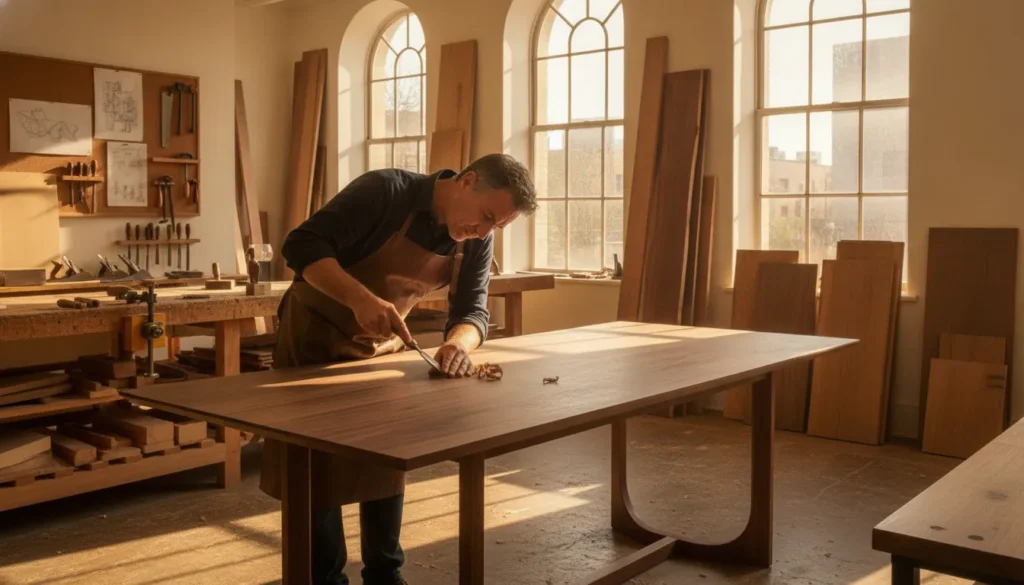
Furniture can do more than fill a room. In an art-led home, a table, cabinet, or chair must hold its own beside the collection while belonging unmistakably to the architecture around it. That requires decisions about proportion, materials, finish, and use to be made together from the beginning.
Bespoke furniture fabrication interior design brings together a tailored design brief, material expertise, artisan making. And careful installation to create pieces for one specific space, collection, and way of living. At CW DESIGN, that work is informed by Catherine Weinstock’s training in interior design, furniture restoration, and fine arts.
The result is not simply a custom object. It may be a new commission, the thoughtful restoration of an existing piece, or a collaboration with an artisan whose techniques add depth to the interior. Understanding how these disciplines meet clarifies why bespoke work begins with the character of the home and the people who inhabit it.
Contact CW DESIGN to begin a bespoke furniture fabrication commission.
What Does Bespoke Furniture Fabrication Mean in Interior Design?
Bespoke furniture fabrication is the full-service craft of conceiving, designing, and building a one-of-a-kind piece to an individual specification. It begins with the character of a room, the needs of the people who use it, and the objects that give the interior meaning. Rather than selecting a standard form and adapting the space around it. The designer develops a considered piece whose proportions, materials, finish, and function belong to that particular setting.
In a sophisticated home, this distinction is consequential. A bespoke cabinet may be shaped to frame an important painting. While a dining table can be developed around the scale of a collection, the architecture of the room, and the rituals of daily life. The result is not simply furniture that fits. It is furniture that contributes to the composition of an interior and remains legible as an expression of its owner.
A full-service discipline, not a finishing detail
Custom fabrication encompasses the creative and technical work required to bring an original design into being. It may involve developing drawings, refining proportions, selecting appropriate materials, coordinating specialist makers, and resolving the practical requirements of construction and installation. Technical skill gives the piece structural integrity and precision. Creative vision gives it presence, harmony, and a sense of place. Together, they make bespoke furniture fabrication an art form within interior design.
This approach is especially valuable when a room must accommodate significant artwork or an unusual architectural condition. The furniture is developed in response to the complete environment, rather than treated as an isolated purchase. Details that might otherwise appear incidental, such as a reveal, hinge, grain direction, or edge profile, become part of a coherent visual language.
Why every commission is individual
CW DESIGN approaches this work as a boutique luxury interior design and furniture restoration firm. Each project is bespoke, and no two jobs are the same. The firm’s multidisciplinary foundation in Interior Design, Furniture Restoration, and Fine Arts supports a view of furniture that is both practical and culturally aware. A new piece may need to stand beside an heirloom, hold its own against a major artwork, or quietly resolve a relationship between rooms.
That is why bespoke furniture fabrication in interior design is not a preset package or a catalogue exercise. It is a collaborative process of observation, interpretation, and making. To see how this art-centric perspective informs a wider commission, explore CW DESIGN’s artisan design philosophy and the role of furniture within a carefully curated interior.
Why Artisan Craft and Custom Fabrication Elevate a Luxury Interior
In a luxury interior, furniture is not simply placed within the architecture. It helps establish the room’s character, scale, and relationship to the art it holds. Handmade, curated pieces can respond to those conditions with a precision that standard forms rarely achieve. Their proportions, materials, and finishes are considered in relation to the collection, the light, and the way the space will be lived in.
Custom furniture fabrication brings woodworking skill into dialogue with design and artistry. The result is not a decorative object added at the end of a scheme, but a piece conceived as part of the interior from the beginning. A table may frame a painting across the room. A cabinet may carry the visual weight of a sculpture while providing discreet storage. A chair, console, or desk can be shaped to make an awkward architectural transition feel intentional.
Furniture as functional jewelry
The finest bespoke pieces have the presence of functional jewelry. They bring distinction to a room while serving a practical purpose, expressing the homeowner’s eye through material, proportion, and detail. That expression matters particularly for art collectors, whose homes are often personal museums as well as places of daily life. Furniture should support the collection without competing with it, adding a layer of intimacy and authorship to the composition.
This is where originality becomes essential. Designer furniture with an artistic point of view can hold attention on its own, yet remain faithful to the larger environment. A carefully made piece might reveal the grain of a selected wood, the hand of a metalworker, or an unusual joinery detail. These qualities invite closer looking. They also give the room a sense of depth that cannot be achieved through repetition alone.
Timelessness through intention
Bespoke design aims for timelessness rather than dependence on a passing look. That does not mean every piece must be formal or traditional. It means its character comes from a thoughtful response to the space, the materials, and the people who will use it, rather than from trend-driven styling. When function is merged with artistry, a useful object can remain compelling as the room evolves around it.
CW DESIGN begins with the artwork and develops the interior around that foundation. Catherine Weinstock’s training in Interior Design, Furniture Restoration, and Fine Arts allows the firm to consider both the visual language and the physical integrity of a piece. Her on-site approach ensures that fabrication responds to the actual room, not an abstract plan. This art-first perspective is central to the firm’s artisan design philosophy: every custom element should feel inevitable within the whole, carefully made, and worthy of lasting attention.
The Custom Furniture Fabrication Process: From Brief to Installation
A bespoke piece should feel inevitable in its setting, as though its proportions, materials, and details belong precisely to that room and to the collection around it. That level of fit comes from a deliberate process rather than a catalogue selection. CW DESIGN’s on-site philosophy is central: Catherine Weinstock visits each space to understand its architecture, light, circulation, and atmosphere before a piece is developed. The result is furniture shaped by the character of the home, not an object designed in isolation.
- Begin with an on-site consultation. The commission starts with a visit to the residence, apartment, or development. Catherine studies the room in person, considers how artwork and existing furnishings relate to it, and listens carefully to the client’s aims. Measurements matter, but so do less obvious qualities: the way a person moves through the space. Where the eye rests, and how the piece should function in daily life. CW DESIGN does not work off-site. This direct understanding of the environment informs every later decision and helps ensure that the finished furniture harmonizes with its surroundings.
- Develop the concept collaboratively. The initial brief becomes a design direction through conversation between client, designer, and maker. Proportion, silhouette, use, finish, and relationship to the interior are considered together. The concept may respond to a particular painting, an architectural condition, or the need for a functional element that also serves as a focal point. Custom furniture design and fabrication firms commonly manage a project from conceptual design through final installation. But the quality of the collaboration determines whether the result feels genuinely personal. At CW DESIGN, the process is tailored to the individual commission rather than forced into a standard formula.
- Select materials and refine the design in three dimensions. Material selection is part of the design language. Wood, upholstery, metal, stone, and finish must support the intended proportion and atmosphere while meeting the practical demands of the piece. Three-dimensional renderings can then show how the proposed furniture will sit within the room. These images give the client and design team a clear basis for review before production begins. Details can be refined while the work is still on paper, from edge treatments and hardware to upholstery depth and the relationship between the piece and nearby artwork. A typical high-end custom furniture timeline is approximately 12 to 14 weeks from concept to delivery. Including consultation, concept development, 3D rendering, refinement, production, and installation, although each commission follows its own requirements.
- Coordinate artisan production. Once the design is resolved, the piece moves into fabrication. Depending on the commission, this may involve custom woodworking, upholstery, metalwork, or several disciplines working together. The production stage translates drawings and decisions into joinery, structure, surfaces, and tactile details. Careful coordination protects the integrity of the design as materials are cut, shaped, assembled, upholstered, and finished. This is where technical skill and creative vision meet. Bespoke fabrication is not simply manufacturing a predetermined product; it is the controlled making of a singular object, with attention to craftsmanship at every stage.
- Install and assess the piece in context. Installation is part of the design process, not an afterthought. The furniture is brought into the space, positioned in relation to architecture, artwork, circulation, and neighboring pieces, and assessed as part of the whole interior. Final adjustments may be needed to achieve the intended alignment, scale, and visual balance. This last on-site stage confirms that the object performs both functions it was created to serve: it works beautifully in use and contributes meaningfully to the room’s atmosphere. For a serious commission, the journey from brief to installation is what turns custom furniture into a lasting element of the interior.
Because no two commissions are the same, the process remains attentive rather than volume-driven. The brief, the room, the materials, and the hands involved in making the piece all contribute to the final result.
Furniture Restoration and Conservation as Custom Fabrication
Furniture restoration is not a secondary service at CW DESIGN. It is part of the firm’s core artisanal practice. Allowing an interior to respect the history of an heirloom while giving it a precise, useful place in contemporary life. For an art collector, that distinction matters. A treasured cabinet, table, or chair may carry family memory, exceptional workmanship, or investment significance. Its restoration should therefore be guided by the same care as a newly commissioned piece.
CW DESIGN brings an unusual depth of perspective to this work. Catherine Weinstock’s multidisciplinary training spans Interior Design, Furniture Restoration, and Fine Arts, disciplines that inform one another throughout a project. The result is not simply a repaired object or an attractive room. It is a considered relationship between the furniture, the architecture, the collection, and the way the space will be lived in. Learn more about Catherine’s bespoke furniture expertise and restoration training.
Preserving character while restoring function
Conservation begins with attention. The original proportions, materials, joinery, surface, and signs of use all contribute to a piece’s identity. The objective is not to erase that character or make an heirloom appear newly manufactured. It is to preserve what is meaningful while addressing the practical requirements of its next chapter.
In some commissions, restoration is integrated with bespoke fabrication. A restored piece may need a discreet structural adaptation, a complementary element, or a newly made component that allows it to function within a renovated interior. This approach preserves artisan craft while modernizing functionality. It can also create a more coherent setting for artwork. Because the furniture is considered as part of the collection’s visual and spatial composition rather than treated as an isolated possession.
Why the work must begin on site
Context determines the right intervention. Catherine visits each space in person because the proportions, light, circulation, architecture, and neighboring works of art cannot be understood fully from drawings or photographs alone. CW DESIGN does not work off-site. That on-site understanding helps determine whether a restored object should anchor a room, sit within a quieter composition, or be paired with a newly fabricated piece.
This is where restoration distinguishes a true design practice from ordinary decoration. The work requires sensitivity to material history and technical craft, as well as an understanding of how a home should support its owner’s life and collection. Whether the commission involves one heirloom or an entire apartment, CW DESIGN treats furniture as part of a lasting, curated interior. The aim is a space in which old and new craftsmanship can exist together without either losing its integrity.
Global Artisan Collaborations in Bespoke Furniture and Interior Design
A truly considered interior is shaped by more than a palette or a floor plan. It depends on the conversation between the room, the collection, and the hands that bring each element into being. CW DESIGN extends that conversation through relationships with internationally respected craftspeople and galleries, including Italian artisan Francesco Perini, designer Patrick Naggar, and Gallery Fumi in London.
These collaborations give a project access to knowledge that cannot be reduced to a catalogue or a fixed finish schedule. A piece may begin with the proportions of a room, the presence of a particular painting, or the needs of an individual collection. From there, Catherine Weinstock works with the appropriate maker to develop an object that belongs to that setting rather than simply occupying it. The result is bespoke furniture fabrication interior design as a genuine design partnership, with the furniture contributing to the character and meaning of the home.
Craft traditions that move across disciplines
Artisanal practice is not confined to one material or technique. It may involve carpentry, sculpture, metalwork, embossing, or mosaics, with each discipline offering a different way to resolve form, surface, scale, and light. That breadth matters in an art-centric interior, where a console, table, cabinet. Or screen may need to stand comfortably beside a major work of art without becoming either anonymous or theatrically dominant.
Working with specialists also makes it possible to consider unique materials and dimensions from the beginning. Built-to-order pieces can be developed for the exact requirements of a room and the habits of the people who use it. The goal is not novelty for its own sake. It is the quiet precision of a piece that feels inevitable in its surroundings, with details that reveal themselves over time.
Collaboration with a longer view
The strongest artisan relationships are grounded in respect for skill, knowledge, and continuity. Craft communities depend on opportunities for people to develop their abilities and express them fully. That principle gives handmade work a human dimension: the object carries not only the designer’s intention, but also the maker’s discipline and cultural intelligence.
For CW DESIGN, international collaboration is part of a larger commitment to timeless, collection-led interiors. Catherine’s training in Interior Design, Furniture Restoration, and Fine Arts allows her to evaluate how new work can converse with antiques, restored pieces, and contemporary art. She visits each space in person, studying its architecture and atmosphere before decisions are made. The finished interior therefore feels composed rather than assembled, with every commission supporting the whole home and the life of the collection within it.
Materials and Craftsmanship in Bespoke Furniture Fabrication
Material selection is one of the earliest acts of authorship in a custom interior. The grain, density, color, and provenance of a wood establish a piece’s presence long before the final finish is applied. In serious bespoke work, materials are not selected from a generic catalogue. They are considered in relation to the architecture, the artwork, the light, and the way a room will be lived in.
High-quality raw materials such as cedar, cherry, and walnut have long been valued for their distinct visual and tactile qualities. In documented artisanal practice, woods have been sourced from specialized environments including the Peruvian jungle and Chilean Patagonia, where local conditions contribute to the character of the material. That relationship between place and craft gives a finished piece a depth that imitation surfaces cannot reproduce. The Financial Times has documented this built-to-order approach in its coverage of artisan furniture.
| Material | Character | Considered use |
|---|---|---|
| Solid walnut | Deep, expressive grain with a composed, sculptural presence | Dining tables, writing desks, libraries, and statement cabinetry |
| Cherry | Warm tonal variation that develops greater richness with age | Fine casework, wall panels, bedrooms, and intimate sitting rooms |
| Cedar | Aromatic, distinctive, and naturally expressive in texture | Storage, chests, sculptural details, and spaces where material character is central |
| Artisanal metals | Precision, patina, and a counterpoint to the softness of timber | Hardware, bases, screens, inlays, and furniture with architectural presence |
The table is a starting point, not a formula. A walnut desk may be right for one collection-lined study and entirely wrong for another if its scale or undertone competes with the art. Likewise, metal can quietly articulate a joint or become a defining sculptural element. The best decisions are made through close attention to proportion and context.
Craftsmanship brings those decisions into alignment. Artisan furniture must merge function with artistry, allowing drawers to operate beautifully, surfaces to withstand use, and structural details to remain graceful rather than concealed as an afterthought. This is why bespoke furniture fabrication belongs within the larger discipline of interior design. The piece must perform its practical role while contributing to the emotional and visual language of the room.
At CW DESIGN, that judgment is informed by a multidisciplinary background in interior design, furniture restoration, and fine arts. Catherine Weinstock’s approach treats materials as part of a curated whole, with the durability of the object and the integrity of the interior considered together. The result is furniture intended to feel inevitable in its setting: useful, individual, and enduring.
How to Commission Bespoke Furniture for Your Home
Commissioning a bespoke piece begins with a conversation about the life of the room, not a catalogue of available forms. At CW DESIGN, the process is collaborative. The design is shaped around the architecture, the collection, the intended use, and the character of the people who will live with it. A table, cabinet, upholstered piece, or restored object should feel inevitable in its setting, as though it belongs there rather than having been added at the end.
The first step is an on-site visit. Catherine Weinstock does not work off-site because understanding a space requires more than dimensions. Light, circulation, ceiling height, existing materials, sightlines, and the relationship between furniture and artwork all affect the design. This visit also establishes whether a commission belongs within a broader interior plan. CW DESIGN’s work is often large-scale, multi-year, and whole-home, so a single piece may be considered in relation to an entire apartment, house, or commercial environment.
Begin with the space and the purpose
Before discussing a silhouette or finish, clarify what the furniture must do. A dining table may need to support formal entertaining and daily use. A bookcase may need to accommodate an evolving collection while preserving a particular architectural view. An upholstered chair may need to balance comfort, proportion, and visual quiet beside a significant work of art. These practical requirements give the commission its foundation.
Bring drawings, photographs, and information about the objects that matter to you, but allow the designer to interpret them in context. Each project is bespoke, and no two jobs are the same. The right result may involve custom dimensions, a particular material, restoration of an existing piece, or collaboration with a specialist artisan. The aim is not simply to make something unique. It is to make something precise, useful, and enduring.
Expect collaboration across disciplines
Bespoke furniture fabrication interior design is most successful when design intent and making expertise remain in dialogue. CW DESIGN’s multidisciplinary background in Interior Design, Furniture Restoration, and Fine Arts supports that conversation. Depending on the commission, the work may involve cabinetmakers, upholsterers, metalworkers, finish specialists, or other craftspeople. Their input can refine how a piece is constructed, how materials will age, and how the finished object will relate to the room.
The scope can also be tailored to residential or commercial needs. What remains constant is the attention to the setting and the standard of craftsmanship. Rather than treating fabrication as an isolated purchase, a boutique studio considers the commission as part of a larger, curated environment. That approach is particularly valuable for clients whose homes function as personal museums, where furniture must support art without competing with it.
Allow the commission to develop thoughtfully
A serious bespoke commission benefits from time for observation, design development, material decisions, and refinement. It may evolve alongside other work in the home, especially when the engagement encompasses a whole residence. During the initial conversation, discuss the spaces involved, the objects that need to be accommodated, and the level of collaboration you expect. Catherine can then determine whether the project is a suitable fit and outline the next stage of the design conversation.
For a tailored commission, contact CW DESIGN to begin with the space, the collection, and the quality of the experience you want the finished interior to provide.
Reach out to CW DESIGN today to discuss commissioning a bespoke piece for your collection.
Frequently Asked Questions
What does bespoke mean in interior design?
Bespoke means that a piece is conceived and made for a particular client, room, collection, and way of living. Its dimensions, materials, proportions, finish, and function are resolved as part of the wider interior rather than selected from a standard catalogue. For CW DESIGN, that work begins with an on-site understanding of the space and with the artwork or architectural character that gives the room its identity.
Is bespoke furniture good quality?
Bespoke furniture can achieve an exceptional level of quality because design decisions, material selection, fabrication, and finishing are considered together. Quality is not simply a label, however. It depends on the suitability of the materials, the precision of the construction, and the skill of the artisans involved. A rigorous design process also allows details to be refined before production rather than compromised by a predetermined size or finish.
How does bespoke furniture integrate into a luxury interior?
It is developed as part of the interior’s composition, not added after the room is complete. Catherine may study the architecture, circulation, lighting, materials, and artwork before determining the appropriate scale and placement. A custom table, cabinet, upholstered piece, or sculptural element can then provide practical use while reinforcing the atmosphere and visual hierarchy of the whole home. Global artisan collaborations can add further depth where a project calls for specialized craftsmanship.
What materials are used in bespoke furniture fabrication?
Materials vary according to the design, use, setting, and desired character of the piece. They may include carefully selected hardwoods, stone, metal, glass, leather, and textiles, alongside distinctive finishes and upholstery. The important question is not whether a material is fashionable, but whether it supports the room’s architecture, artwork, durability requirements, and long-term intention. Material choices should be made collaboratively with the designer and fabricator before production begins.
Begin Your Bespoke Furniture Commission
Bespoke furniture fabrication and interior design is a deeply personal craft. And CW DESIGN approaches every commission as a collaboration built around your collection, your space, and the way you live. Catherine Weinstock brings together the disciplines of Interior Design, Furniture Restoration, and Fine Arts to create interiors that feel collected, never decorated.
Because every room and every object is different, each engagement begins with a conversation about your expectations, your workspace, and the lasting quality you are looking for. CW DESIGN works on a limited number of engagements each year to give every project the detail and curation it deserves.
If you are considering commissioned furniture or a restoration project, contact CW DESIGN and share your vision. Catherine will visit your space to understand it in person before a single line is drawn.
Pingback: Integrating Sculpture Into Interior Design – CW DESIGN
Pingback: Why Luxury Interior Design Is an Investment, Not an Expense – CW DESIGN
Pingback: What Is Furniture Restoration? A Practical Guide – CW DESIGN
Pingback: Antique Furniture Restoration New York: Heritage Guide – CW DESIGN
Pingback: Bespoke Furniture Design New York: Crafting Unique Pieces for Luxury Residences – CW DESIGN
Pingback: Working With Francesco Perini: Italian Artisan Furniture for New York Luxury Interiors – CW DESIGN