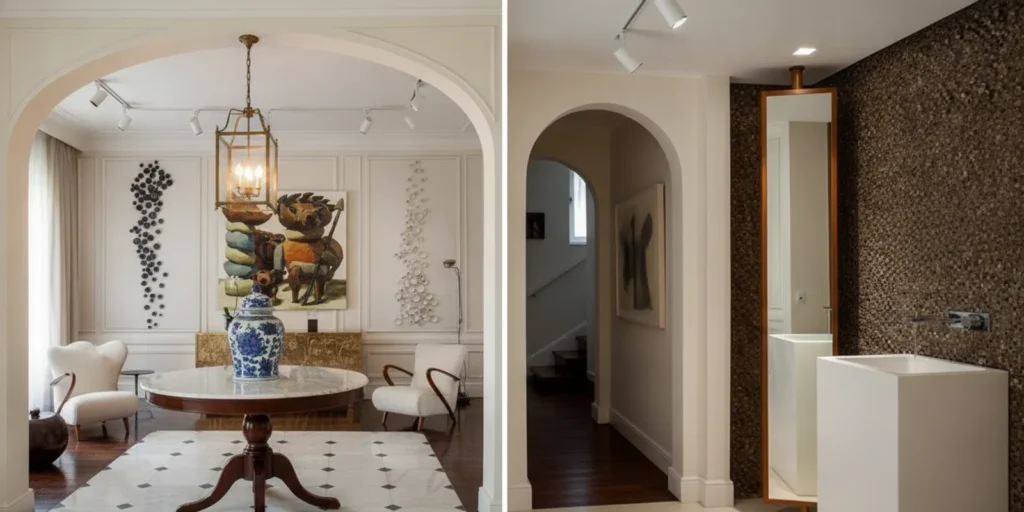
When one home holds paintings, works on paper, and three-dimensional objects, lighting cannot be reduced to a single fixture choice. The question of lighting mixed media art collection residence design begins with the collection itself: what each work needs, how it is experienced in its room, and how the light relates to the wider home. A thoughtful plan allows different works to share a residence without forcing them into one display formula.
Discuss your home and collection
Why does a mixed-media collection need a layered lighting plan?
A varied collection asks several questions at once. A painting may have a substantial frame and a strong relationship to the wall around it. A work on paper may call for a different approach to brightness and exposure. A sculpture is experienced through volume, surface, and shadow rather than only from the front. These distinctions matter, but they do not mean that every work needs its own conspicuous spotlight.
In a residence, the aim is not to turn each room into a gallery installation. People move through rooms, sit, read, converse, and use the furnishings. Art has to remain part of that lived experience. General illumination, task lighting, and carefully directed light can work together, so an artwork is legible without making the rest of the room feel neglected or harsh.
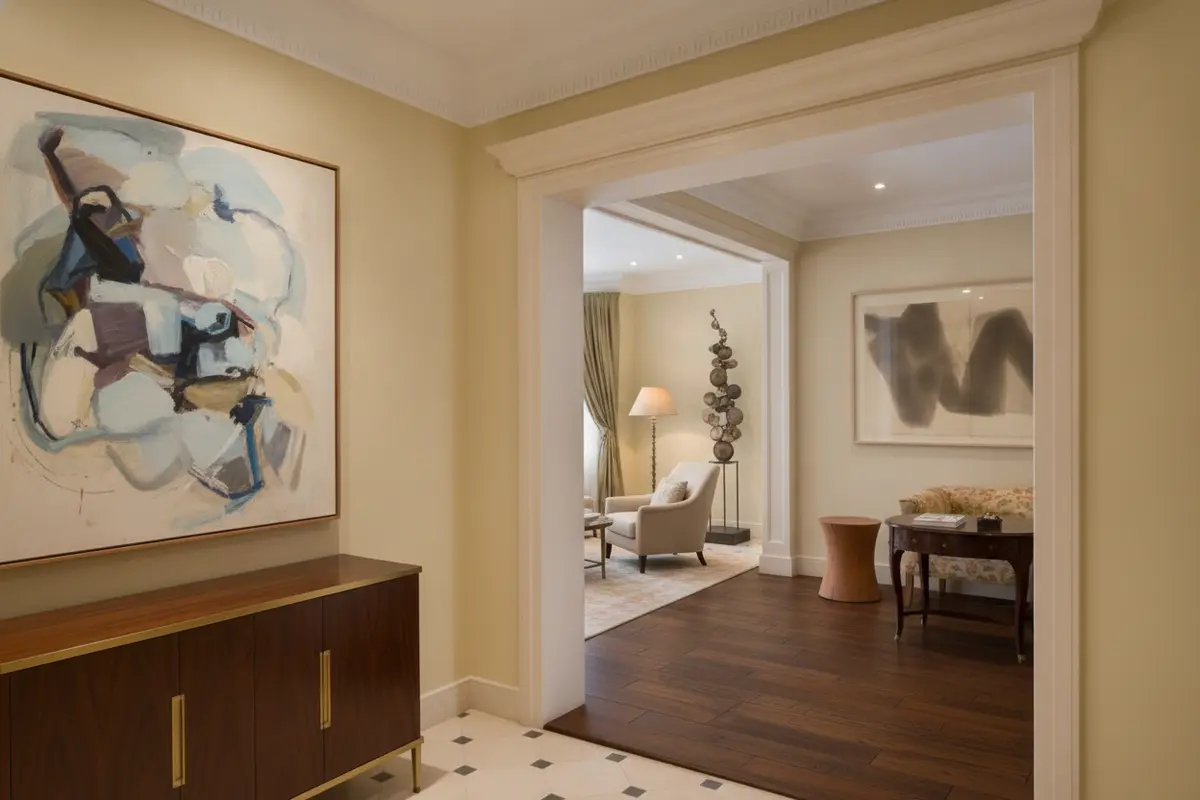
Begin by looking at the relationship among the works, not by ordering fixtures. A collection-first design process asks which pieces anchor a room, which are encountered in passing, and where a work needs breathing room. That larger reading informs lighting decisions without prescribing the same treatment for every object.
What should you learn about each work before choosing a light?
Make an inventory that is useful for design coordination, not a substitute for conservation advice. Record the work’s medium as you understand it, approximate dimensions, frame or mounting details, current location, and whether it is likely to move. Note any known care instructions or concerns from the gallery, artist, conservator, or other knowledgeable source. If the medium or condition is uncertain, ask a qualified conservator rather than guessing from appearance.
For each piece, consider these practical questions:
- What is the work made of? Broad labels can hide important differences. A mixed-media painting may combine distinct materials, while an object may have varied surfaces or finishes. Do not assume that two works with similar appearances have identical needs.
- How is it viewed? A large work seen across a room has different viewing conditions from a small work encountered close up. A sculpture may be approached from several sides, or intended to be seen from a particular angle.
- What light already reaches it? Track direct sun, bright reflections, and changing daylight at different times. A fixture plan should respond to the room’s actual conditions, not only to a drawing.
- How does the work relate to its neighbors? Consider nearby pieces, wall color, furniture, reflective glass, and sightlines. A light that seems effective in isolation can create glare or visual competition in the whole composition.
- Will the display change? A fixed arrangement and a collection that evolves over time call for different levels of flexibility in the room’s lighting infrastructure.
Material identification is one reason not to make assumptions from a broad category. A Smithsonian-hosted conservation paper on detecting individual paints in mixed-media paintings illustrates that identifying materials within a single work can itself be a distinct technical question. The paper is not a residential lighting specification; it is a reminder to confirm material concerns with an appropriate specialist before using light as a solution to a conservation question.
How do paintings, works on paper, and objects differ in a room?
The useful distinction is not that each category has one universal fixture. It is that each asks the designer to pay attention to a different set of viewing relationships. A painting’s scale, frame, surface, and wall context shape how it reads. For works on paper, ask about the specific work’s care guidance and avoid assuming that a frame or glazing eliminates every concern. For objects, pay attention to form, finish, viewing height, and the shadows created as a person moves around them.
The table below is a planning prompt. It does not set technical exposure limits or replace advice from a conservator. The appropriate design response depends on the particular work, the room, and the way the collection is used.
| Collection element | What to assess | Design question |
|---|---|---|
| Paintings | Surface, frame, viewing distance, reflections, and nearby finishes | Can the work be seen clearly without glare or a bright pool that overwhelms the wall? |
| Works on paper | Known materials, framing, daylight exposure, and any care guidance | What lighting and placement are appropriate for this specific work, and is specialist advice needed? |
| Sculpture and objects | Form, material, finish, viewing angles, and cast shadows | How will the object read from the approaches people actually take through the room? |
| Mixed-media works | Known components, condition, display position, and collection context | Do material questions need to be resolved before the lighting direction is set? |
For paintings, the aim is usually a composed relationship between work, wall, and surrounding room rather than a beam that announces itself. Framed works can introduce reflections from glazing, so test the view from likely seating and circulation positions. With works on paper, distinguish the aesthetic decision about how to see the work from any conservation decision about appropriate exposure. They are related, but one does not answer the other.
Sculpture requires attention to depth. A single frontal source may flatten the form or throw a distracting shadow; multiple directions may reveal shape but also create visual clutter. The piece’s setting matters. A sculpture integrated with a wall, alcove, or bespoke furnishing has different sightlines from an object placed in the center of a room. For more on this relationship, see the discussion of integrating sculpture into an interior.
How can ambient, task, and accent light work together?
Think in layers. Ambient light supports the room as a whole. Task light serves a defined activity, such as reading. Accent light draws attention to selected architectural or art features. The layers should have a clear hierarchy and should not all compete for attention. A room that is comfortable to occupy at different times of day will often feel more considered than one in which every surface is equally bright.
Start with how the room functions. Identify where people sit, read, gather, and pass through. Then map the collection against those activities. A painting might be a focal point from the entrance, while another piece is best encountered from a chair. A three-dimensional object could sit along a circulation route, where the changing angle is part of its presence. Each of these relationships can inform the direction and control of light.
Next, consider daylight. Observe the room at more than one time of day and note direct sun, reflected light, and areas that remain dim. Window treatments, wall finishes, and furniture placement can affect the perceived balance. Do not assume a fixture can compensate for every daylight condition. Where there are questions about the care of a work, seek conservation guidance and coordinate placement and lighting accordingly.
Then review the plan from normal viewing positions. Look for glare on glazing, strong reflections from polished surfaces, unwanted shadows, and light that spills onto a neighboring work. A plan should be judged from the doorway, the principal seating, and the paths people use—not only from directly beneath a fixture. The same principles matter in a home with a loft-like open plan, where a single sightline may connect several areas and works.
Controls also shape how layers function. Discuss which lights should operate together, which should be independently controlled, and whether the room needs more than one mood. Coordinate these questions with the electrical and architectural teams early enough to make considered decisions. Fixture placement, switching, and access for maintenance are part of a successful scheme, not details to leave until the end.
How should lighting decisions fit into a whole-home design?
Art lighting works best when it is part of the interior architecture and furnishings, not an isolated finishing exercise. A collection can guide the placement of walls, openings, furniture, and circulation. Lighting must then respond to those decisions while maintaining coherence from room to room. This is particularly important in a whole-home commission, where a repeated display detail can become monotonous and unrelated treatments can make the residence feel fragmented.
Coordinate the art plan with wall construction and finishes, power locations, ceiling details, window treatments, and furniture layouts. If a room will include custom cabinetry or a built-in display, consider how the object or artwork relates to the joinery and how fixtures can be integrated discreetly. A bespoke furniture and fabrication plan may be relevant when the display depends on tailored millwork or a specific relationship between art and furnishing.
Timing matters. Establish the collection priorities before finalizing lighting locations, and revisit the plan when the architecture or intended artwork placement changes. If pieces are still being selected, plan for sensible flexibility rather than pretending that every future work is already known. Track decisions so that the owner, designer, architect, electrician, and any conservation specialist are working from the same understanding of the room.
For works with uncertain materials, condition concerns, or specific care requirements, distinguish roles clearly. The designer can coordinate how the room is experienced and how lighting fits the composition. A conservator can advise on the individual work and its care. An electrician or lighting professional can address technical implementation. Good coordination respects these different forms of expertise instead of asking one decision to solve every problem.
This collection-first approach is consistent with CW DESIGN’s design approach, where art informs the space rather than being treated as an afterthought. Catherine Weinstock’s background spans interior design, furniture restoration, and fine arts, with European study; that multidisciplinary perspective informs the firm’s bespoke residential work. Learn more about the firm’s experience and background or explore residential and collection-focused projects.
What should you review before approving the lighting plan?
Before the plan is finalized, review it in the context of the actual residence and the collection. A useful review includes the following:
- A collection inventory with known media, dimensions, locations, and care notes.
- A record of daylight conditions and likely viewing positions in each room.
- A lighting layout coordinated with furniture, circulation, art placement, and architectural details.
- A clear hierarchy among room lighting, task lighting, and selected art or object lighting.
- A discussion of glare, reflections, shadows, switching, and maintenance access.
- Confirmation that conservation questions have been referred to a qualified specialist rather than resolved through guesswork.
- A plan for how the room will adapt if the collection or placement changes.
When possible, assess the result from the positions where the work will actually be seen. A drawing can help coordinate decisions, but it cannot fully substitute for understanding the scale, material, and atmosphere of a particular room in person. The final lighting should support both the individual pieces and the residence as a whole.
Speak with CW DESIGN about a whole-home commission
Frequently Asked Questions
Should every artwork have a dedicated light?
No. Some works may benefit from carefully directed accent light, while others may be seen comfortably within the room’s broader lighting scheme. The decision depends on the work, its location, the viewing experience, and any care guidance. A dedicated fixture is not automatically the most discreet or appropriate answer.
Can residential lighting protect a work on paper?
Lighting and placement can be considered as part of a work’s care, but a general design article cannot set safe exposure levels for a particular object. Ask a qualified conservator for advice about the specific work and follow any documented care guidance. A designer can coordinate those recommendations with the room’s appearance and use.
When should the art and lighting plan be coordinated?
As early as practical, before fixture positions and related architectural details are fixed. Early coordination allows the collection, viewing positions, daylight, furniture, and electrical requirements to inform one another. Revisit the plan if the room layout or intended placement changes.
What if the collection changes over time?
Discuss that possibility at the outset. A considered plan can identify which elements should remain fixed and where flexibility is useful, while preserving a coherent character for the room. The aim is not to make every surface adjustable, but to make choices that can accommodate the way the collection is expected to evolve.
When paintings, works on paper, and objects share a home, the best lighting plan begins with close attention to the works and the life of the rooms around them. A coordinated, collection-first approach can bring clarity to each piece while keeping the residence composed, comfortable, and distinctly personal.