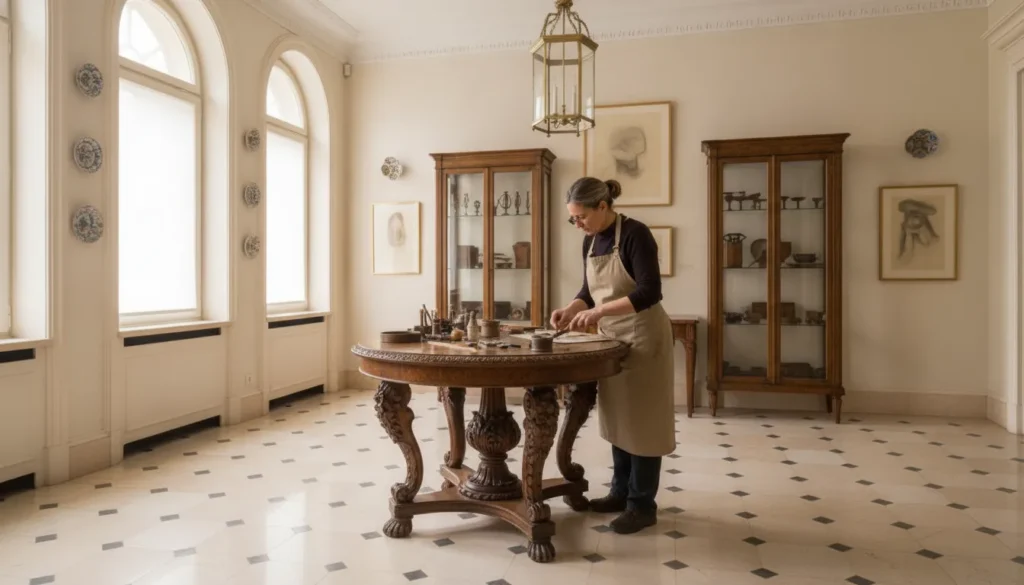
An antique can carry the character of a room before a single new furnishing is chosen. Its scale, patina, construction, and history may shape how the residence is composed, especially when the piece belongs to a larger collection or has been part of a family home for generations.
Discuss an on-site, whole-home design commission with CW DESIGN
Antique furniture restoration New York specialists should begin with close assessment, respect for original material, and a clear judgment about what the piece actually needs. Restoration is not simply cosmetic repair. As the Smithsonian notes, ill-conceived work can destroy historic material, while an appropriate environment can help minimize deterioration. The right approach considers the object and the residence together.
That distinction matters in a bespoke whole-home commission. A restored table, cabinet, or chair should feel at home among the architecture, art, circulation, and daily rituals of the rooms around it. The following guide explains what to expect from a specialist, from initial evaluation through careful integration into a considered New York interior, especially when the piece belongs to a larger collection. For a broader view of how collections can shape a residence, explore our art-oriented interior design for collectors. For the wider craft context, read our guide to bespoke furniture fabrication and artisan craft.
What should you expect from antique furniture restoration New York specialists?
Specialist antique furniture restoration begins with judgment. Before any treatment is proposed, the piece should be considered as an object with a history, construction, materials, finish, and place within the home. The aim is not to make an antique look new. It is to understand what should be preserved, what may require intervention, and which changes could diminish the character or original material of the furniture.
That distinction matters because routine repair and considered restoration are not the same service. A routine repair may address a loose joint, damaged hardware, or an immediate functional concern. Restoration requires a broader assessment of condition and significance, followed by a restrained plan. The Smithsonian’s furniture-conservation guidance warns that ill-conceived repairs can destroy original material, and it outlines an ethical framework for choosing a conservator. Its preservation guidance is a useful reminder that intervention should be deliberate rather than automatic.
In New York, the conversation also needs to account for the residence itself. A meaningful piece may belong in a Brooklyn townhouse, a Manhattan apartment, or another New York-area home, where light, temperature, circulation, architecture, and neighboring furnishings affect how it is experienced and cared for. The specialist’s role is therefore not limited to the workshop or the object in isolation. It includes understanding the setting in which the furniture will live.
Catherine Weinstock’s background spans interior design, furniture restoration, and fine arts, with study in Europe. You can read more about Catherine Weinstock’s background in furniture restoration and the perspective it brings to a piece’s larger context. For CW DESIGN, restoration is considered when it serves the character of the furniture and the composition of a bespoke, whole-home engagement. Not every antique should be restored, and not every restoration belongs within every project.
Why New York is a hub for serious furniture restoration practice
New York gives furniture restoration a particularly rich setting because residences here often hold objects with history, craftsmanship, and personal significance. An inherited cabinet, a chair acquired over years of collecting, or a piece that has traveled with a family may need to be understood in relation to the architecture around it, not treated as an interchangeable furnishing. The city’s concentration of collectors, historic residences, and design-led homes creates a continual need for judgment that respects both the object and its setting.
That context is supported by an established specialist ecosystem. Restoration practices serving the New York area address antiques, heirlooms, wood finishes, upholstery, and architectural woodwork, with different firms bringing different areas of experience. The existence of this range does not make every treatment appropriate. It makes careful assessment more important, particularly when original material, patina, construction, or evidence of age should be preserved rather than erased.
New York’s geographic character also matters. A project may involve a Brooklyn townhouse, a Manhattan apartment, or another residence across the wider New York area. The piece must be considered where it will live, with attention to proportion, light, circulation, and the practical conditions of the room. That is one reason an on-site perspective is valuable: restoration decisions become part of a larger understanding of the home.
Catherine Weinstock brings a relevant multidisciplinary foundation to that conversation, with training in interior design, furniture restoration, and fine arts, including study in Europe. You can read more about Catherine Weinstock’s background in furniture restoration and how those disciplines inform a considered approach to meaningful interiors. For CW DESIGN, restoration is a core service, but it is not assumed that every antique should be restored or that every project requires the same intervention. The right decision begins with the object, the residence, and the client’s broader collection.
What does the antique furniture restoration process involve?
Restoration begins with restraint. A meaningful table, chair, cabinet, or desk is first understood as an object with a history, construction, finish, and relationship to the home around it. The objective is not to make every mark disappear, but to determine what intervention is appropriate and what should remain. The Smithsonian’s Museum Conservation Institute cautions that ill-conceived repairs can destroy original material, making diagnosis more important than speed. Its guidance on historic furniture care provides useful context for that preservation-minded approach.
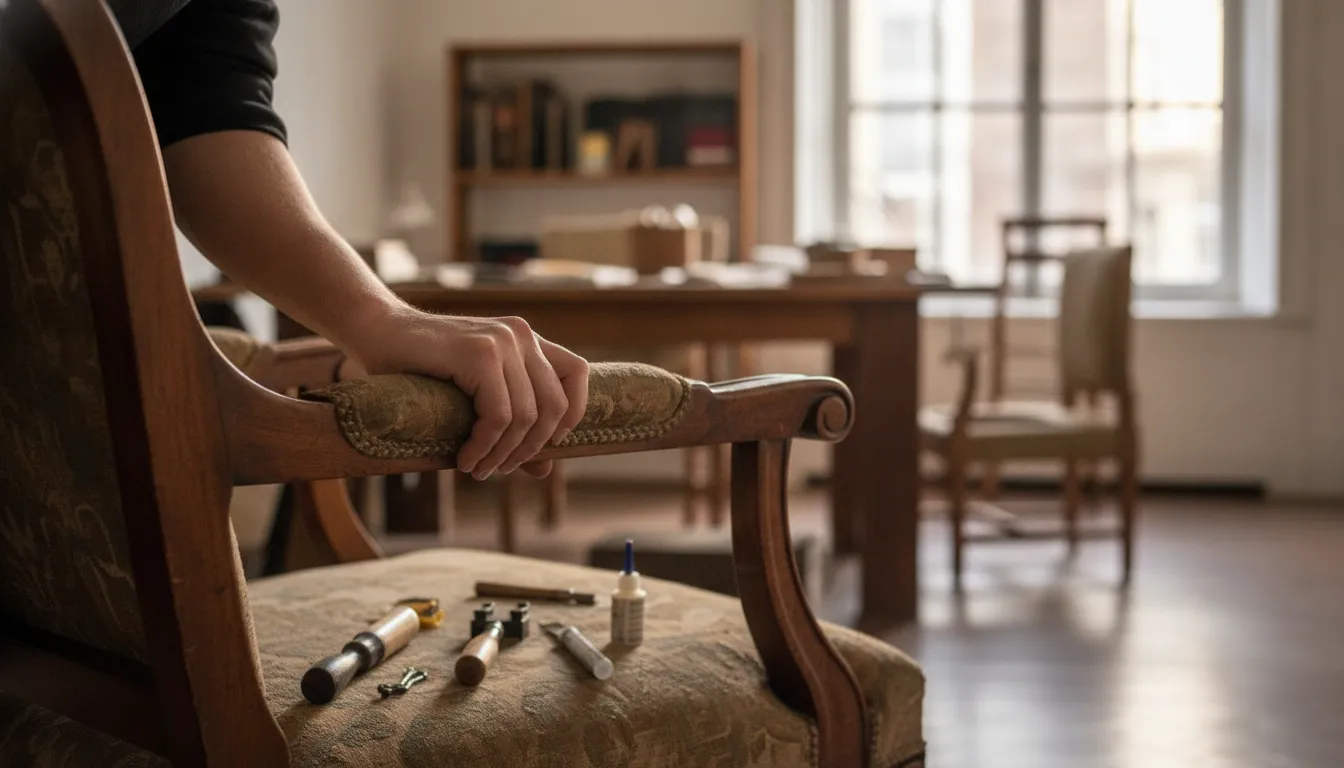
- Intake and visual assessment. The process starts with an on-site conversation and close observation of the piece in its setting. Its materials, visible condition, construction, finish, use, and significance are considered together. The assessment should distinguish ordinary wear from structural concern and identify whether specialist conservation input is warranted.
- Documentation and treatment planning. Findings are recorded before work begins. The plan considers the furniture’s original material, existing alterations, intended use, and the conditions of the residence. Because temperature and relative humidity fluctuations can be detrimental to furniture, the environment is part of the conversation, not an afterthought. The Smithsonian’s furniture-care resource also discusses construction techniques, adhesives, finishes, and the selection of a conservator.
- Careful intervention. Work proceeds according to the agreed scope, with the least disruptive appropriate treatment favored over an automatic refinishing or replacement. The exact techniques depend on what the assessment establishes. Common household habits can create risk: the Smithsonian notes concerns including damp plants on tables and antique objects placed near radiators or open windows. Products marketed for furniture can also damage wood and finishes over time, so familiar does not always mean safe.
- Review and environmental care. Once the planned work is complete, the piece is reviewed against the documented condition and the purpose it must serve. Care guidance is discussed in practical terms, including placement and handling. This matters because furniture conservation addresses biological, chemical, and physical causes of deterioration, rather than treating appearance in isolation.
- Return and placement in the residence. Delivery is considered in relation to the room, circulation, lighting, adjacent furnishings, and the home’s broader composition. For an art-led, whole-home commission, restoration may be one part of a larger act of curation. The restored piece should have a considered place, while its history and material presence remain legible.
No responsible specialist can promise a fixed timeline or a predetermined result before examining the individual piece. The quality of the process lies in the clarity of the assessment, the respect shown to original material, and the communication maintained from intake through return.
How does antique restoration work alongside a contemporary interior design commission?
A meaningful antique does not need to make a contemporary residence feel period-bound. Its value may lie in its material presence, workmanship, patina, or connection to the collector’s life. The design question is how that piece should relate to the architecture, art, palette, circulation, and rituals of the home. Restoration is therefore considered in context, rather than treated as an isolated repair.
That context begins with the object itself. A specialist assessment should distinguish what needs attention from what gives the piece its character. Original material can be damaged by ill-conceived repairs, and the Smithsonian’s furniture-care guidance notes that environmental conditions, finishes, adhesives, and construction methods all affect long-term preservation. The design team can then consider placement, use, light, nearby materials, and the practical movement of people through the room without assuming that every antique should be restored or displayed in the same way.
This is where a whole-home interior design commission provides useful scope, while remaining distinct from restoration itself. The broader commission coordinates the residence from its initial brief through design development, sourcing, coordination, and installation. Restoration contributes one carefully judged element to that composition. It does not replace the conservator’s specialist evaluation, nor should the surrounding design dictate an unsuitable treatment.
| Consideration | Restoration-led attention | Ordinary replacement or disconnected decoration |
|---|---|---|
| The object | Begins with the antique’s condition, construction, materials, and meaningful signs of age. | Begins with a new selection or a visual effect, without requiring the existing piece to inform the decision. |
| The room | Coordinates proportion, sightlines, circulation, art, and adjacent finishes around the piece. | Adds an object after the room is otherwise resolved, which can leave it visually unrelated. |
| Daily life | Considers appropriate use and a sound environment as part of caring for the furniture. | May treat a historic object like everyday furniture or prioritize appearance over stewardship. |
In an art-centric home, the result should feel composed rather than themed. The antique can hold a quiet conversation with contemporary architecture and collected works, giving the residence continuity without imitation. That balance requires judgment, restraint, and attention to the life the room is meant to support.
What should you expect from a specialist restoration firm in New York?
A specialist should begin with diagnosis, not a predetermined treatment. Before any work is proposed, the firm should look closely at the piece’s construction, materials, finish, condition, history, and role in the home. That distinction matters because, as the Smithsonian’s Museum Conservation Institute explains, ill-conceived repairs can destroy original material and cause irreparable harm: historic furniture requires care suited to its special needs.
Ask how the firm distinguishes preservation from alteration. A considered recommendation may involve stabilizing a vulnerable element, improving the environment, or leaving an aged surface largely undisturbed. The Smithsonian notes that some products traditionally marketed for furniture can damage wood and finishes over time, while fluctuating temperature and relative humidity can also contribute to deterioration. A specialist should be willing to explain what is known, what remains uncertain, and why a proposed intervention is appropriate.
Communication is part of the craft. Expect a clear account of the piece’s condition, the questions that require further investigation, the intended scope of work, and the points at which decisions will be reviewed. Documentation should be proportionate but meaningful, recording the object before treatment and clarifying what has been changed or intentionally left intact. You should also understand how the furniture will be considered in its actual setting, including access, light, circulation, surrounding materials, and the habits of the household.
Finally, evaluate fit rather than relying on a label alone. The right specialist understands that an antique is not an isolated decorative object. It has a relationship to the architecture, art, and atmosphere of the residence. For a broader view of the judgment and trust required in a complex New York commission, see this guide to luxury interior design in New York. The best choice is the firm whose assessment is careful, whose language is transparent, and whose respect for the original material is evident before any treatment begins.
How CW DESIGN integrates restoration into whole-home bespoke commissions
At CW DESIGN, furniture restoration sits within a wider understanding of the residence. It is one of the firm’s core services, alongside luxury residential interior design, but it is not an automatic treatment applied to every antique or every commission. The first question is whether a piece has a meaningful role in the home, and what level of intervention respects its material, history, and intended place.
Catherine Weinstock’s training spans interior design, furniture restoration, and fine arts, with study in Europe. That multidisciplinary perspective allows a significant table, chair, cabinet, or other furnishing to be considered alongside the architecture, circulation, finishes, and collection around it. The result is not a restored object placed into an otherwise unrelated scheme. It is a considered relationship between the piece and the rooms it inhabits. This is consistent with CW DESIGN’s art-oriented interior design for collectors, where meaningful works shape the atmosphere and composition of the home.
For a New York residence, that judgment begins on site. Catherine visits the space to understand its proportions, light, architectural character, and daily use. She can then determine whether restoration belongs within the scope of a larger commission, whether a piece should remain untouched, or whether it needs specialist assessment before any decision is made. Techniques, materials, timelines, and outcomes should remain specific to the object rather than assumed in advance.
This approach also reflects CW DESIGN’s bespoke interior design philosophy: the home develops from the client, the collection, and the architecture, not from a fixed formula. The broader bespoke furniture fabrication and artisan craft guide provides further context for restoration, custom work, and collaboration. The practice deliberately limits its engagements, prioritizing quality and close attention over volume. If your collection or furnishings need to be understood as part of a complete residence, you can discuss an on-site, whole-home design commission with CW DESIGN.
Contact CW DESIGN to discuss an on-site restoration and whole-home commission
Frequently Asked Questions
What does specialist antique furniture restoration involve?
It begins with a careful assessment of the piece, its original material, construction, finishes, and present condition. A qualified specialist then determines what treatment is appropriate, rather than treating restoration as routine repair. This judgment matters because ill-conceived repairs can destroy original material. The Smithsonian’s furniture-conservation guidance also emphasizes professional ethics and thoughtful conservator selection.
How should I protect an antique while deciding what to do?
Keep the piece in a sound, stable environment and avoid placing it near radiators or open windows. Do not use furniture products casually, since some traditionally advertised treatments can damage wood and finishes over time. Fluctuating temperature and relative humidity can also be detrimental, so minimize environmental swings while an assessment is pending. The Smithsonian’s furniture-care resource provides further preservation guidance.
Should every antique be restored?
No. Restoration is a considered professional judgment, not an automatic step for every antique. The right approach depends on the piece’s condition, original material, significance, intended use, and place within the residence. Some furniture may need conservation, some may require limited treatment, and some may be best protected with its existing character intact. The assessment should establish what is appropriate before work begins.
How can restoration relate to a whole-home design commission?
When appropriate, restoration can be considered as one part of a bespoke whole-home commission. The piece can be evaluated alongside the architecture, art collection, materials, proportion, circulation, and daily life of the residence, rather than treated as a disconnected object. This allows its history and presence to inform the home’s broader composition while keeping the restoration scope specific to the piece.
Contact Us to Discuss a Whole-Home Design Commission
When an antique piece carries genuine presence, its restoration is best considered alongside the rooms, art, and architecture that will surround it. For a thoughtful, on-site approach to a bespoke whole-home commission, contact us to discuss your project with CW DESIGN.