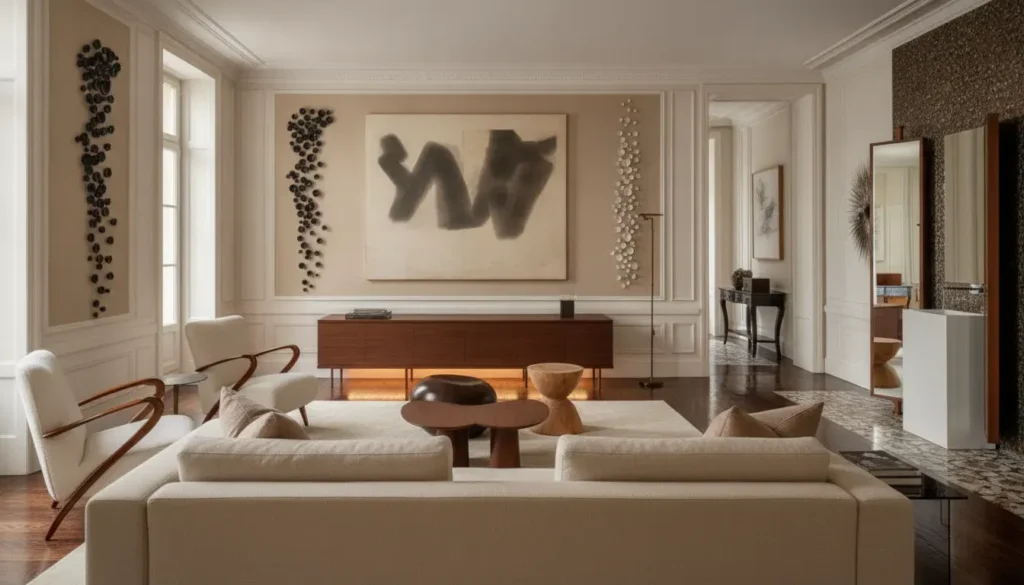
Bespoke interior design is a fully tailored approach to shaping a home around one client, one property, and one way of living. Instead of fitting a room around catalogue pieces, the designer develops the space, materials, furnishings, and details as a coherent response to the client’s architecture, collection, and daily life. For a broader view of how lasting interiors are conceived, read CW DESIGN’s timeless design philosophy.
Speak with CW DESIGN about a considered, on-site design engagement.
What does bespoke interior design mean?
Bespoke interior design means creating an interior to an original brief rather than selecting a room from a fixed template. The design responds to the property’s proportions, the client’s habits, the art and objects they live with, and the level of craftsmanship required. It is a method of working, not a decorative style.
The word comes from tailoring, where something bespoke is made for a particular person. In an interior, that principle can shape the plan of a room, a wall of cabinetry, a dining table, an upholstered piece, a lighting detail, or the relationship between a painting and the architecture around it.
A bespoke commission does not mean that every object must be newly made. A carefully selected antique, a work by an established designer, and a custom-made cabinet can belong in the same room. The distinction is whether each decision serves the specific composition and the person who will live with it, rather than reproducing a showroom arrangement.
For an art collector, this distinction is especially important. Artwork may determine the scale of a wall, the direction of circulation, the quality of light, or the palette of nearby materials. CW DESIGN describes art as the place where design begins, not a final layer to be added after the furniture has been chosen. That collection-first approach is explored further in the firm’s approach to art and interiors.
How bespoke design differs from standard interior design services
Bespoke and standard interior design can both produce beautiful, functional rooms. The difference is where the work begins and how much of the result is determined by the individual project. A standard service may organize selections from established ranges; a bespoke commission develops a design language and specifications around the property’s particular conditions.
| Consideration | Standard service | Bespoke commission |
|---|---|---|
| Starting point | Existing products, ranges, or a familiar room formula | A client brief, the property, and an original design direction |
| Fit | The room accommodates available pieces | Furniture, joinery, and details are developed for the room |
| Material decisions | Selections from a defined catalogue | Materials, finishes, and textures are curated for the complete composition |
| Art and objects | Placed after the principal scheme is established | Integrated into planning, sightlines, lighting, and circulation from the beginning |
| Craft | Primarily relies on repeatable products | May include drawings, specialist workrooms, restoration, and artisan commissions |
| Best suited to | Projects with straightforward needs and standard dimensions | Distinctive homes, significant collections, complex architecture, and clients seeking singular results |
The distinction is not a judgement against standard products. A well-made piece can be exactly right for a room. Bespoke design becomes valuable when a property’s dimensions, history, use, or collection calls for a solution that cannot be selected responsibly from a short list.
It also differs from semi-custom design. Semi-custom usually begins with an existing frame, system, or range, then changes a finish, fabric, size, or configuration. Bespoke work begins with the conditions of the project. That can lead to an original drawing, a new proportion, a special material treatment, or a sequence of decisions that exists only for that client.
For a closer look at one adjacent application, see bespoke furniture fabrication and artisan craft. That subject is part of a bespoke interior when the project calls for it, but it is not the whole definition of bespoke design.
What makes an interior design commission truly bespoke: process and craftsmanship
A genuinely bespoke commission is defined by the quality of its decisions and the discipline of its process. It begins with discovery, then moves through concept, documentation, sourcing, fabrication, installation, and refinement. The visible room is the final expression of many coordinated choices, not a collection of unrelated upgrades.
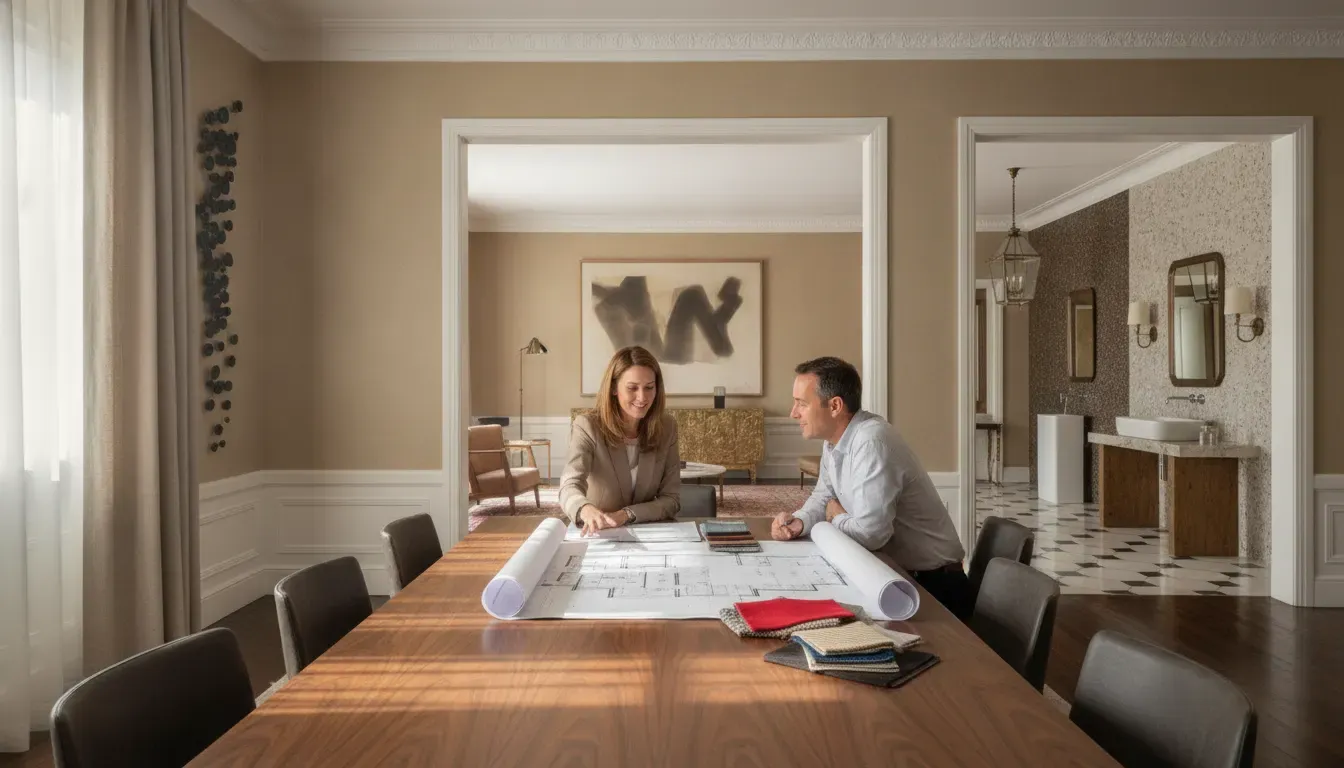
For a complex residential commission, the work may include the following stages:
- Understand the client and the property. The designer studies how the household lives, what it values, how the rooms connect, and which architectural conditions must be preserved or resolved.
- Inventory the art, furniture, and objects. Existing pieces can influence scale, color, sightlines, conservation needs, and the emotional character of the project.
- Develop an organizing idea. A strong scheme gives the home a coherent rhythm without forcing every room into the same visual formula.
- Resolve the details. Drawings, samples, dimensions, joinery, upholstery, lighting, and hardware translate the concept into decisions that can be made and reviewed.
- Coordinate makers and specialists. Artisans, restorers, architects, galleries, workrooms, and installers each contribute within a shared design direction.
- Install and refine on site. Placement, balance, comfort, and the relationships between objects are assessed in the real rooms, where small changes can alter the whole composition.
Craftsmanship is therefore more than a visible hand-finished surface. It includes the intelligence of the specification, the accuracy of the drawings, the integrity of the material, and the care taken to make separate contributions feel intentional together. A custom detail that cannot be lived with comfortably is not successful simply because it is rare.
CW DESIGN’s multidisciplinary foundation is relevant here. Catherine Weinstock trained across Interior Design, Furniture Restoration, and Fine Arts in Europe. That combination supports a conversation that crosses spatial planning, the life of an object, and the way art is experienced in a room. It can also help keep restoration, sourcing, and new work connected rather than treated as isolated services.
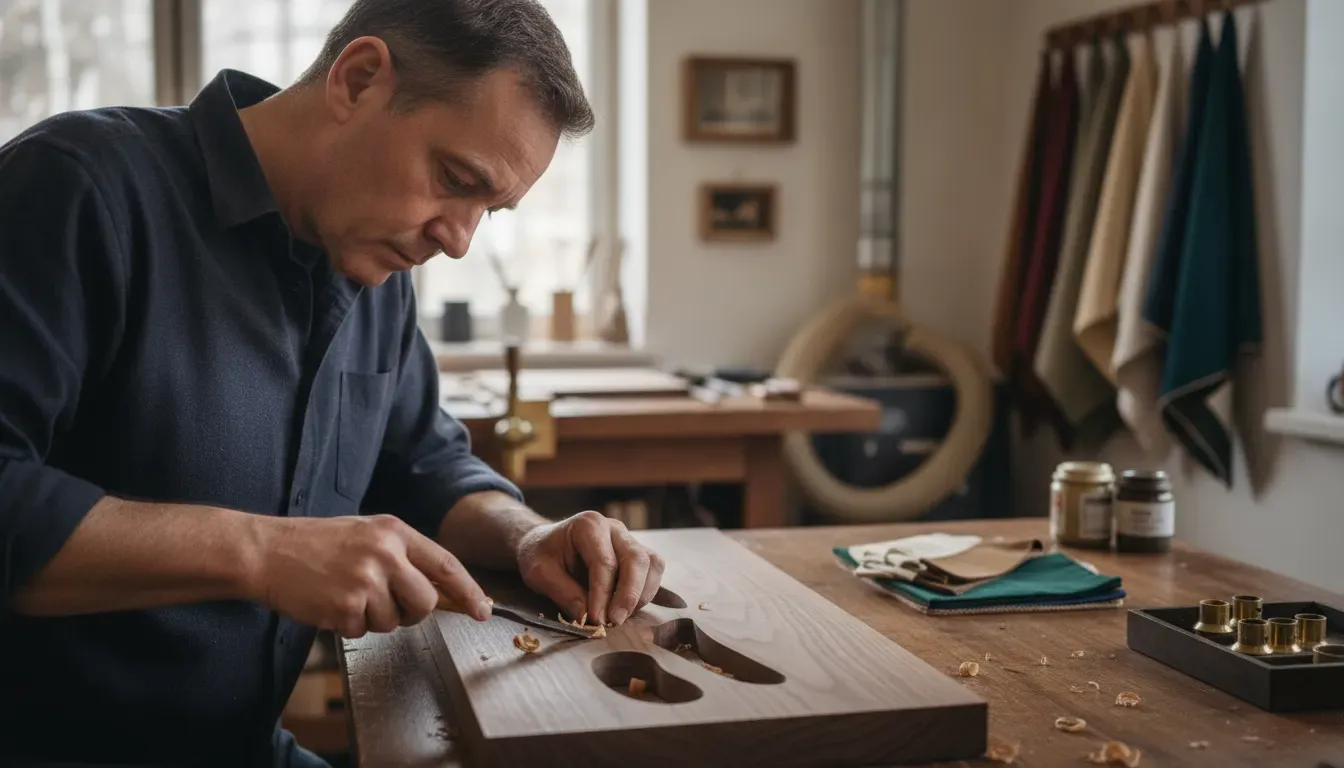
Global relationships can also matter when they are purposeful. CW DESIGN documents collaborations and sourcing relationships involving artisans and galleries in Europe and beyond, including Francesco Perini, Patrick Naggar, Gallery Fumi, and Dutko Gallery. The value is not the name alone. It is the ability to identify a piece, material, or technique that supports the particular design narrative.
Who commissions bespoke interior design and what do they value?
Bespoke interior design is most useful to clients whose homes, collections, or expectations resist standardized solutions. They are often art collectors, owners of architecturally distinctive properties, multi-residence clients, or people who want their surroundings to express a personal history rather than a current trend.
These clients tend to value:
- Individuality: a home that reflects a considered point of view instead of a recognizable showroom look.
- Longevity: materials and proportions that can remain compelling as tastes and collections develop.
- Craftsmanship: honest materials, specialist skills, and details that reward close attention.
- Artistic dialogue: rooms in which art, furniture, architecture, and light support one another.
- Direction: an experienced designer who can edit, prioritize, and make decisions with calm confidence.
- Discretion: a private process suited to personal collections, family life, and significant residences.
The approach can be appropriate for a Brooklyn townhouse with historic constraints, a Tribeca loft, a large residence, or a home in an international market. Scale alone does not make a project bespoke. A single room can require original thinking, while a large property can still feel generic if its decisions are copied from a catalogue.
The strongest fit is usually a client who wants a whole-home or substantial apartment commission and understands that meaningful design develops through conversation, review, making, and installation. For collectors, bespoke interior design for art collectors offers a more focused look at how a collection can guide a residence.
Discuss whether a bespoke, art-aware approach is right for your residence.
How to recognize a genuinely bespoke firm versus a standard design practice
The word bespoke is widely used, so prospective clients should look for evidence in the firm’s process rather than relying on the label. A genuinely bespoke practice can explain how it discovers the client, develops the design, documents custom work, coordinates specialists, and protects the integrity of the result through installation.
Useful questions to ask include:
- How do you learn about the way the client lives and uses the property?
- How are existing art, furniture, and objects considered before the scheme is fixed?
- Which parts of the project are designed or specified for this property?
- Can the firm explain its approach to drawings, samples, approvals, and fabrication?
- Who coordinates architects, artisans, galleries, restorers, and installers?
- How does the team review the work on site before the project is complete?
- Does the portfolio show a consistent point of view without making every home look identical?
Look for specificity in the answers. A firm should be able to discuss materials, proportion, light, circulation, and the practical life of a room, not only adjectives such as luxurious or unique. It should also be candid about the boundaries of its work. A bespoke relationship is not improved by promising services or timelines that the practice cannot responsibly deliver.
CW DESIGN’s background and multidisciplinary training, its art-centered design approach, and its documented portfolio provide useful evidence of how the practice works. The relevant question for a prospective client is not whether every project resembles their own home. It is whether the firm can bring the same rigor, curiosity, and craftsmanship to a new set of conditions.
How to begin a bespoke interior design engagement
Beginning a bespoke engagement is less about arriving with a finished style brief and more about sharing the information that will make a serious conversation useful. The designer needs to understand the property, the client’s aspirations, the collection or objects involved, and the level of involvement expected from the practice.
Before making an inquiry, prepare:
- The property’s location, type, approximate scope, and any known architectural or preservation constraints.
- A short description of the spaces that need attention and how the household uses them.
- Information about important artwork, furniture, collections, or pieces that must remain part of the home.
- References that explain what feels right to you, while leaving room for the designer’s interpretation.
- Your preferred timing and the decisions that are most important to resolve.
CW DESIGN works on site, because a room’s proportions, light, materials, and atmosphere are not fully understood from photographs alone. An initial conversation can establish whether the project, the property, and the firm’s working method are aligned. The firm’s contact page notes that there is limited room for engagements, which reflects a deliberately selective, high-touch practice.
Once the fit is clear, the next steps should make the scope and responsibilities understandable. A well-run process gives the client opportunities to respond while preserving a coherent design direction. It also makes the relationship between custom work, sourced pieces, restoration, architecture, procurement, and installation visible before the work advances too far.
A bespoke interior should feel personal without becoming precious, and refined without becoming remote from daily life. The best result is a home in which art, materials, comfort, and function have been considered together, with enough discipline behind the scenes for the final rooms to feel effortless.
Frequently Asked Questions
What is bespoke interior design in simple terms? Bespoke interior design is a home designed specifically for one client and one property. The process begins with the client’s needs, architecture, art, furniture, and way of living, then develops an individual composition of space, materials, furnishings, and details. It is not a fixed style and it does not require every item to be custom-made.
What is the difference between bespoke and custom interior design? The terms overlap, but custom often means adapting an existing product, such as changing its size, fabric, or finish. Bespoke usually means originating the solution for the project, beginning with a brief and a design rather than a catalogue model. A project may contain both custom and bespoke elements alongside carefully sourced pieces.
Is bespoke interior design only for large homes? No. Bespoke work can be valuable in a single room with unusual proportions, a significant collection, or a specific functional need. Larger whole-home commissions naturally offer more opportunities for a unified design language, but project size alone does not determine whether the approach is bespoke.
Does bespoke interior design mean everything is handmade? No. A successful bespoke interior may combine antiques, established designs, restored furniture, made-to-order pieces, and original elements. What makes the result bespoke is the way those decisions are selected, developed, and coordinated for a particular client and property.
How does art fit into bespoke interior design? Art can guide the design from the first conversations. Its scale, color, medium, sightlines, lighting needs, and emotional importance can influence planning and material choices. In a collection-first approach, art is part of the architecture of the experience rather than decoration added after the room is complete.
How do I know if a bespoke designer is right for my project? Review the firm’s portfolio and ask about discovery, documentation, sourcing, fabrication, installation, and on-site decision-making. The right practice should be able to explain how it will respond to your property and collection without forcing them into a predetermined look. It should also be clear about scope, availability, and the nature of the working relationship.
Contact CW DESIGN to begin a private conversation about your interior.