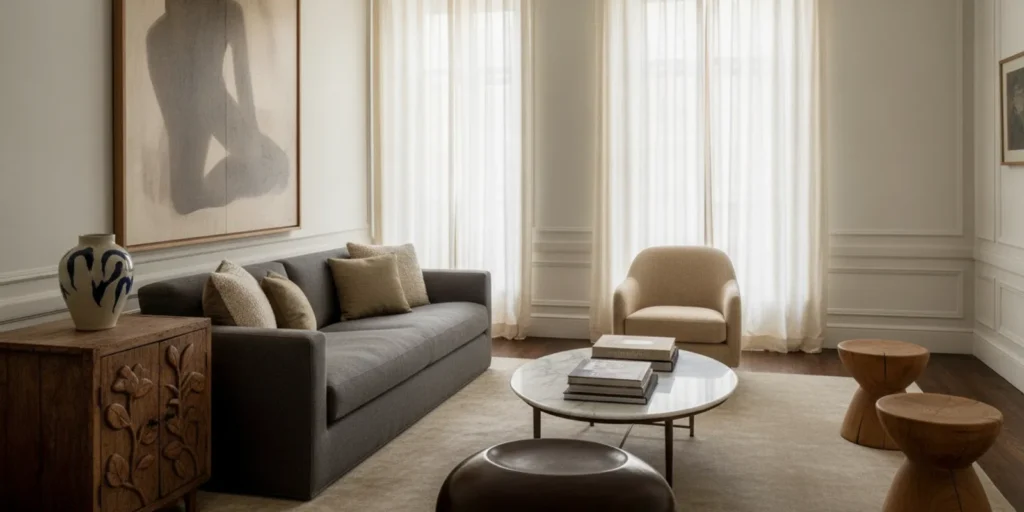
Displaying collectible furniture in a daily-use room is a balancing act: the piece should be seen and appreciated, but the room must still support ordinary life. Begin with the furniture itself—its condition, materials, function, and role in the collection—then plan how people move, sit, gather, and care for the room around it. A considered arrangement makes the object feel at home without asking it to bear more use than it can withstand.
Discuss your residence with CW DESIGN
What makes collectible furniture different in a room used every day?
A collectible piece can carry significance beyond its immediate function. Its form, construction, history, finish, or relationship to a collection may make it worth treating with particular care. That does not mean it must be hidden away. It means the room plan should recognize that the object has specific needs as well as visual presence.
Start by separating three questions that are easy to conflate:
- Can the piece safely serve its intended purpose? A chair that is structurally sound may be used differently from one with a loose joint or delicate upholstery.
- How vulnerable is its surface? A polished top, painted finish, textile, or inlay can respond differently to touch, sunlight, spills, and cleaning.
- What does the collection need from the room? The furniture may be a focal point, part of a larger ensemble, or an object that needs visual breathing room.
Do not assume that age alone determines whether a piece can be used. Nor should an attractive appearance be taken as proof that an object is ready for regular handling. If its stability or care requirements are uncertain, have it assessed before assigning it a demanding role. For broader context, see CW DESIGN’s guide to what furniture restoration involves.
The aim is not to make a room feel like a gallery with seating added as an afterthought. It is to let the furniture contribute to a coherent home, with its use and preservation considered alongside comfort, circulation, and the rest of the collection.
How should you assess a piece before placing it?
Look closely before moving anything. Record the piece’s current condition with photographs, including existing marks or areas of wear. Note whether doors and drawers open smoothly, whether legs and joints feel stable, and whether decorative elements are secure. Do not test a questionable chair by putting weight on it, or force a stuck drawer to check its operation.
Consider what the object is made from and how it is finished. Materials and finishes do not all respond alike to heat, moisture, abrasion, or sunlight. When you do not know the appropriate care method, avoid experimenting with household cleaners or polishes. Ask a qualified furniture conservator for advice, particularly if the object is fragile, unstable, or has a finish you cannot identify. The American Institute for Conservation is a professional association for conservation professionals.
Then establish the piece’s proper role. A sturdy table may be able to support a daily activity, while another collectible might be best appreciated as a visual anchor. Decide whether the object is meant to be touched, sat upon, opened, or simply seen. That decision is not a judgment of its importance. It is a practical way to align its use with its condition and the household’s habits.
For a larger residence, assess the whole collection rather than considering each object in isolation. The CW DESIGN approach begins with the art and objects that matter to a client, then considers how the home can support them. A furniture piece may relate to artwork, architecture, another object, or a view across the room. Those relationships help determine where it belongs.
Where can collectible furniture sit without interrupting daily life?
Map the room’s everyday routes before choosing a display position. Include the paths from doorways to seating, between seating and tables, and to windows, storage, or adjoining rooms. Observe how people actually use the space at different times of day. A beautiful location that narrows a common route or puts a fragile edge in the path of a swinging door will become a source of friction.
Give the piece enough visual space to read clearly. A cabinet or chair can feel crowded when it is pressed against several competing objects, but it need not be isolated. A quiet wall, a measured relationship to nearby furnishings, and a clear approach can let its shape and detail register. In a room organized around art, consider how furniture height, sightlines, and the position of the viewer affect the experience of both.
Think about what happens when the room is occupied. Can someone pull out a chair without striking the collectible? Can guests pass behind a seated person? Does opening a door, cabinet, or window create a collision risk? Where do coats, bags, drinks, and books naturally land? If everyday belongings have no sensible place, they may end up on a vulnerable surface.
Test the arrangement in real conditions before treating it as final. Walk the paths with doors open. Sit in the usual places and look toward the object. If a piece is expected to serve as a table, try the intended activity using a temporary substitute first. This helps reveal whether reach, height, and clearance are comfortable without risking the original.
Include the less formal moments in the test. Imagine a guest arriving with a coat, someone carrying a tray, or a child moving through the room while others are seated. These situations show whether a piece is safely positioned beyond the idealized view from the doorway. Notice whether people naturally use a surface as a landing place, even if you intended it only for display. A room plan that anticipates real behavior is more dependable than one that asks everyone to remember a rule every time.
If the room is used for entertaining, consider whether the arrangement changes when more people are present. Extra seating should not press against fragile legs or block a route to an exit. Decide in advance where temporary chairs or serving pieces can go, and keep them away from collectible surfaces. These simple checks help preserve a graceful atmosphere while allowing the room to function as a welcoming part of the home.
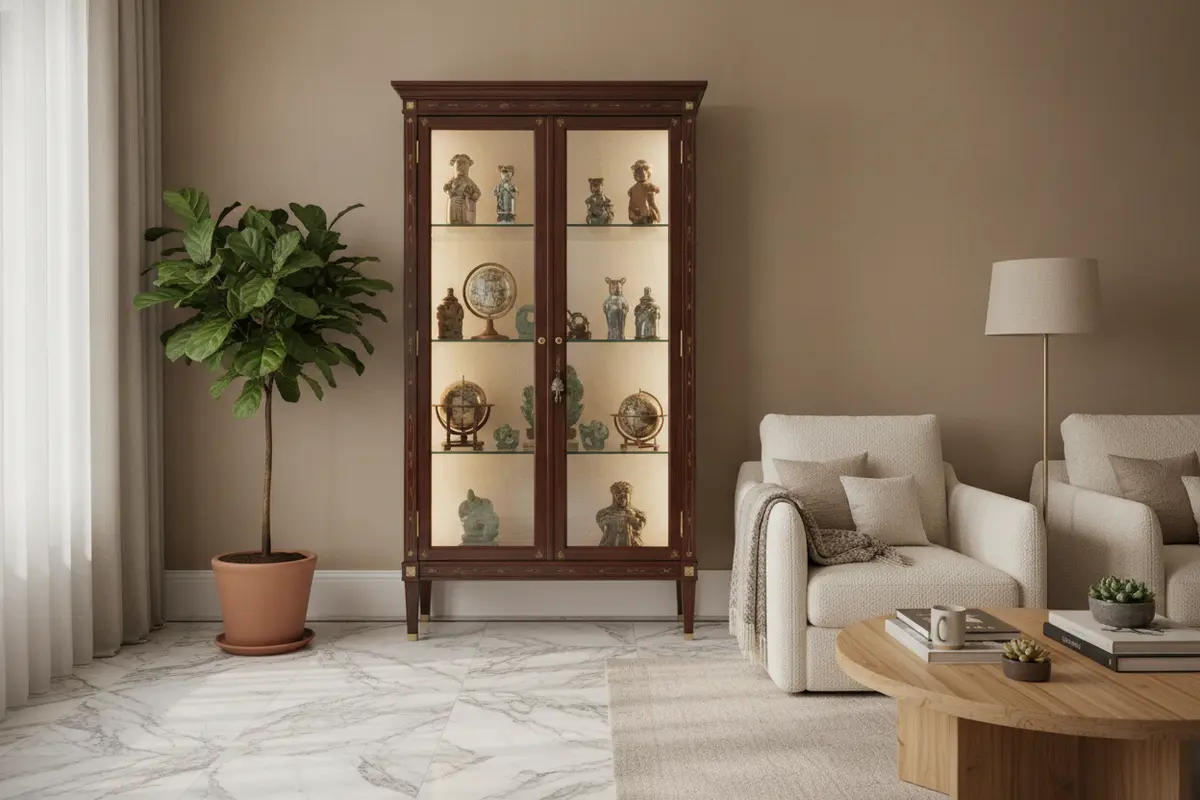
How can the room support both use and preservation?
Daily wear often comes from small repeated habits rather than one dramatic event. A drink set down without a coaster, a bag placed on a chair, or a sunny patch that falls on the same surface each afternoon can gradually affect a finish or textile. The response should be proportionate to the object. A practical room makes the safer choice easy rather than relying on constant reminders.
- Provide nearby alternatives. Place a suitable side table where people naturally want to set down a cup, book, or phone. Make a coat hook or storage point more convenient than the collectible chair.
- Keep movement clear. Protect edges and protruding details from door swings, crowded passageways, and furniture that shifts during use.
- Consider light over time. Notice when direct sunlight falls on the piece. Window coverings and thoughtful placement can help manage exposure; seek specialist advice if the surface is particularly sensitive.
- Use gentle routines. Dust with an appropriate, clean method and avoid untested products. Follow care advice suited to the material and finish.
- Make the household plan explicit. If some pieces are not for sitting or setting objects on, communicate that calmly and provide an appealing alternative.
Protection does not have to look conspicuous. A carefully placed lamp, a usable table within reach, or a change in the furniture arrangement may do more than a collection of visible warnings. The goal is a room where daily behavior naturally respects the object.
Which roles can collectible furniture play in an active room?
Not every collectible needs to function in the same way. Its role can be active, occasional, or primarily visual. A piece in good condition might be used as intended, subject to sensible care. Another may retain a functional role but be used less often. A fragile or unstable item may be better treated as a visual presence until a conservator advises otherwise.
| Role in the room | When it may suit the piece | Planning consideration |
|---|---|---|
| Regular use | The object is stable and its condition supports its intended function. | Keep the activity comfortable and provide care appropriate to its materials and finish. |
| Occasional use | The piece can function, but frequent handling or wear is not desirable. | Place it where access is possible without making it the default for every household task. |
| Visual anchor | Its condition, construction, or significance calls for minimal handling. | Give it clear sightlines and protect it from routine contact, heat, and avoidable knocks. |
This is a planning guide, not a condition assessment. If a piece has uncertain structural integrity, old repairs, fragile surfaces, or materials that need specialist care, ask a qualified professional before deciding on its use. There is no need to make every collectible do practical work. Presence, proportion, and its relationship to the rest of the room can be a meaningful contribution.
For a home where furniture and art are considered together, explore CW DESIGN’s perspective on interior design for art collectors and its guidance to designing around an art collection. The broader plan should support the collection as a whole, not turn one treasured object into a display that makes the rest of the room difficult to live in.
How should scale, seating, and light relate to the furniture?
Scale is more than the dimensions of the collectible. Consider how it reads beside the room’s architecture, seating, lighting, and other objects. A visually substantial cabinet may need a quieter wall around it, while a delicate chair can disappear when surrounded by bulky furnishings. Keep enough space for the eye to understand the piece, while maintaining a comfortable balance across the room.
Seating should invite people to gather without making the collectible a barrier. Arrange chairs and sofas for conversation and everyday use, then check the view from those seats. A person should not have to weave around a fragile object to join the group. At the same time, avoid placing a striking piece so far outside the social area that it feels unrelated to the room.
Light affects both perception and care. Observe natural light at different times, including the direction and duration of direct sun. Consider whether window treatments can moderate glare or exposure while preserving a pleasant room. For evening use, layered lighting can make furniture details legible without relying on a harsh beam. If a finish, textile, or material raises conservation concerns, get tailored guidance rather than assuming one lighting approach suits every object.
Surface and color relationships matter, too. A calm backdrop may make carved detail or patina easier to appreciate; a carefully chosen textile or nearby artwork can establish a more layered conversation. Keep these decisions in service of the object and the room, not a short-lived look. CW DESIGN’s design philosophy favors a curated, enduring relationship among art, furnishings, and daily life.
What sequence helps you plan the room?
- Define the everyday activities. List who uses the room and what they do there: reading, conversation, entertaining, or moving between spaces. Include occasional gatherings as well as ordinary routines.
- Document the furniture. Note each piece’s dimensions, current condition, intended function, material if known, and any care advice. Photograph existing wear before moving or cleaning it.
- Identify the non-negotiable routes. Mark doors, windows, circulation paths, and places where people need to sit or reach. Keep the room’s basic function intact.
- Set a use level for each piece. Choose regular use, occasional use, or visual display based on condition and appropriate professional guidance—not on appearance alone.
- Place the collection in context. Consider sightlines, scale, nearby art, architecture, light, and the way pieces relate to one another. Decide what should draw attention first and what should support it.
- Make the protective choice convenient. Add suitable landing surfaces and storage, and remove likely collision points. Make a safer habit easier than an unsafe one.
- Live with a trial arrangement. Walk through, sit down, open doors, and notice where clutter gathers. Adjust the plan before settling on a final position.
This sequence keeps the room grounded in actual use. It also makes conversations with a design professional more productive: you can explain which objects matter, what the household needs, and where the current arrangement falls short.
When more than one room is involved, note how the collection moves through the residence. A piece near an entry may set up a first impression, while furnishings in a library or sitting room may support longer, quieter use. Consider whether repeated materials, forms, or colors create continuity without making every room identical. A home-wide plan can also help decide which pieces need a generous setting and which can be appreciated in closer relation to others. This is especially useful when the collection includes works of different scales or when the furnishings have distinct practical roles. The result should feel connected from room to room while allowing each important object to be understood on its own terms.
Which decisions benefit from an on-site review?
Some choices depend on the qualities of the actual space: daylight, architectural proportions, circulation, existing finishes, and the visual relationship between furniture and art. Photographs can help communicate an idea, but they do not replace experiencing a room in person. CW DESIGN’s work is on-site; Catherine Weinstock visits spaces to understand their character and how the client lives with the collection.
An on-site review can help when a whole room or residence needs to accommodate a significant collection, when circulation and display compete, or when a cherished piece must relate to an existing interior. CW DESIGN brings together interior design, furniture restoration, and fine arts training, with an art-first approach to residential environments. You can learn more about the firm’s background and practice, or view selected residential projects.
The focus is not on making every object prominent. It is on creating a coherent home in which meaningful furnishings can be appreciated and the people who live there can move, gather, and rest comfortably.
Begin a conversation about your home
Frequently Asked Questions
Can collectible furniture be used every day?
Sometimes. First consider the piece’s condition, stability, intended function, materials, and finish. If you are uncertain whether regular use is appropriate, seek an assessment from a qualified furniture conservator before relying on it.
Should a collectible piece be the focal point of the room?
It can be, but it does not have to be. Its position should respond to its scale, the rest of the collection, the architecture, and the room’s daily activities. A quieter position may let it relate more naturally to the whole interior.
How can I protect a furniture finish in a room people use?
Make practical alternatives easy to reach, notice direct sun and likely collision points, and use only care methods suited to the material. Avoid placing drinks or other objects on a vulnerable surface unless that use is appropriate for the piece.
What if I do not know how a piece should be cared for?
Do not test cleaners, polishes, or repairs on the object. Document its condition and consult a qualified furniture conservator for advice specific to the piece and its finish.
A thoughtful room lets collectible furniture take part in daily life at a level its condition can support. When use, care, circulation, and the larger collection are considered together, the result can feel both personal and composed.