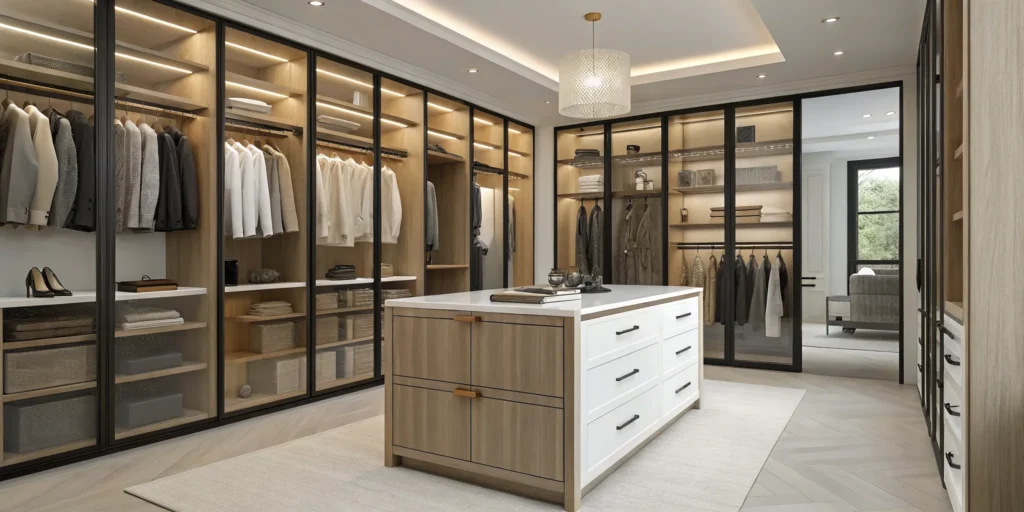
At its best, design is a perfect marriage of artistry and function. This philosophy is especially true when it comes to your most personal spaces, including the closet. We believe a closet should be as beautifully considered as any other room in your home. The practice of custom closet design is about transforming a utilitarian space into a personal sanctuary that reflects your unique style. It’s an opportunity to weave together luxurious materials, thoughtful lighting, and exquisite hardware to create a system that is both effortlessly functional and a joy to behold. This guide is for those who see their closet not just as storage, but as an extension of their home’s aesthetic, a space where every detail works in harmony to create a truly bespoke experience.
Key Takeaways
- Start with a Strategic Inventory: Before you begin designing, take a thorough count of your wardrobe and assess your daily habits to ensure the final layout is truly built for your lifestyle, not just the space.
- Prioritize Quality and Smart Design: A lasting and functional closet relies on durable materials and clever design choices, like using the full vertical height and integrating lighting, to protect your belongings and simplify your routine.
- Personalize Beyond Simple Storage: Treat your closet as a multi-functional room by incorporating elements like a vanity, comfortable seating, or unique finishes to create a beautiful retreat that reflects your personal style.
What is Custom Closet Design?
At its heart, custom closet design is the art of creating a storage space that is built entirely around you. Instead of trying to fit your wardrobe into a standard, one-size-fits-all closet, a custom design adapts to your specific collection, your habits, and the unique dimensions of your room. It’s a personalized organizational system where every shelf, drawer, and hanging rod is placed with intention. This approach transforms a purely utilitarian area into a functional and fashionable space that feels like a natural extension of your home.
This process goes far beyond simply adding more shelves; it’s a thoughtful collaboration to map out how you live. Do you have an extensive shoe collection? We can design illuminated display shelving. A love for long coats and gowns? We’ll plan for the appropriate double-height hanging space. The goal is to create a seamless experience that makes getting ready feel effortless and even enjoyable. A truly bespoke approach ensures that the final design not only holds your belongings but also reflects your personal style, integrating perfectly with the aesthetic of your home. It’s about making your space work for you, down to the last detail.
Built-In, Modular, and Walk-In Closets
When you hear “custom closet,” you might picture a few different things, and you’d be right, as the concept applies to several formats. A walk-in closet is essentially a small room dedicated to your wardrobe, offering the most space to create designated zones for clothing, shoes, and accessories. Built-in closets are integrated directly into a room’s architecture for a seamless, permanent look. Finally, modular closet options use individual, pre-made components that can be arranged in various configurations. This offers a great deal of flexibility and adaptability for different spaces and evolving needs.
Why Custom is Better Than Off-the-Shelf
Choosing a custom closet over a standard system comes down to three key advantages: quality, fit, and personalization. A custom closet is an investment in durability. Using high-quality materials like solid wood, premium laminates, and sturdy hardware means your closet will last for decades while protecting your clothing and accessories. More importantly, a custom solution is tailored to your lifestyle, ensuring every item has a home. This thoughtful organization reduces clutter and streamlines your daily routine. Instead of a chaotic space, you get a functional system that adapts to you, with special drawers for jewelry, angled shelves for shoes, or valet rods for planning your outfits.
How to Plan a Custom Closet
A truly exceptional custom closet begins long before the first shelf is installed. Thoughtful planning is the foundation for a space that is not only beautiful but also perfectly functional for your lifestyle. By taking the time to assess, map, and budget, you can ensure your new closet is a seamless extension of your home and a daily source of ease and organization.
Assess Your Space and Wardrobe
The most common misstep in closet design is planning the space without a complete picture of what it needs to hold. Before you dream of finishes and hardware, take a thorough inventory of your wardrobe. This means counting everything: shoes, handbags, suits, gowns, and accessories. Consider how you prefer to store items. Are you a folder or a hanger? Do you have an extensive collection of watches or jewelry that needs a special home? This detailed assessment allows you to curate your collection and ensures your final design has a designated place for every piece. Don’t forget to look up; using the full vertical height of your closet is a simple way to maximize storage and create a more spacious feel.
Map Out Your Layout
Once you know what you need to store, you can decide where it will go. A well-designed closet feels intuitive, with your most-used items easily accessible. Think about your daily routine and design the layout around it. Many people settle for generic, one-size-fits-all systems, but a custom plan should be tailored to your specific needs. Do you want a built-in vanity for getting ready? A comfortable seating area? Dedicated drawers for athletic wear? Sketching a basic floor plan can help you visualize the flow and ensure every inch is intentional. This is your opportunity to create a space that works precisely for you, eliminating clutter and simplifying your life.
Set a Realistic Budget
Creating a budget is a practical step that brings your vision into focus. While bespoke closets are an investment, there are beautiful, high-quality options across a range of price points. The final cost will depend on factors like size, materials, and the complexity of your chosen features. Researching the potential costs of a custom closet can help you set a realistic budget from the start. Consulting with a design professional can also help you make smart decisions, ensuring you invest in the features that will provide the most value and joy. A professional can guide you toward materials and solutions that meet your aesthetic goals without exceeding your financial plan.
Key Features of a Custom Closet System
A truly exceptional custom closet is more than just a place to hang your clothes; it’s a personalized system where every detail is designed around you. The magic lies in the thoughtful combination of features that work together to create a space that is both beautiful and effortlessly functional. When planning your design, think about how each component can simplify your daily routine and protect your wardrobe. From the specific depth of a shelf to the warmth of integrated lighting, these key features are what transform a standard closet into a bespoke sanctuary. A well-designed system considers not only what you own, but how you live, ensuring every item has a place and is always within easy reach. This thoughtful approach turns the simple act of getting dressed into a seamless and enjoyable experience.
Shelving and Drawer Options
The foundation of a great closet is storage that’s built for your specific belongings. Instead of trying to fit your items into generic spaces, a custom design adapts to your wardrobe with a variety of shelving and drawer options. Adjustable modular components allow you to create tailored configurations for every storage challenge, from deep drawers for chunky knitwear to shallow, velvet-lined trays for jewelry and watches. Consider angled shelves to display a shoe collection or glass-front cabinets to showcase designer handbags. The goal is to design a system where every item, whether it’s a collection of silk scarves or bulky luggage, has a designated home that keeps it organized and accessible.
Hanging Space and Rods
Properly planned hanging space is critical for preserving the life of your garments and making your morning routine smoother. A common mistake is not accounting for the actual length and volume of your clothes. A mix of single and double-hang rods is essential for maximizing vertical space; double rods work perfectly for shirts, skirts, and trousers, while single rods are necessary for longer items like dresses, coats, and gowns. To ensure your clothes hang freely without being crushed, you’ll want to plan for shelving and hanging sections that are at least 14 inches deep. This thoughtful allocation of space prevents wrinkles and makes it easy to see everything at a glance.
Materials, Finishes, and Hardware
The materials you choose define the closet’s character, durability, and overall sense of luxury. A custom closet built with solid wood or high-quality laminate shelving and sturdy hanging rods is an investment that will last for decades while protecting your belongings. The finish, whether it’s a rich wood grain, a sleek lacquer, or a soft painted hue, sets the aesthetic tone. Hardware like handles, knobs, and hooks acts as the finishing touch, adding a layer of personality and refinement. These details are where you can infuse artistry into the design, creating a space that feels as considered and elegant as the rest of your home.
Integrated Lighting
Lighting is one of the most transformative features in a custom closet, shifting it from a purely utilitarian space to a luxurious dressing room. Good lighting is not only practical, making it easier to distinguish colors and find what you’re looking for, but it also highlights the beauty of the design itself. Consider a layered approach with LED strips along shelves to illuminate clothing, motion-activated lights inside drawers, and spotlights to accent a favorite pair of shoes or a handbag. This intentional use of light creates a warm, inviting atmosphere that makes your closet feel like a high-end boutique.
Smart Technology and Sustainable Materials
Modern closet design seamlessly blends innovation with environmental consciousness. For those looking to incorporate eco-friendly elements, there are beautiful and durable options available, including sustainable materials like FSC-certified woods and bamboo. At the same time, smart technology can add a layer of convenience and security. Imagine motorized wardrobe lifts that bring out-of-reach clothing down to you with the touch of a button, or drawers that lock electronically to secure valuables. These forward-thinking features can enhance the functionality of your closet, making it a truly modern and personalized space that reflects your values and lifestyle.
Common Design Mistakes to Avoid
A custom closet is an investment in your home and your daily routine. While the design process is exciting, a few common missteps can prevent you from creating a truly functional and beautiful space. By being aware of these potential pitfalls from the start, you can ensure your final design is everything you dreamed of and more. Let’s walk through the five most frequent mistakes and how to sidestep them for a flawless result.
Ignoring Vertical Space
One of the most overlooked opportunities in closet design is the space above your head and below your hanging clothes. Many standard closets only use the area at eye level, leaving valuable real estate untouched. To truly maximize your storage, you need to think vertically. Consider installing double-hanging rods for shirts and skirts, placing one above the other. High shelves are perfect for storing out-of-season items, luggage, or keepsake boxes. By using the full height of your closet, you not only gain more storage but also create a space that feels more expansive and thoughtfully planned.
Underestimating Your Storage Needs
It’s easy to plan a closet for the wardrobe you have right now, but a great design anticipates your future needs. Before you begin, take a full inventory of everything you own, from clothing and shoes to handbags and accessories. Then, think about your lifestyle and shopping habits. Do you have a growing collection of shoes? Do you need dedicated space for formal wear or bulky ski jackets? A common regret is not planning for growth. A truly custom closet should feel spacious and organized from day one, with plenty of room to accommodate new additions to your collection without feeling cluttered.
Skimping on Materials
Your closet is one of the most frequently used spaces in your home, with drawers opening and closing daily and rods supporting the weight of your wardrobe. Choosing low-quality materials is a mistake that can lead to sagging shelves, broken hardware, and a worn-out appearance in just a few years. Investing in high-quality materials like solid wood or premium laminates, along with sturdy hardware, ensures your closet will stand the test of time. This commitment to quality craftsmanship not only guarantees durability but also protects your valuable clothing and accessories, making it a wise long-term investment in your home.
Getting Measurements Wrong
A one-size-fits-all approach simply doesn’t work for a custom closet. Every detail, from the height of the hanging rods to the depth of the drawers, should be tailored to you and your wardrobe. A common error is designing a layout without considering how you actually live. For example, if you have many long dresses, you’ll need adequate full-length hanging space. If you prefer to fold your sweaters, you’ll want more shelves than drawers. Precise, personalized measurements are essential to creating a closet that feels intuitive and works for your specific needs, not against them.
Overlooking Lighting
A dark, shadowy closet is both impractical and uninspiring. Proper lighting is not a luxury; it’s a fundamental component of good closet design. It allows you to see your clothes clearly, distinguish between similar colors like black and navy blue, and find what you need without frustration. More than that, thoughtful lighting can transform your closet into a beautiful, boutique-like space. Consider incorporating integrated LED lighting within shelves, drawers, and hanging areas. Good lighting makes the space more functional and highlights the beauty of your collection and the design itself.
Finding the Right Custom Closet Service
Once you have a vision for your closet, the next step is finding the right partner to bring it to life. The market offers a spectrum of services, from completely hands-off bespoke design to hands-on DIY kits. Understanding these different approaches will help you choose the path that best aligns with your project’s scope, budget, and your desire for a truly personalized space. Each option has its merits, whether you’re looking for a seamless, professionally managed project or a more budget-conscious, self-directed solution.
The Bespoke Approach: CW Design
For a closet that is an impeccable extension of your home and personal style, a bespoke approach is the ultimate solution. This is where firms like ours, CW Design, excel, creating spaces that are meticulously tailored to your wardrobe, lifestyle, and aesthetic vision. The process is collaborative and detailed, ensuring every element, from the material palette to the hardware, is a perfect fit. Similarly, services like California Closets offer a personalized experience, starting with a design consultation to map out a storage solution that fits your unique needs. This high-touch method guarantees a result that is not just functional but also a beautiful, integrated piece of your home’s interior architecture.
Semi-Custom Systems
If you’re looking for a happy medium between a fully bespoke design and an off-the-shelf unit, semi-custom systems offer a great balance of personalization and value. Companies like IKEA have developed popular solutions, such as their PAX and AURDAL systems, that give you a framework to design an efficient closet. You can select and arrange modules, drawers, and rods to fit your space and storage needs. While you won’t get the same level of unique materials or finishes as a bespoke project, these walk-in wardrobes provide a solid, functional foundation that you can tailor to a significant degree, making them a smart choice for many projects.
Modular and DIY Kits
For those who enjoy a hands-on project and want maximum flexibility on a budget, modular kits are an excellent option. Companies like Modular Closets have designed systems that are straightforward to assemble and can be configured in countless ways to suit your specific space. This approach empowers you to act as your own designer, piecing together the components you need to create your ideal layout. Many of these companies also provide free design assistance, giving you expert guidance to ensure your DIY project is a success. It’s a practical and affordable way to achieve a custom-fit closet with a personal touch.
How Much Does a Custom Closet Cost?
The cost of a custom closet can span a surprisingly wide range, from a few hundred dollars for a simple DIY kit to tens of thousands for a bespoke dressing room. Understanding the different tiers of closet systems will help you align your vision with your budget. The final price tag ultimately comes down to the size of your space, the materials you select, and the complexity of the design you envision. Let’s look at what you can expect at each level.
Entry-Level Systems
For those seeking organization on a modest budget, entry-level systems offer a practical and accessible solution. Brands like IKEA provide modular walk-in wardrobes and closet components that you can often configure and install yourself. These systems are designed for flexibility, allowing you to place shelves, drawers, and rods where you need them most. While they may not offer the high-end materials or deep customization of more expensive options, they are an excellent way to bring order to a chaotic space quickly and affordably. They can be a great fit for a secondary bedroom, a first apartment, or as a temporary solution while you plan a more extensive renovation.
Mid-Range Options
Stepping into the mid-range brings you to semi-custom solutions from companies like California Closets. This tier offers a significant jump in personalization and service. Typically, the process begins with a design consultation to create a layout tailored to your specific wardrobe and space. You’ll find a much broader selection of finishes, hardware, and accessories, from built-in hampers to jewelry trays. These custom storage solutions are professionally installed, ensuring a polished and integrated look. This option strikes a nice balance, providing a personalized design and higher quality materials without the investment required for a fully bespoke project.
High-End and Bespoke Designs
At the highest end, a bespoke closet is a completely custom-built space designed to be a seamless extension of your home and personal style. This is where you collaborate with an interior design firm to create a truly one-of-a-kind dressing room or walk-in closet. Every detail is considered, from the grain of the wood to the feel of the drawer pulls. This approach allows for the use of premium materials, exquisite craftsmanship, and integrated features like custom lighting and elegant seating. A firm with a multidisciplinary background, like CW Design, can weave together artistry and function to transform a simple closet into a personal sanctuary that reflects your unique identity.
What Affects the Final Price?
Regardless of which tier you choose, several key factors will influence the final cost of your project. The size of the closet is the most obvious driver; a larger space requires more materials and labor. The complexity of the design, including intricate drawer configurations or specialized storage, also plays a significant role. Finally, the materials you select will heavily impact the price. Laminates and melamine are more budget-friendly, while solid wood, high-end veneers, and custom hardware will increase the cost. Understanding these factors that affect the price will help you make informed decisions as you plan your perfect closet.
DIY vs. Professional: Which is Right for You?
Deciding between a do-it-yourself project and hiring a professional designer comes down to your budget, timeline, and the complexity of your vision. One path offers the satisfaction of building something with your own hands, while the other provides a seamless, expert-led experience. Let’s explore which approach is the right fit for your custom closet project.
When to DIY Your Closet
A DIY closet project can be incredibly rewarding if you have a clear vision and are comfortable with basic tools. This path is ideal for straightforward spaces, like a standard reach-in or a small walk-in closet, where the layout is simple. If you enjoy the creative process and want to manage your budget closely, taking on the project yourself gives you complete control. It requires patience and a willingness to learn, but the result is a custom space you built from the ground up. Just be sure to measure carefully, as mistakes can be costly and time-consuming to fix.
Helpful Online Design Tools
Going the DIY route doesn’t mean you have to design your closet on a piece of notebook paper. Many companies now provide intuitive online design tools that help you visualize your layout in 3D. These platforms allow you to drag and drop shelves, drawers, and hanging rods to see how everything fits together before you commit. Experimenting with different configurations digitally can help you catch potential design flaws and make the most of your space. It’s a fantastic way to bring your ideas to life and build a clear plan for your project.
When to Hire a Professional
If your project is complex, you have an unconventional space, or you simply want a flawless, high-end finish, hiring a professional is the best investment. A designer can see possibilities you might not have considered, finding clever ways to maximize every inch of your closet. They handle all the technical details, from precise measurements to coordinating installation, saving you time and preventing frustrating mistakes. More importantly, a seasoned designer brings an artistic eye to the project. Their multidisciplinary background and access to exclusive materials can transform a functional closet into a truly bespoke sanctuary that reflects your personal style.
The Latest in Custom Closet Design
A custom closet is more than just a place to hang your clothes; it’s a personal space that should reflect your style and streamline your daily routine. As our lives and wardrobes evolve, so do the possibilities for closet design. The latest trends move beyond simple storage, transforming closets into beautiful, functional, and highly personalized rooms. From smart technology that inventories your wardrobe to sustainable materials that align with your values, today’s custom closets are designed to be as unique as you are. These innovations focus on creating a space that is not only organized but also a source of daily inspiration and calm.
Smart Closets and Technology
Technology is seamlessly integrating into every corner of the home, and the closet is no exception. The concept of a “smart closet” is becoming a reality, with features designed to make managing your wardrobe effortless. Imagine digital tools that allow you to scan and catalog your clothing, creating a virtual inventory you can access from your phone. This makes it simple to plan outfits, pack for travel, and identify gaps in your collection without ever having to rummage through hangers. It’s the ultimate fusion of fashion and function, bringing a new level of organization and ease to your daily dressing ritual.
Sustainable and Eco-Friendly Materials
Conscious living is influencing our design choices, and closets are increasingly being built with sustainability in mind. There is a growing demand for eco-friendly materials that are both beautiful and kind to the planet. Think shelving crafted from reclaimed wood, organizers made from rapidly renewable bamboo, or panels constructed from recycled materials. Choosing sustainable design elements doesn’t mean compromising on luxury. In fact, these materials often bring a unique texture, warmth, and story to the space, creating a closet that feels both grounded and sophisticated. It’s a way to build a personal sanctuary that aligns with a modern, mindful lifestyle.
Personalized Aesthetics
Your closet should be a true extension of your personal style. The trend of personalization is moving beyond layout and into the very look and feel of the space. Homeowners are using their closets as an opportunity for self-expression, choosing bold colors and unique finishes. Instead of traditional white or wood, consider a deep emerald green, a rich navy, or even a dramatic wallpaper to line the space. Custom hardware, from leather pulls to brass knobs, can act as the jewelry of your closet. This approach transforms a functional area into a deeply personal statement, creating a jewel-box space that you love spending time in.
Multi-Functional Closet Rooms
For many, the walk-in closet is evolving into a multi-functional room that serves as a private retreat. It’s no longer just about storage; it’s about creating a personal sanctuary for dressing, relaxing, and preparing for the day. These spaces often include features like a built-in vanity with perfect lighting for makeup application, a comfortable ottoman or chaise lounge for trying on shoes, or even a small island with a countertop for folding clothes or displaying accessories. Some designs even incorporate a mini-fridge for morning coffee or evening champagne, turning the closet into a true dressing room experience that feels both luxurious and incredibly practical.
Open Shelving and Displays
If you’ve invested in beautiful shoes, handbags, and accessories, why hide them away? A major trend in closet design is the use of open shelving and glass-front displays to showcase your most treasured items. This boutique-inspired approach turns your wardrobe into a curated collection. Think of a wall of shoes displayed like art, handbags sitting on illuminated shelves, and folded sweaters neatly stacked and visible. Integrated lighting is key to this look, with options like backlit panels, illuminated hanging rods, and in-drawer lights that not only add ambiance but also make it easy to see and access everything you own. It’s about creating a space that allows you to appreciate the items you love every single day.
Start Designing Your Perfect Closet
Turning the dream of a perfect closet into a reality starts with a thoughtful plan. Before you even think about materials or finishes, the most important step is understanding exactly how you live and what you own. A truly bespoke closet is more than just a storage space; it’s a system designed around your personal collection and daily routines. By taking the time to assess your needs and map out your vision, you create the foundation for a space that is both beautiful and effortlessly functional. These initial steps ensure your final design serves you perfectly for years to come.
Take a Detailed Inventory
One of the most common missteps in closet design is planning the space without a clear picture of what needs to go inside. Start by taking a complete inventory of your wardrobe. Count your shoes, measure the length of your dresses and coats, and decide how many items you prefer to hang versus fold. Do you have an extensive collection of handbags that deserve a special display? Are you a watch aficionado who needs secure, organized drawers? This detailed assessment is the blueprint for your design, ensuring every inch is tailored to your specific belongings and prevents you from wasting valuable space.
Create Functional Zones
Think of your closet like a high-end boutique, with distinct areas for different categories. Creating zones makes your daily routine smoother and keeps everything organized. You might dedicate one wall to hanging clothes, separating work attire from casual wear. Another area could feature open shelving for sweaters and drawers for accessories. Consider creating a dedicated zone for shoes, whether on angled shelves or in clear boxes. By dividing your closet into logical sections based on item type or how often you use them, you make it incredibly easy to find exactly what you need, right when you need it.
Plan for Your Future Self
Your wardrobe isn’t static, and your closet shouldn’t be either. A great design anticipates your future needs, offering flexibility as your collection evolves. Incorporating adjustable shelving and modular hanging rods allows you to reconfigure the space as needed. For example, you might need more long-hanging space now but could require more shelving later. Building in this adaptability ensures your closet remains functional and organized through every season of life. This kind of forward-thinking is key to creating a space you won’t regret later, making your investment truly timeless.
Balance Beauty with Function
The most successful closet designs are a perfect marriage of style and utility. While maximizing storage is crucial, don’t forget about the elements that make the space feel luxurious and personal. Integrated lighting is a perfect example. It’s not just functional; it illuminates your collection and adds a layer of sophistication. Likewise, the hardware you choose, from drawer pulls to hanging rods, contributes to the overall aesthetic. At CW Design, our philosophy centers on this very balance, ensuring that every functional component is also a beautiful design element in its own right.
Frequently Asked Questions
Is hiring a professional designer really worth it for a closet? Absolutely. While a DIY approach can work for simple layouts, a professional designer brings a level of expertise that prevents costly mistakes and saves you from the stress of managing a complex project. They have a trained eye for maximizing space in ways you might not see and can create a truly seamless design that feels integrated with your home’s architecture. More importantly, a designer brings an artistic vision, helping you select materials and finishes that transform a functional closet into a beautiful, personal sanctuary.
My space is small or has an awkward shape. Can I still have a great custom closet? Yes, this is exactly where a custom approach makes all the difference. Off-the-shelf systems are made for standard, boxy rooms and simply won’t work in a space with sloped ceilings, tight corners, or unusual dimensions. A professional designer specializes in solving these spatial puzzles. They can create a bespoke solution that uses every available inch, turning an awkward area into a highly functional and elegant storage space that feels intentional and perfectly fitted.
What’s the single most important thing to do before I start designing my closet? Before you think about finishes or features, you must take a detailed inventory of your wardrobe. This goes beyond just counting your shoes; it means understanding what you own and how you live. Measure the space your long coats require, decide if you prefer to fold sweaters or hang trousers, and identify any special collections, like handbags or jewelry, that need a specific home. This personal audit is the blueprint for a closet that truly works for you.
Besides size, what really determines the cost of a high-end custom closet? The final price of a luxury closet is shaped by three main factors: materials, craftsmanship, and integrated features. The choice between a standard laminate and a solid hardwood or a custom lacquer finish will significantly affect the cost. Similarly, the level of craftsmanship, such as dovetailed drawer joints, adds to the durability and feel. Finally, incorporating sophisticated features like integrated LED lighting, custom hardware, or a built-in vanity will elevate the project from a simple storage solution to a bespoke dressing room.
How can I make my closet feel like a luxury dressing room and not just a storage space? Creating a luxurious feel is about layering thoughtful details that appeal to the senses. It starts with great lighting; integrated, warm-toned light makes a space feel like a high-end boutique. Incorporating a comfortable place to sit, like an ottoman or a small bench, invites you to spend time in the space. Finally, use the design to showcase your favorite items with open shelving for handbags or angled displays for shoes. It’s this combination of function, comfort, and personal expression that creates a true dressing room experience.