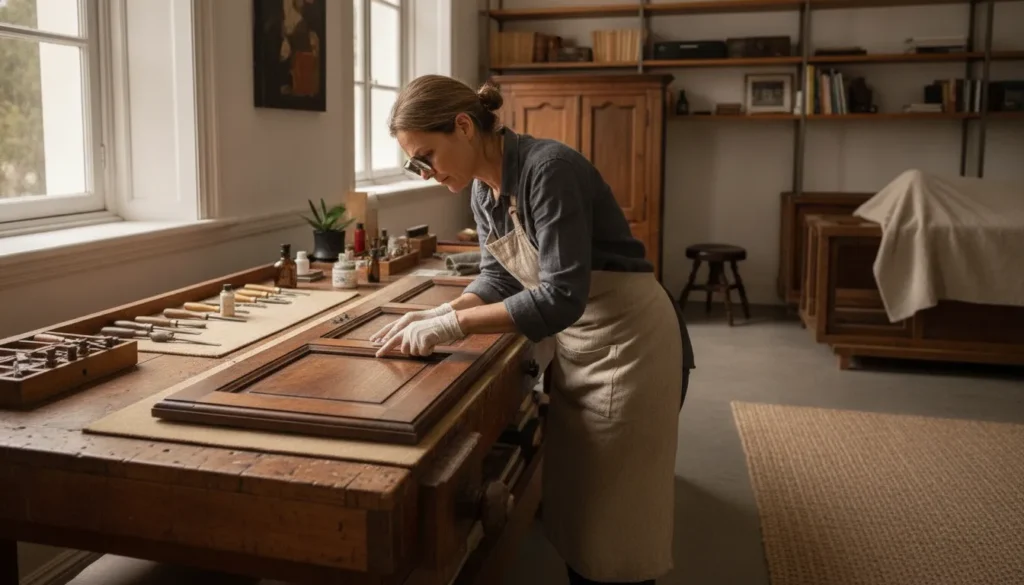
A treasured table, chair, or cabinet can carry more than age. Its materials, joinery, finish, and history all shape how it should be cared for. Restoration is not simply a cosmetic makeover or a way to make an old piece look new. It is a considered process of repairing and preserving furniture while respecting its character.
Contact CW DESIGN to discuss an on-site furniture restoration project.
In practical terms, what is furniture restoration? It is the skilled assessment, repair, and conservation of a piece so its structure, materials, and distinctive qualities can continue to serve a meaningful purpose. The appropriate treatment depends on the furniture itself, its condition, and what the owner hopes to preserve.
For collectors and homeowners, that judgment matters as much as technical skill. Furniture conservation draws on historical, artistic, scientific, and making knowledge, while each object still requires an individual assessment. CW DESIGN brings this perspective to its bespoke furniture fabrication and restoration, connecting craftsmanship with the way valued pieces live within a considered interior. The distinction between restoration, refinishing, repair, and reupholstery is the natural place to begin.
What is furniture restoration?
Furniture restoration is the careful repair and preservation of a piece so its structure, materials, character, and history can be understood and respected. It may address damaged wood, loose components, worn surfaces, or other signs of age, but it is not simply a cosmetic makeover. The appropriate treatment depends on the individual piece and on what should be retained.
Repair usually refers to correcting a specific structural or material problem, such as a failed joint or damaged veneer. Restoration is broader. It considers how the repair, surface treatment, and existing craftsmanship work together. Conservation is more specialized still. The field developed from simple furniture repair into a highly specialized profession, drawing on scientific, artistic, and historical knowledge as well as furniture-making skills. The Smithsonian’s overview of furniture conservation explains this interdisciplinary distinction.
For collectors and homeowners, that distinction matters. A thoughtful restoration should not erase the evidence that gives a piece its identity. It should begin with close assessment, respect the original materials where possible, and use intervention proportionate to the condition and significance of the furniture.
What is the difference between repair and conservation?
Answer: Repair fixes damage or weakness. Conservation takes a wider view, combining historical, artistic, scientific, and practical knowledge to guide how the piece is handled and preserved. Restoration can include repair, but its aim is to return the furniture to a coherent, usable condition without treating every sign of age as a defect.
At CW DESIGN, Catherine Weinstock’s furniture restoration training includes intensive European study and the London Metropolitan University Conservation of Historic Furniture program. The Brooklyn-based practice combines residential design, furniture restoration, and fine arts expertise, with a conservation-oriented connection to traditional European craftsmanship. Its broader perspective can help place a valued object within a considered interior. For related work, explore expert furniture restoration and fabrication.
The difference between furniture restoration, refinishing, and reupholstery
These terms describe related but distinct forms of furniture care. The right treatment depends on the piece’s materials, condition, construction, history, and intended use. Restoration is the broadest and most considered approach: it may include structural repair, surface work, conservation, and upholstery when those steps are necessary to preserve the furniture as a whole. Refinishing is narrower, while reupholstery addresses the textile and padded elements.
| Treatment | Primary focus | What it may involve | When it is appropriate |
|---|---|---|---|
| Restoration | The furniture as an object | Assessment, structural repair, veneer work, surface treatment, and related conservation | When a piece needs coordinated care across several materials or conditions |
| Refinishing | The surface and finish | Cleaning, reducing damage to the finish, or applying a new surface treatment | When the structure is sound but the finish is worn, damaged, or visually inconsistent |
| Repair | Specific damage or failure | Regluing joints, stabilizing components, repairing veneer, or addressing warped boards | When a defined structural or material problem can be treated without broader intervention |
| Reupholstery | Fabric, padding, and upholstery support | Removing worn coverings and, where needed, replacing padding and upholstery | When the upholstered elements are damaged or no longer support the piece’s use |
A restoration project can include refinishing or reupholstery, but those services do not automatically amount to full restoration. For example, a chair may need new upholstery while its frame remains stable. Conversely, a cabinet may require structural repair and careful veneer treatment without any textile work. Veneered furniture is available in many qualities, and localized loose veneer may be repairable, while extensive damage may be more difficult to address. Expert furniture restoration and fabrication begins with identifying what the object actually needs, rather than applying the same treatment to every piece.
That distinction matters when preserving furniture with history, craftsmanship, or personal significance. A measured assessment can protect original material and avoid replacing sound elements simply to create a more uniform appearance.
What types of furniture are good candidates for restoration
A strong candidate is not defined by age alone. A piece may merit careful restoration because of its construction, history, condition, or role in a collection. The right decision is individual: assess the damage, the item’s significance, its intended use, and the scope of work required before choosing a treatment. The Alabama Cooperative Extension recommends weighing the extent of damage, the cost of the article, sentimental value, and restoration cost, while emphasizing that each piece should be considered on its own. Read the full furniture assessment guidance.
- Well-made solid wood pieces: Solid wood furniture can usually be restored unless the damage is severe. Signs of interest may include sound construction, meaningful proportions, or joinery that deserves to remain visible. Cleaning, drying, and regluing may form part of the work, while slightly warped boards may sometimes be removed and straightened.
- Furniture with a meaningful history: An inherited, collected, or otherwise significant piece may deserve assessment even when its condition is imperfect. Antiques may justify the time and effort of restoration, but age alone does not promise a successful result or determine the appropriate treatment.
- Veneered furniture with localized damage: Veneer varies considerably in quality. Extensive damage may be costly to repair, while veneer that is loose in only a few places may be repairable. A specialist should examine the substrate, adhesion, edges, and surrounding finish before any surface is disturbed.
- Upholstered furniture with a sound underlying form: Upholstered pieces may be salvageable depending on their general condition. If damage is extensive, the padding and upholstery may need replacement, but the frame, shape, and relationship to the room can still make an assessment worthwhile.
For collectors, the central question is whether restoration will respect the object’s material character and intended use. That calls for a measured review rather than a promise about value. In a larger interior, restoration can also extend the life of fine furnishings while preserving the qualities that made the piece worth keeping.
The restoration process: assessment, stabilization, conservation, and finishing
Restoration begins with restraint. The aim is to understand what a piece is made of, what has happened to it, and which intervention will preserve its character without disguising its history. The sequence below is intentionally handled by a qualified specialist rather than improvised at home. Extensive repair or reveneering, for example, should be entrusted to a reliable furniture repair professional, according to the Alabama Cooperative Extension.
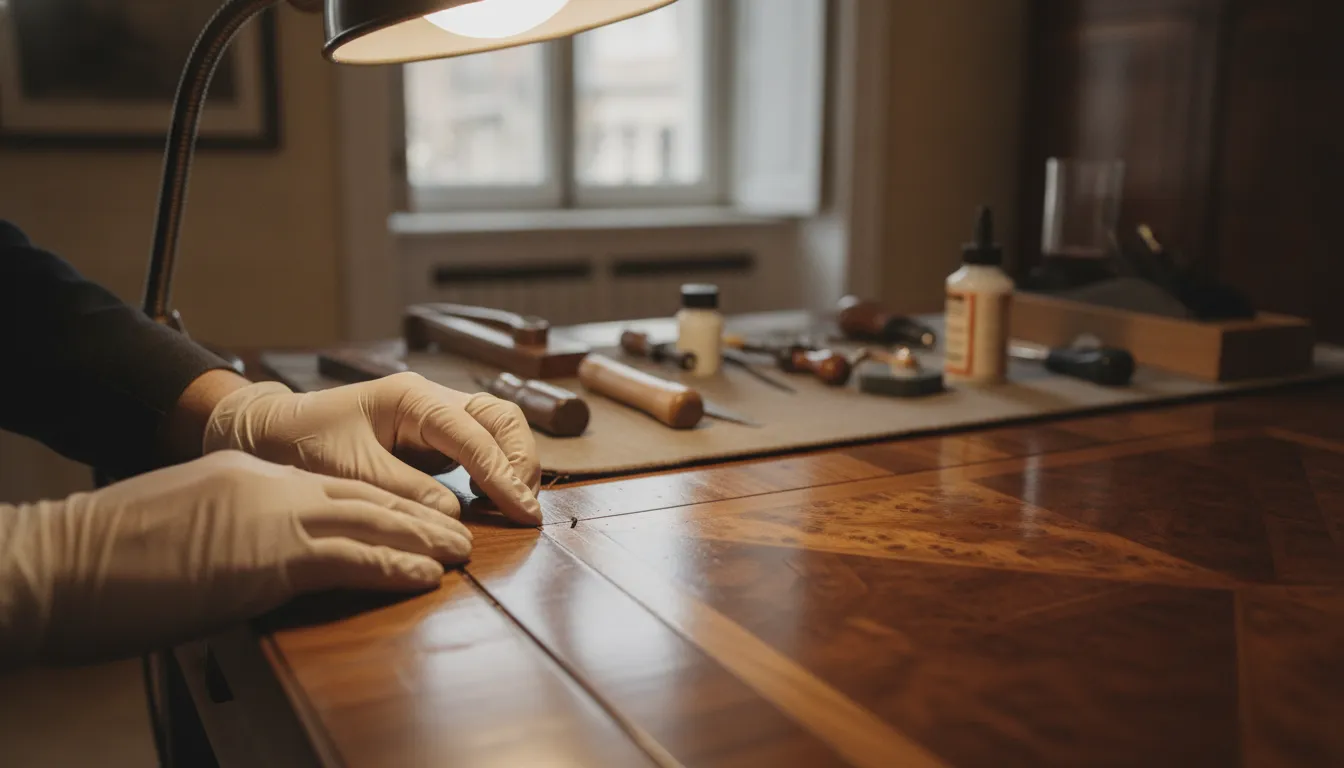
- Assessment. The specialist examines the structure, surface, joinery, veneer, upholstery, and signs of moisture or previous repair. Each piece should be considered individually. The extent of damage, sentimental importance, the nature of the object, and the appropriate scope of work all inform the next decision. This is also the point to document condition and distinguish an authentic aged surface from damage that requires treatment.
- Stabilization. The immediate priority is to prevent further deterioration. Depending on the material and condition, this may involve careful cleaning, controlled drying, structural repair, or storage in a dry, well-ventilated place. Slightly warped boards may sometimes be removed and straightened, but valuable furniture should not be forced, sanded, glued, or stripped without professional assessment.
- Conservation. Treatment is selected to respect the furniture’s construction. Solid wood may require cleaning, drying, and regluing. Veneer requires a different approach, particularly where it is loose or extensively damaged. Flood-damaged pieces need cleaning and drying, with mildew removed, while upholstered furniture may require replacement of damaged padding and upholstery. The objective is a sound, coherent piece, not a generic new appearance.
- Finishing. Once the structure and materials are secure, finishing work can restore legibility and balance to the surface. The level of intervention should suit the object and its place in the home. CW DESIGN’s art-centered approach to interiors treats furniture as part of a larger composition, where craftsmanship, history, and the surrounding collection remain in conversation.
When restoration makes more sense than replacement
The decision is rarely about age alone. A piece may deserve careful restoration because it carries family history, belongs to a significant collection, or has materials and workmanship that are difficult to replicate. It may also be the right choice when its proportions, patina, or relationship to the room are essential to the interior.
A measured assessment should consider the extent of the damage, the nature of the piece, its sentimental significance, and the work required. The Alabama Cooperative Extension recommends weighing damage, the cost of the article, sentimental value, and restoration cost, while emphasizing that each piece should be considered individually: furniture salvage guidance. That framework is useful even when the decision is being made for a highly personal or collectible object.
What should I consider before replacing a piece?
Ask whether the furniture has qualities that a new object would not provide: a meaningful history, distinctive craftsmanship, compatible scale, or authentic materials. Also ask whether the damage is localized and technically manageable, or so extensive that the original structure and finish would be difficult to preserve. An honest specialist should explain the condition and possible scope without promising a particular outcome.
Restoration may be especially worth exploring for antique, inherited, or collectible furniture. That does not mean every older piece should be saved, or that restoration automatically changes its financial value. It means the decision should account for significance as well as condition. For art collectors and affluent homeowners, the goal may be to preserve an object’s role within a larger, curated environment rather than replace it with something merely similar.
This perspective aligns with CW DESIGN’s preference for bespoke, timeless interiors and authentic materials over mass-produced or trend-driven furnishings. Read more about how thoughtful design can extend the life of fine furnishings, then assess the individual piece in the context of the home, the collection, and the quality of work it can responsibly receive.
How to find a qualified furniture restoration specialist in New York
Begin with the specialist’s training, then look closely at how they think about the object in front of them. Furniture restoration calls for more than an attractive finish. Ask whether the practitioner can distinguish solid wood, veneer, joinery, upholstery, and historic surface treatments, and whether they will explain the risks of each proposed intervention.
Catherine Weinstock’s background offers one example of the kind of preparation worth investigating. Her credentials include intensive European study in furniture restoration and formal training in the London Metropolitan University’s Conservation of Historic Furniture program. CW DESIGN describes this work as conservation-oriented and connected to traditional European craftsmanship. You can read more about Catherine Weinstock’s furniture restoration training before beginning a conversation.
Questions to ask before work begins
- What is your training? Look for specific study, not only general claims about craftsmanship. Training across restoration, interior design, and fine arts can be especially relevant when a piece must function within a larger collection or home.
- How will you assess the materials? Veneer, solid wood, finishes, and upholstery respond differently to cleaning, repair, and stabilization. A careful specialist should inspect the piece in person and explain what is known, what is uncertain, and what should remain untouched.
- What will be documented? Request a clear description of condition, proposed scope, materials under consideration, and decisions that may change if concealed damage appears. Documentation helps preserve the object’s history and keeps the work aligned with your priorities.
- How does the piece fit the commission? Restoration may be part of a broader interior project rather than an isolated cosmetic service. Reviewing the practice’s approach to artisan sourcing and custom furnishings can help you judge whether its perspective suits the room, collection, and level of care involved.
For a New York homeowner or collector, an on-site assessment is an important test of fit. The specialist should see the furniture, its setting, and the surrounding light and materials before recommending a course. That measured beginning is more valuable than a standardized promise. It also reflects how CW DESIGN connects restoration with a considered, art-centered interior.
Contact CW DESIGN to discuss an on-site furniture restoration project.
Frequently Asked Questions
Is furniture restoration the same as furniture repair?
Not exactly. Repair addresses a specific failure, such as a loose joint or damaged veneer. Restoration takes a broader view of the object’s materials, history, finish, and intended character, while conservation aims to preserve significant original evidence. The appropriate scope depends on the piece and its condition.
How do I know whether a piece is worth restoring?
Consider the extent of damage, the piece’s construction and condition, its sentimental or historical importance, and the likely restoration effort. The Alabama Cooperative Extension recommends evaluating each piece individually rather than applying a single rule to every item: extension guidance on salvaging furniture.
Can solid wood or veneered furniture be restored?
Often, yes, but the treatment differs. Solid wood may require cleaning, drying, regluing, or careful correction of slight warping. Veneer must be assessed for its quality, adhesion, and extent of damage. Localized loose veneer may be repairable, while extensive damage requires more specialized intervention.
Should I choose an original color and hardware?
When preservation is the priority, begin by documenting what remains before selecting a finish or replacement hardware. The choice should respect the furniture’s period, materials, and surviving evidence. A specialist can help distinguish an appropriate intervention from a cosmetic change that obscures the object’s character.
What should I ask a furniture restoration specialist?
Ask about training, experience with the specific materials, the proposed scope, documentation practices, and how original elements will be treated. You should also discuss whether an on-site assessment is appropriate, since the furniture’s condition and role within the room can affect the recommendation.
Contact us to discuss a valued piece
Furniture restoration is most rewarding when the treatment respects the piece, its materials, and its place in your home. For an art-centered, on-site restoration or interior project, a thoughtful conversation can help clarify the right next step.
Contact CW DESIGN to discuss your piece or project.