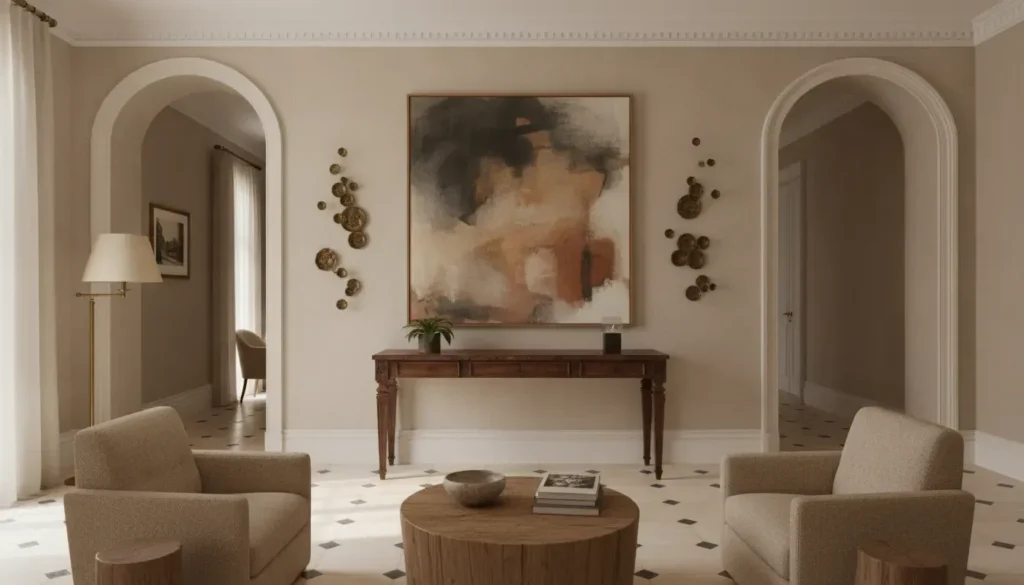
Anti-trend interior design is not a refusal of beauty, invention, or contemporary life. It is a decision to begin with the people, architecture, collection, and quality of a room rather than with whatever aesthetic is being repeated most often. A great interior should feel specific to its occupants and its setting, not like a polished record of the year it was completed.
For collectors and homeowners commissioning a serious residence, that distinction matters. A room shaped by a passing visual formula can be attractive at first and strangely impersonal later. A room shaped by a considered brief has the chance to gather meaning over time. The difference is not whether the interior is modern or traditional. It is whether every choice has a reason beyond being current.
Discuss an art-centric, bespoke interior with CW DESIGN.
What happens when an interior is built around a trend rather than a brief
When an interior is built around a trend instead of a brief, visual decisions begin to serve fashion rather than the home, its architecture, or the client’s life. The result may photograph well, but it can feel generic, age quickly, and require unnecessary replacement when the original reference point loses relevance.
A brief is a design instrument. It establishes how a home should support daily life, what it needs to hold, what the architecture is already saying, and which parts of the client’s identity should be made visible. For an art collector, the brief may begin with the collection itself: its scale, light sensitivity, emotional range, and the conversations that can unfold between works. For a family, it may begin with hospitality, privacy, movement, and the rituals that make a residence feel lived in.
A trend reverses that order. It asks the room to accommodate a visual vocabulary that was formed elsewhere, often for an audience that is not the client. A finish, silhouette, or palette becomes the starting point, and the room is then assembled around it. The choices may be individually attractive, but the whole can lack the quiet coherence that comes from a real point of view.
How trend-led decisions make a home feel less personal
Trend-led design rewards recognition: the fashionable color, familiar profile, or arrangement seen in many other rooms. Anti-trend interior design asks what would make this room belong to this person, in this building, with this light and these objects.
A collector’s painting may determine the temperature of a wall, the spacing of furniture, or the direction of movement through a room. A restored table may establish the scale of a conversation area. CW DESIGN’s art-first approach treats these relationships as part of a living environment, not as a gallery or social-media image.
The hidden cost of following the room instead of the brief
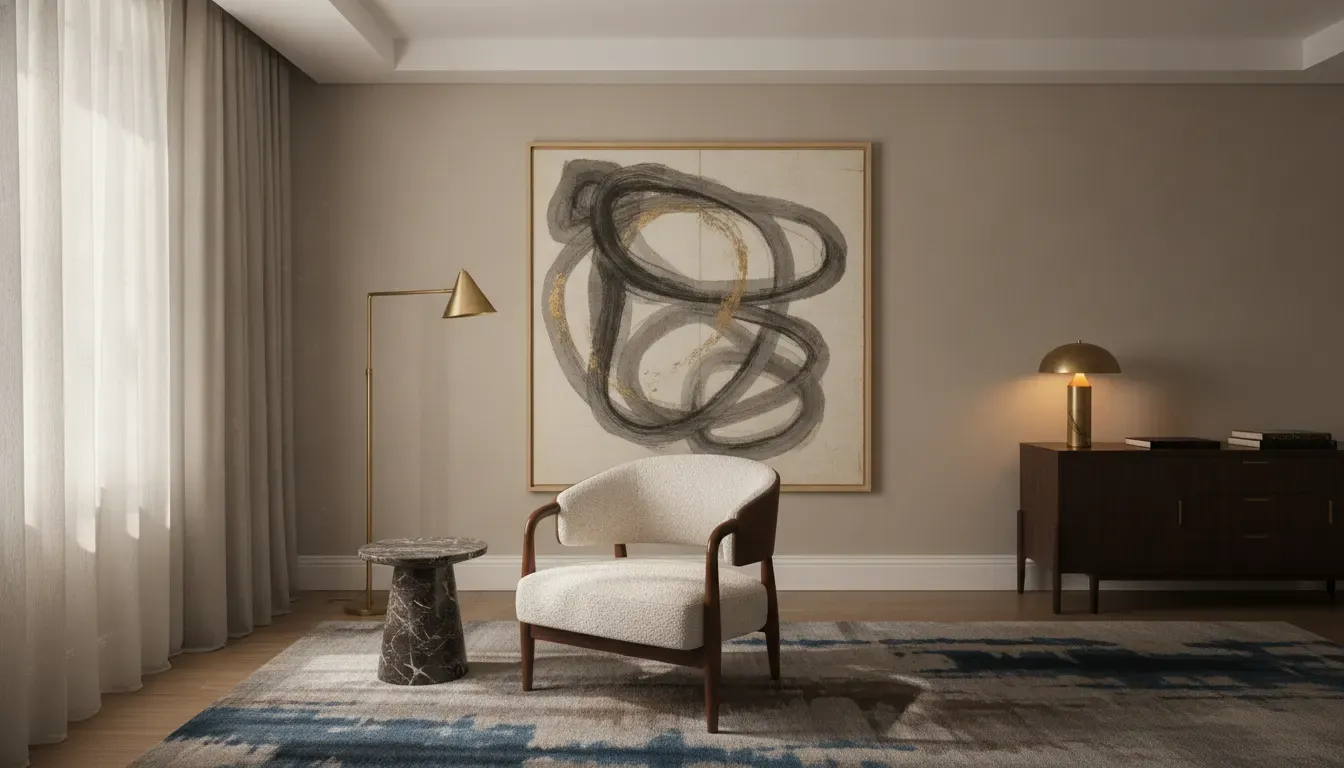
The cost of a trend is not limited to replacing a chair or repainting a wall. It can include the loss of a good architectural decision, a material chosen for appearance rather than performance, or the quiet fatigue of living in a room that asks to be updated before it has become yours. A more durable approach lets boldness come from conviction rather than repetition.
The interior design trend cycle: how fast it moves and what it costs to follow
The interior design trend cycle moves faster than the buildings, materials, and collections it enters. Following it too closely can create premature replacement, visual fatigue, and a loss of individual character. A lasting interior measures decisions against the life of the home, not against the lifespan of a media cycle.
Design trends are not inherently shallow. They can reveal changing technologies, new craft practices, or a cultural appetite for different ways of living. The difficulty begins when awareness becomes obedience. Repetition is not evidence of suitability. It is evidence of circulation.
The cycle usually begins with discovery. A material, color, room arrangement, or furniture profile appears as a fresh response to a broader mood, then reaches showrooms and becomes easier to source. The more visible it becomes, the more it is treated as a shorthand for taste. Eventually, that shorthand can date the room it was meant to elevate.
Why fast visual cycles create slow design problems
A residence is not a campaign. Its surfaces are used, maintained, repaired, and experienced in changing light. Its furniture meets real bodies, its storage meets real habits, and its rooms must accommodate a collection as it evolves. When a short-lived preference controls those decisions, the home carries a reference point that may no longer serve it.
The better question is not, “Will this still be popular next year?” It is, “Will this decision continue to make sense when the room is used, when the light changes, and when the collection grows?” That question brings the project back to the brief.
| Trend-led choice | Brief-led alternative |
|---|---|
| Begins with a widely repeated look | Begins with the architecture, client, and collection |
| Optimizes for immediate recognition | Builds relationships that reward longer attention |
| Prioritizes novelty over the whole room | Prioritizes proportion, material, light, and use |
| Can make replacement feel inevitable | Allows pieces to age, adapt, and gather meaning |
There is also an opportunity cost. Time spent correcting an interior that was never properly briefed is time not spent refining the things that make a home singular: an artisan commission, a restored piece, a better sightline to a painting, or a more intelligent transition between rooms. Longevity is not achieved by refusing to change. It is achieved by making change serve the project.
Principles that predate trends: proportion, materiality, light, and restraint
The principles that outlast trends are practical and perceptual: proportion gives a room order, materiality gives it substance, light reveals its character, and restraint protects its balance. Together, these fundamentals create an interior that can accommodate contemporary expression without becoming dependent on a fashionable visual formula.
Anti-trend interior design is sometimes mistaken for a narrow look: neutral rooms, antique furniture, or a deliberate avoidance of anything new. In fact, it is a method rather than an aesthetic. It can support color, contrast, modern art, historical references, and experimental craft when those elements are selected in response to the project.
Proportion gives the room a quiet authority
Proportion is the relationship between parts. It governs the scale of furniture, the weight of artwork against a wall, and the rhythm of openings, moldings, and circulation. These judgments come from looking carefully at the architecture and understanding how the room will be used, not from copying a reference image.
Materiality makes quality legible over time
Materiality is the way a surface feels, reflects light, wears, and changes through use. Natural stone, wood, metal, plaster, leather, and textile each carry a different history. CW DESIGN’s emphasis on superior materials, restoration, and master artisans gives a piece a life beyond its first impression and lets the setting support art without competing with it.
Light determines how a room is actually experienced
Light changes the apparent color, depth, and mood of every material. Daylight, architectural lighting, and the placement of artwork need to be considered together. A quieter wall or a controlled pool of illumination may create intimacy without theatrical excess, giving the eye somewhere to rest.
Restraint leaves space for meaning
Restraint is not deprivation. It is the discipline to stop when the room is resolved, protecting the distinction between a curated interior and a crowded one, and between a memorable gesture and a room full of competing gestures.
The CW DESIGN timeless interior design philosophy expands on this broader question of how homes can endure across generations. This article takes a narrower position: before a home can endure, the design process must resist allowing the trend cycle to define the brief.
How serious designers respond to client trend requests
A serious designer does not dismiss a client’s reference image or accept it without examination. The designer asks what the client responds to in the image, then translates that underlying desire into a solution suited to the architecture, materials, collection, and daily life of the home.
Clients do not usually bring a trend to a project because they want a disposable room. They may be responding to warmth, clarity, informality, color, or a feeling of welcome. The reference image is a clue, not a complete brief. The designer’s role is to listen for the need beneath the image.
That conversation can turn a request for a fashionable finish into a more durable decision. A client who asks for a current color may be asking for depth. A client who asks for a highly recognizable furniture style may be asking for ease. A client who wants a dramatic room may be looking for a stronger emotional experience. Each desire can be honored without reproducing the exact image that triggered it.
Translate the impulse, not the surface
Translation is where expertise matters. The designer can study the client’s references, identify the qualities that feel compelling, and test those qualities against the room. Is the appeal in the contrast, the tactility, the scale, the sense of history, or the way the art is framed? Once the answer is clear, the project can move toward materials and pieces with a deeper connection to the client’s life.
For Catherine Weinstock, that process is inseparable from her background in interior design, furniture restoration, and fine arts. It is also consistent with a philosophy built around engagement, balance, comfort, and user-friendliness. A room should hold attention, but it should also make sense to inhabit.
Building a brief that prioritizes longevity from day one
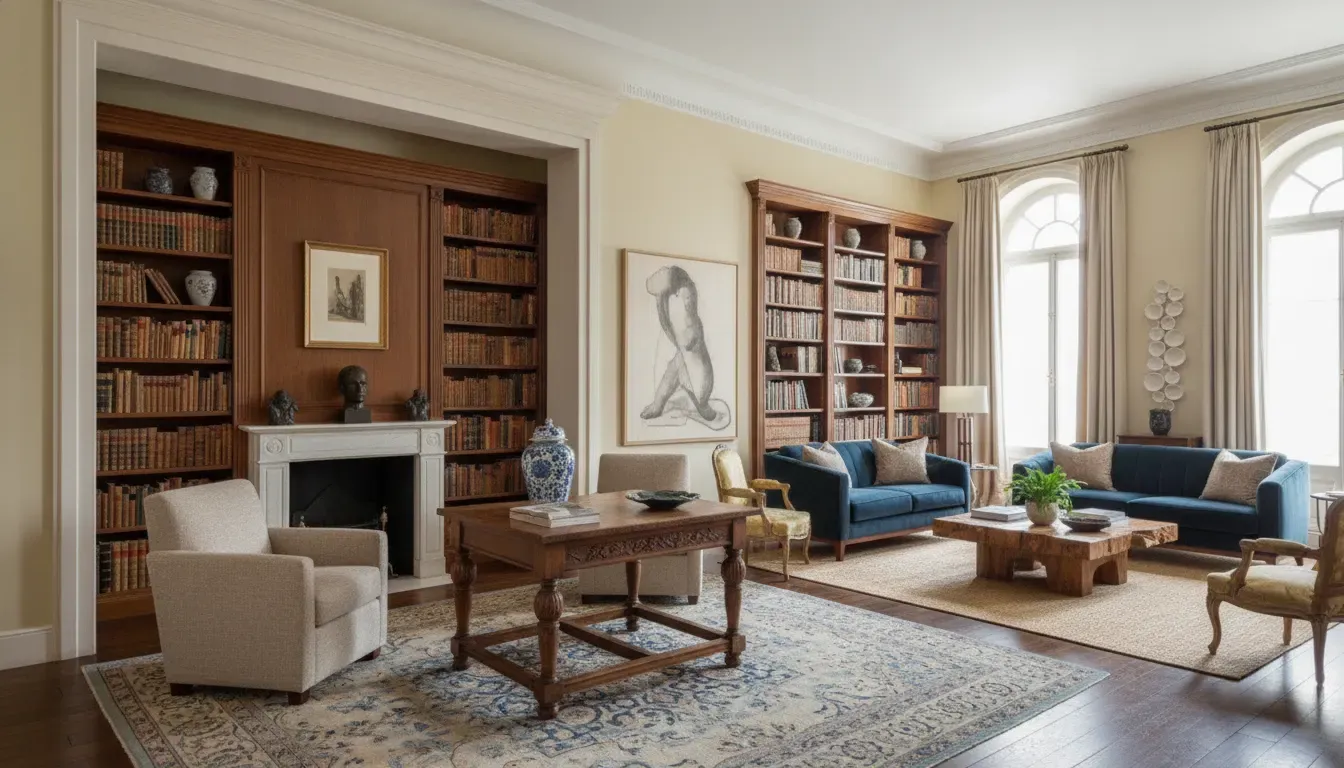
A longevity-led design brief defines how the home should feel, function, age, and support its collection before products or finishes are selected. It records the architecture, daily rituals, light, material standards, and future needs that will guide decisions long after a current trend has disappeared.
The brief is where anti-trend interior design becomes practical. It gives the project a set of questions that can outlast the references used during the early conversations. A useful brief should be precise enough to guide decisions and open enough to allow discovery.
Questions a lasting brief should answer
- What should the home make possible every day, and what should it make possible when guests arrive?
- Which works of art, furniture, books, objects, and collections must the architecture support?
- How does natural light move through the rooms, and how should artificial light extend that experience?
- Which materials will become more beautiful through use, and which will demand unnecessary replacement?
- Where should the design be quiet so that a collection, view, or architectural detail can lead?
- What future acquisitions, family changes, or shifts in use should the rooms be able to accommodate?
- Which pieces deserve restoration, custom work, or an artisan collaboration rather than a readily available substitute?
These questions create a stronger foundation than a folder of images alone. References still matter, but they become evidence of feeling rather than instructions to copy. The client may love the calm of one image, the color of another, and the sense of history in a third. The final room should not reproduce any of them. It should express the client’s own combination of needs and convictions.
Whole-home work makes this discipline especially important. Each room must have its own character while contributing to a larger rhythm. Materials can recur without becoming repetitive. A collection can guide the palette without turning every room into the same gallery. Bespoke pieces can create continuity while preserving surprise. The best interiors are coherent enough to feel intentional and varied enough to reward movement through them.
CW DESIGN’s art-first design approach and its multidisciplinary foundation offer useful context for this way of working. The practice also draws on global artisan relationships, furniture restoration, and a serious understanding of art, allowing the brief to include more than a surface treatment.
Before approving a fashionable choice, ask whether it would still be persuasive if the trend disappeared from every feed tomorrow. Test the underlying quality against the room’s proportions, material palette, light, and collection. Longevity does not ask a home to remain frozen. It gives change a better role, allowing art, repaired furniture, and inherited objects to enter without forcing the room to start over.
An enduring home is not one that avoids the present. It is one that knows what in the present deserves to remain. Trend awareness can be useful, but it should never be the author of the room. The author should be the brief, shaped by the client, the architecture, the collection, and the craft required to bring them into balance.
Begin a private conversation with CW DESIGN about a lasting, art-centric home.
Frequently Asked Questions
Anti-trend interior design creates distinctive, lasting homes by using trends as optional references rather than foundations. It prioritizes the client’s life and collection, the architecture, durable materials, proportion, light, craftsmanship, and restraint, so the finished rooms can evolve without becoming generic or quickly dated.
Is anti-trend interior design the same as traditional interior design?
No. Anti-trend interior design is a method, not a historical style. It can include contemporary art, modern furniture, strong color, and experimental materials when they belong to the architecture and the client’s brief. The goal is not to make a room look old. The goal is to make its choices feel considered rather than borrowed.
Can a timeless interior still feel current?
Yes. A timeless interior can feel unmistakably of its moment through art, technology, craft, and the way it supports contemporary life. What keeps it from becoming dated is the quality of the underlying relationships: proportion, materiality, light, comfort, and a clear connection to the people who live there.
How should a homeowner use inspiration images?
Use inspiration images to identify what you respond to, not as a shopping list. Look for the feeling beneath the surface: warmth, clarity, intimacy, drama, tactility, or ease. A designer can then translate that quality into materials, furniture, and spatial decisions suited to your home rather than reproducing another person’s room.
Why does art belong in the brief from the beginning?
Artwork affects scale, color, circulation, lighting, wall treatment, and the emotional rhythm of a home. When it is added at the end, the room may compete with the collection or leave it without the right setting. A collection-first brief allows the architecture and furnishings to support the art as part of everyday life.
What makes an interior feel personal instead of generic?
Specificity makes an interior feel personal. That can come from the client’s collection, the history of the building, an inherited object, a meaningful material, or a carefully made piece that could not have been selected for anyone else. Personal design is not a recognizable trend. It is a series of decisions that belong to one life.