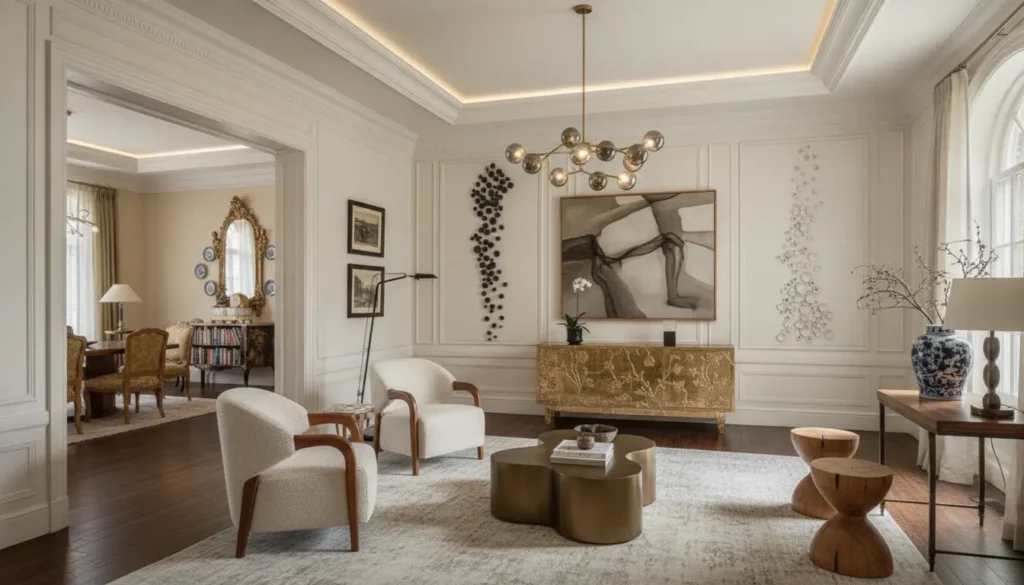
The interior designer vs. interior decorator difference is chiefly a difference in scope: an interior designer can shape how a space functions, is planned, and is coordinated, while an interior decorator typically focuses on its visual character through furnishings, color, textiles, and objects. In practice, the titles can overlap, so the right choice depends on the work your property and project actually require.
Contact CW DESIGN to discuss your whole-home project
What is an interior designer? Scope, credentials, and scope of work
An interior designer develops the interior environment as a complete system. That may include the way rooms connect, how people move through them, how light is controlled, how materials perform, and how a finished space supports daily life. A designer may also coordinate with architects, contractors, engineers, artisans, and other specialists when a project includes renovation or construction.
The profession generally calls for specialized education and technical literacy. The U.S. Bureau of Labor Statistics describes interior designers as professionals who make indoor spaces functional, safe, and beautiful, and notes that a bachelor’s degree is typical for the occupation. Requirements for practice and protected titles vary by jurisdiction, however, so a prospective client should always confirm the qualifications relevant to the project and location.
The Council for Interior Design Qualification’s definition of interior design describes a broad practice that can include analysis, planning, design, documentation, management, coordination, and contract administration for interior projects, as allowed by law. That definition helps explain why design is more than selecting beautiful pieces for a completed room.
Typical responsibilities of an interior designer
- Brief and discovery: Translating a client’s lifestyle, collection, priorities, and practical requirements into a coherent project brief.
- Space planning: Establishing room relationships, circulation, proportions, sightlines, storage, lighting logic, and furniture layouts.
- Material and finish selection: Choosing surfaces, fixtures, furnishings, and details for aesthetic coherence, performance, maintenance, and longevity.
- Renovation coordination: Working with the appropriate architectural, engineering, construction, and regulatory professionals when the scope changes the building or its systems.
- Documentation and administration: Communicating design intent, reviewing information, coordinating decisions, and helping the project maintain its direction through installation.
Not every interior designer offers every service. A designer may specialize in kitchens, hospitality, retail, residential renovation, or another field. The important question is not whether a title sounds comprehensive, but whether the professional’s actual process matches the complexity of your commission.
What is an interior decorator? What they do and where they stop
An interior decorator concentrates on the visual transformation of an existing interior. Decorators may develop a palette, refine a style, source furniture, select fabrics and window treatments, place art and accessories, and bring rooms into a more finished relationship with one another. Their work can be highly skilled and deeply influential, particularly when the structure and major systems of a property are already settled.
Decoration is not a lesser form of design. It is a distinct kind of expertise. A thoughtful decorator understands proportion, scale, color, texture, composition, and the emotional effect of a room. The work can make a home feel considered rather than merely furnished.
Training varies widely among decorators. Some come through formal interior design, fine arts, or architecture programs. Others develop their practice through mentorship, experience, sourcing knowledge, and a strong portfolio. Unlike the technical scope that may be required for a renovation, decorating work generally does not involve changing load-bearing structure, relocating plumbing, designing building systems, or preparing construction documents.
Typical responsibilities of an interior decorator
- Visual direction: Establishing a palette, mood, and stylistic language for the rooms being refreshed.
- Furnishings and textiles: Selecting sofas, chairs, rugs, fabrics, window treatments, lighting, and accessories.
- Art and object placement: Arranging existing or newly sourced pieces so a room feels balanced and personal.
- Finishing and installation: Coordinating the final layer of a space, from delivery and placement to styling.
There is no universal boundary that makes every decorator’s practice identical. Some decorators work closely with builders or designers, and some designers spend much of their time on furnishing and decoration. Reviewing the service agreement, deliverables, and decision-making responsibilities is more useful than relying on the title alone.
The key differences: training, scope, and accountability
The simplest way to understand the interior designer vs. interior decorator difference is to compare the project layer each professional is prepared to own. An interior designer may work from the structure and systems outward. An interior decorator usually begins with the finished or substantially finished interior and develops its visual expression.
| Consideration | Interior designer | Interior decorator |
|---|---|---|
| Primary focus | Function, space, materials, coordination, and aesthetic coherence | Color, furnishings, textiles, objects, and visual cohesion |
| Typical starting point | A new build, renovation, reconfiguration, or complex whole-home brief | An existing interior that needs refinement, furnishing, or a stylistic change |
| Technical scope | May include space planning, documentation, and coordination with allied professionals | Usually centers on the finished interior and does not require construction documentation |
| Project accountability | May coordinate a larger team, sequence decisions, and protect the design through execution | Usually owns the visual layer, sourcing, placement, and finishing of the space |
| Best fit | Projects where function, architecture, renovation, and design must work together | Projects where the structure is settled and the primary need is visual transformation |
Bottom line: Choose by scope, not status. A decorator can be the right professional for a focused furnishing project, while an interior designer is generally better suited to a commission that involves planning, renovation, coordination, and long-term design integrity.
Read CW DESIGN’s philosophy for interiors built to endure
When do you need a designer versus a decorator?
Start by asking what must change. If the walls, circulation, lighting infrastructure, millwork, bathrooms, kitchens, or other functional elements need to be reconsidered, an interior designer is likely the more appropriate first conversation. The same is true when several professionals must work from one coordinated design direction.
A decorator may be the right fit when the property functions well but feels unfinished, impersonal, visually inconsistent, or ready for a new chapter. That can include furnishing a newly completed home, revising a palette, replacing window treatments, layering textiles, or giving a collection of objects a more deliberate setting.
Some projects need both kinds of attention. A designer may guide the spatial and technical work, then bring a decorator or stylist into the furnishing and finishing phase. Other professionals combine both capabilities. Ask who will make the decisions, who will coordinate with the trades, who will visit the property, and who remains responsible when a choice affects another part of the project.
Why the distinction matters when commissioning a whole-home project
A whole-home commission is not simply a collection of separate rooms. Decisions about circulation, light, scale, acoustics, storage, materials, and art placement affect one another across the property. The more ambitious the brief, the more valuable it is to have one clear design logic and an accountable process.
This is particularly important for an art collector. Artwork may be the point of departure rather than the final accessory. A painting can determine a wall’s proportion, a sculpture can alter circulation, and a group of works can influence the rhythm between rooms. Furniture, lighting, color, and architectural detail must support the collection without competing with it.
CW DESIGN approaches these commissions from an art-centric perspective, with Catherine Weinstock’s background spanning interior design, furniture restoration, and fine arts. That combination is relevant when a project must bring together spatial planning, conservation-minded care, custom furnishings, and the quieter work of creating dialogue among objects. The firm’s approach to design places curation and the character of the client at the center of the process.
For a home intended to evolve with its collection, the goal is not to decorate every surface at once. It is to establish an enduring framework in which new pieces can find their place. That is the deeper connection between professional scope and design quality: the right process protects the whole, not only the moment of installation.
How to choose between a designer and decorator for your specific situation
Before making contact, write a short brief describing the property, what is working, what is not, and what must change. Then use the following questions to compare professionals:
- Does the project change the building? If walls, plumbing, electrical systems, lighting infrastructure, millwork, or circulation are involved, look for a professional with appropriate design and coordination experience.
- Is the structure settled? If the main need is furnishing, color, textiles, art placement, and finishing, a decorator or a designer with a strong decorating practice may be appropriate.
- What deliverables are included? Ask whether the proposal covers layouts, drawings, specifications, sourcing, procurement, installation, and coordination, or only selections and styling.
- Who will be on site? Especially for a complex or art-oriented commission, confirm that the professional will visit the property and understand the space firsthand.
- How does the portfolio match the brief? Look for evidence of work at the scale, level of detail, and aesthetic register you want, rather than choosing from a title alone.
- Who owns decisions when the project becomes complicated? Clear accountability matters when materials change, deliveries shift, or the needs of the collection evolve.
For affluent clients, a successful collaboration also depends on discretion, communication, and intellectual compatibility. The professional should be able to listen carefully, understand what is meaningful about the property and its contents, and make decisions that feel specific rather than formulaic.
Contact CW DESIGN to discuss the right scope for your home
Frequently Asked Questions
What is the main difference between an interior designer and an interior decorator?
The main difference is project scope. An interior designer may address function, space planning, materials, renovation coordination, and execution, while an interior decorator typically focuses on furnishings, color, textiles, art, and accessories within an existing structure. The exact services vary, so review each professional’s process and agreement.
Can an interior designer also decorate?
Yes. Many interior designers provide both technical design and decoration services, guiding a project from planning through furnishing and installation. The useful question is whether the designer has the experience and service structure needed for the full scope of your project, not whether the title excludes decorating.
Do interior decorators need formal training?
Training requirements for interior decorators vary, and there is no single path followed by every professional. Some decorators have formal education in interior design, fine arts, or a related field, while others build expertise through mentorship, sourcing, and years of practice. Review the portfolio and defined deliverables alongside any credentials.
Which professional is better for a whole-home renovation?
An interior designer is generally the better starting point for a whole-home renovation because the work may involve space planning, materials, lighting, architectural coordination, documentation, and installation. A decorator may contribute valuable furnishing and finishing expertise, either independently for a settled structure or as part of a larger design team.
How should an art collector choose a design professional?
An art collector should look for a professional who understands sightlines, scale, lighting, circulation, material relationships, and the evolving nature of a collection. Ask how the practice begins with the artwork, how decisions are coordinated on site, and how the design will give the collection room to develop over time.