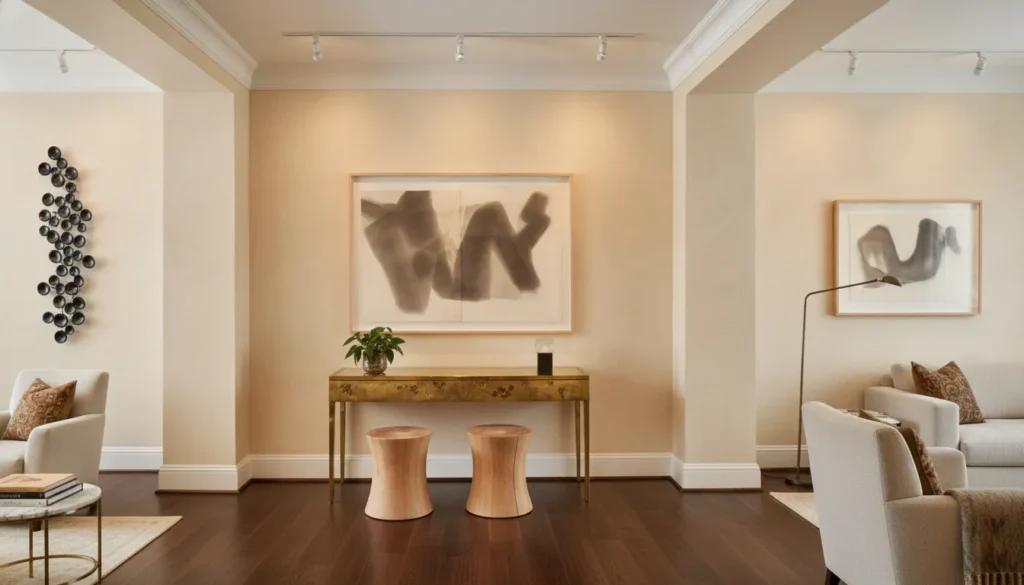
Art Gallery Home Interior Design: A Curated Residence
A gallery-quality residence begins with the collection, not with a decorating style. Each work asks the room to respond with enough light to reveal its character, surfaces that offer quiet support, and carefully considered views that allow one piece to enter into dialogue with another. Yet a private home must remain generous and comfortable, rather than becoming a white box for display.
Contact CW DESIGN to discuss your art-centered residence.
Art gallery home interior design shapes a private residence around an art collection. It uses museum-informed lighting, restrained materials, considered sightlines, and comfortable furnishings so each work is protected, legible, and part of daily life.
That collection-first discipline is central to CW DESIGN’s art-first approach. The related Art-First Design guide explains the broader philosophy: artwork is not an element added after the interior is complete. It is where the design begins. The most successful result is not a room filled with framed objects, but a coherent interior in which architecture, furnishings, and artwork heighten one another.
What Separates a Gallery-Quality Home From a Home That Merely Displays Art?
A gallery-quality home is a considered environment in which the collection, architecture, furnishings, and daily movement support one another. A display-only room begins with available wall space or a finished decorating scheme, then places art wherever it fits. The difference is not the value or quantity of the collection. It is the order of decisions.
In collection-first planning, the art is studied before decorative decisions are made. Scale, medium, palette, period, framing, surface, and condition all influence the rooms in which works will be seen. The interior then becomes a setting that gives each piece presence without making the home feel like a commercial exhibition space.
Designing a dialogue between works
Curation is partly an exercise in editing. Not every piece needs to be displayed at once, and not every strong work should compete for the same focal position. Works can converse through a shared tone, a repeated line, a contrast in scale, or a deliberate pause between them. That dialogue can continue across the home, so a view from a corridor, stair, or seating area reveals a relationship rather than a series of isolated objects.
Sightlines make this possible. Placement is considered from multiple angles and at the height from which the room will actually be experienced. A painting might anchor one wall, while a sculpture, doorway, or piece of furniture frames it from an adjacent space. The result is dynamic but not restless. Negative space gives particularly compelling works room to be seen clearly.
A practical way to edit a gallery wall
Before hanging, test the composition at full scale. Lay works on the floor, or tape a box of the intended dimensions and arrange the pieces within it. This makes it easier to assess the overall balance, center line, frame relationships, and sightlines before putting holes in the wall. Approximately three inches between pieces can be a starting point, but the right spacing depends on the scale and character of the collection.
- Begin with the focal work. Identify the piece that should hold the room’s attention.
- Build outward with restraint. Preserve breathing space instead of filling every available surface.
- Test real approaches. View the arrangement from standing, seated, and transitional positions.
- Edit decisively. Remove anything that weakens the dialogue or makes the wall feel merely full.
That final act of restraint is often what makes the design feel curated. The objective is not to imitate a museum, but to give a personal collection an intelligent, lasting place within a home.
| Design decision | Collection-first approach | Display-only approach |
|---|---|---|
| Starting point | Artwork, architecture, and daily life are considered together. | Art is added after the room is already designed. |
| Lighting | Layered, adjustable, and planned for viewing and preservation. | A single general source illuminates everything equally. |
| Placement | Sightlines, pauses, and movement guide the composition. | Available wall space determines placement. |
| Atmosphere | Curated materials keep the home warm and lived in. | Decorative objects compete for attention. |
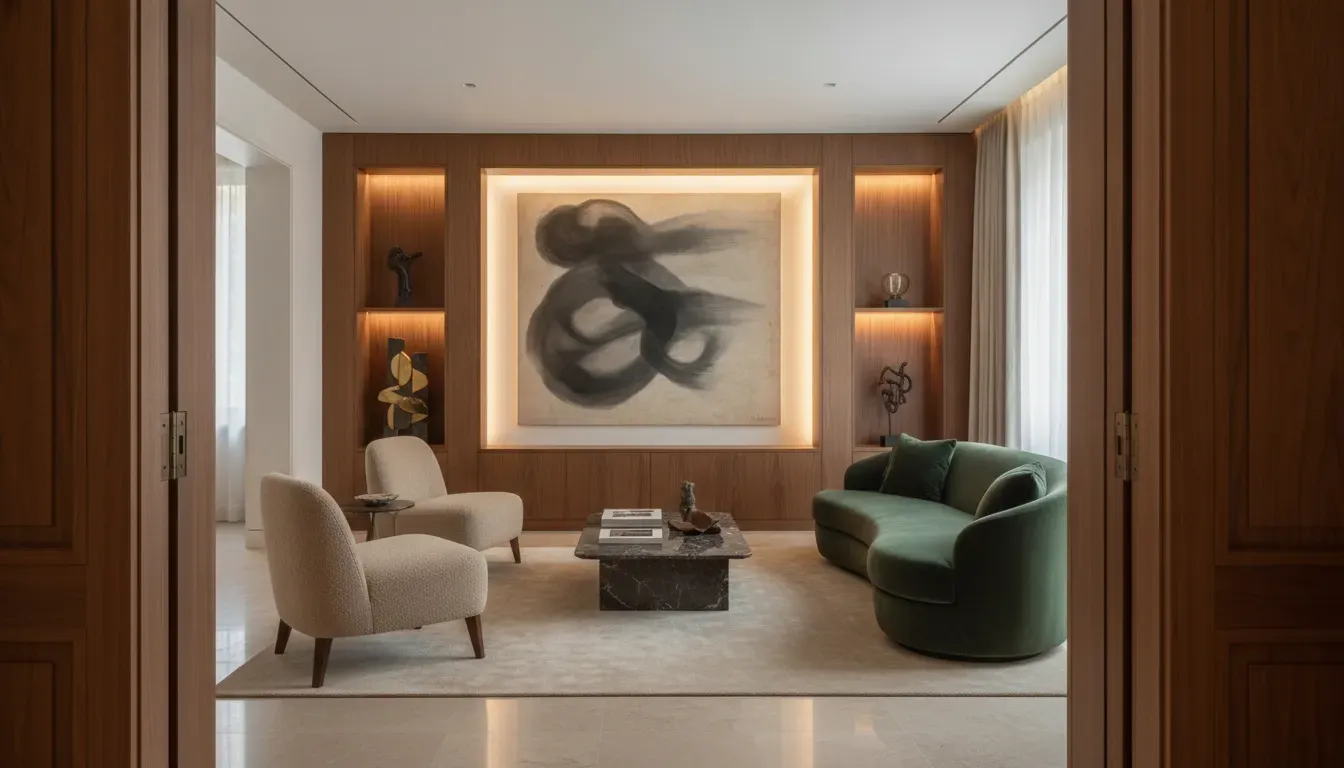
How Should Museum-Informed Lighting Work in a Private Home?
In a private residence, lighting should make the collection legible without making the rooms feel like exhibition halls. The most successful approach is layered: picture lights or discreet wall fixtures for selected works, adjustable accent sources for changing displays, and ambient illumination that supports conversation, movement, and evening life. Each layer has a role, and none should overpower the others.
Adjustment matters because a home contains different media, finishes, and moments of use. Dimmers allow intensity to be lowered when a room is quiet and raised when it is occupied. Adjustable color temperature, often described as correlated color temperature or CCT, can respond to the character of a work and the atmosphere of the room. A peer-reviewed study of gallery lighting and visual experience discusses how intensity and color temperature influence the way viewers experience art.
Control glare before adding brightness
Glare is often a positioning problem rather than a problem solved by more light. Fixtures should be aimed so illumination reaches the surface without reflecting directly into the viewer’s eye or creating a bright patch across the work. Matte finishes, shielding, and careful spacing between artwork and fixture can all contribute to a calmer viewing experience. Even distribution is especially important for works with texture, sheen, or glazing.
Daylight deserves equal attention. Direct sunlight can accelerate fading and other light-related deterioration, so works should not be placed where strong sun falls across them for extended periods. The Smithsonian American Art Museum’s art-care guidance recommends avoiding direct sunlight, using UV-filtering glass or plexiglass, and considering low-heat, UV-free LED lighting. The Getty Conservation Institute’s museum-lighting research likewise frames display as a balance between visibility and preservation.
Museum-informed does not mean recreating a museum mechanically. A private home still needs warmth, flattering ambient light, and flexibility for daily life. Preservation principles should quietly support the collection, while the overall lighting design remains bespoke to the architecture, furnishings, and way the rooms are lived in.
How Do Wall Color, Surface Finish, and Materials Defer to the Works?
In an art-centric residence, walls are not competing canvases. They establish the quiet conditions in which a collection can be seen, understood, and lived with over time. Color, sheen, and texture should therefore be chosen in response to the work, the architecture, and the changing light of the rooms, rather than selected as a decorative statement in isolation.
A restrained palette can create continuity between distinct artists, periods, and media. Similar tones and intensities help a varied collection feel composed, while a carefully placed contrast can give a singular work the visual authority it deserves. The aim is not to make every room monochromatic or austere. It is to create enough tonal cohesion that the eye moves naturally toward the art, then returns to the surrounding space without encountering visual noise.
Surface finish matters just as much as color. A highly reflective wall may introduce glare and distract from a painting, while an overly flat, hard surface can make a room feel institutional. Subtle variation in plaster, lacquer, stone, wood, or woven material can absorb and return light differently, giving the residence depth without asking finishes to perform more loudly than the collection.
Warmth comes from considered material curation. Upholstery with a tactile hand, aged timber, hand-finished metal, or quietly irregular stone can make a gallery-quality setting feel inhabited rather than preserved behind glass. These elements support domestic rituals around the collection: reading, conversation, meals, and unhurried movement from one room to the next.
CW DESIGN’s global artisan collaborations, including work associated with Patrick Naggar and Gallery Fumi, make room for bespoke surfaces and furnishings shaped by craftsmanship and dialogue. The result is not a showroom formula, but a residence in which architecture, materials, and artwork belong to the same curated conversation.
How Do Furniture and Objects Create Sightlines and Natural Movement?
A collection is experienced in motion, not only from the position directly opposite a wall. As someone enters a room, turns a corner, settles into a chair, or looks back toward a previous space, furniture and objects should reveal a sequence of considered views. This is the difference between hanging art on available walls and allowing it to participate in the architecture of the home.
Begin by studying the principal approaches through the residence. A console, low cabinet, or occasional chair can frame a work without competing with it. In a connected plan, an opening between rooms may become a deliberate visual aperture. One painting or sculptural object can establish a dialogue with another at a distance. This is one reason the CW DESIGN approach to art integration treats relationships between rooms as part of the spatial composition.
Plan pauses as carefully as views
Furniture placement should support both movement and stillness. Keep circulation routes legible, then use negative space around a significant work to give the eye somewhere to rest. A generously scaled piece may need more air than its dimensions suggest, while a group of smaller works can be held together by a consistent visual rhythm. The surrounding wall, floor, and furnishings are not empty leftovers. They are the quiet intervals that make the collection legible.
- Study principal approaches. View important works from standing, seated, and transitional positions.
- Protect visual axes. Keep tall furniture from interrupting the intended view toward a painting or object.
- Frame connections. Use openings between rooms to create relationships rather than fill every surface.
- Preserve pauses. Let one or two pieces carry emphasis while supporting works create depth.
A compact residence does not require a diminished artistic presence. A single work at the end of a short passage can extend the perceived depth of the home. A sculptural object beside, rather than in front of, a sightline can reward movement without obstructing it. When each piece has a reason to occupy its position, even a modest room can feel layered, cultivated, and distinctly residential.
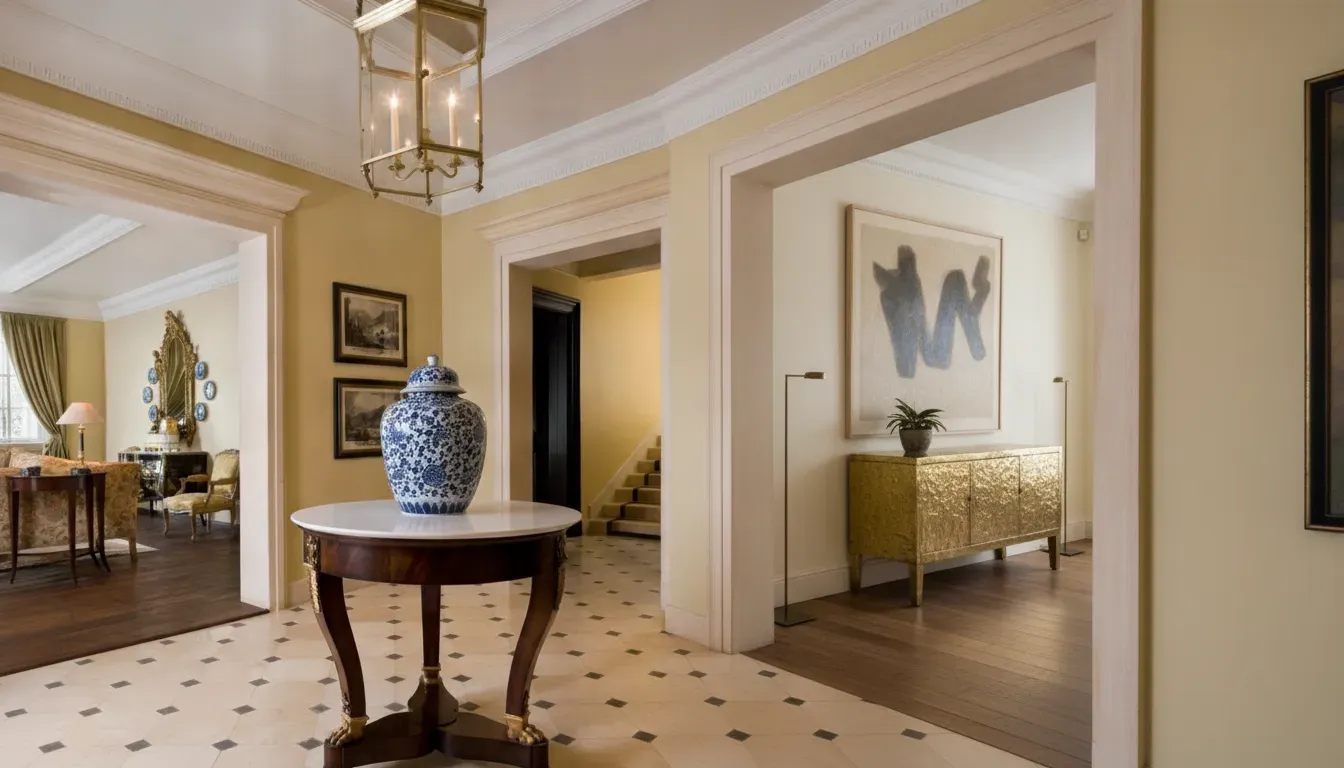
How Can Art Gallery Home Interior Design Stay Warm and Livable?
A private residence should invite people to settle in, not ask them to behave like visitors in a public institution. A museum is organized around viewing, circulation, and preservation. A home must also support morning routines, long meals, conversation, rest, and the informal rituals that give rooms their meaning. Artwork remains central, but it is held within an environment designed for daily life.
Comfort begins with scale. Generous rooms do not need to feel ceremonial, and smaller rooms do not need to be filled to create visual impact. Furniture should be proportioned for the way the household actually uses each space, with enough clearance to move naturally and enough negative space for important works to breathe. A chair placed for conversation, a sofa oriented toward a view, or a console positioned beneath a painting can make the collection part of the rhythm of the home.
Layer atmosphere instead of flattening it
Lighting is one of the quietest ways to preserve this balance. Focused illumination can bring a painting or sculpture into dialogue with the room, while ambient light, dimming, and softer pools of illumination keep adjoining areas relaxed. Material tactility is equally important. Wool, linen, aged wood, and stone with quiet variation offer physical warmth that a purely white, highly controlled setting cannot provide.
That whole-home perspective requires attention to high-touch moments. Door hardware, upholstery, table edges, seating depth, acoustic softness, and the placement of objects all influence whether a room feels hospitable. A collection can be carefully curated without making every surface precious. Some pieces should command attention; others should recede into the life of the household.
How Do You Commission Art Gallery Home Interior Design Without Sacrificing Residential Warmth?
Look for a designer who can read a collection as both an aesthetic language and a set of practical responsibilities. In a serious private residence, the work begins on site. The designer needs to understand the architecture, natural light, circulation, scale, and the way each room is inhabited before proposing where art, furniture, and materials should sit.
A multidisciplinary understanding of the collection
Catherine Weinstock brings training in interior design, furniture restoration, and fine arts to this conversation. That combination matters because a painting, sculpture, or antique furnishing is not simply a decorative accent. Its condition, material character, proportions, and relationship to neighboring works all influence the room around it. Learn more about Catherine Weinstock’s multidisciplinary practice.
Curation that extends across the whole home
A gallery-quality residence should feel considered from one space to the next. Look for a designer who can shape a whole-home narrative while allowing individual rooms to retain their own atmosphere. This requires thoughtful editing, not simply displaying more objects. Negative space, measured placement, and carefully composed views can give significant works the attention they deserve while preserving comfort and movement.
Access to exceptional craftsmanship
Art-centric design also benefits from relationships with makers who can respond to the particular character of a collection and its setting. Global artisan collaborations can bring bespoke surfaces and furnishings into the scheme without making the home feel like a showroom. Materiality should support the art and add warmth through craftsmanship.
Finally, consider whether the designer welcomes a high-touch engagement suited to a residence that will evolve over time. A serious art-oriented project calls for sustained attention to curation, restoration awareness, installation, and the dialogue between space and collection. The right partnership is selective, collaborative, and thorough from the first visit onward.
Contact CW DESIGN to discuss your art-centric residence.
Frequently Asked Questions
How do you create a gallery-quality home interior design?
Begin with the collection, then plan the residence around its scale, palette, sightlines, and conservation needs. The goal is not to reproduce a public gallery, but to create a considered dialogue between artwork, architecture, furnishings, and daily life. Restrained surfaces, deliberate negative space, and carefully chosen artisan details allow the collection to remain the visual authority while the home retains warmth.
What is the secret to a professional gallery wall layout?
Establish the overall boundary first, then test the arrangement on the floor or with painter’s tape before making holes. Balance focal pieces with quieter works, and consider approximately three inches between pieces as a starting point rather than a universal rule. A related palette of tones can unify varied frames and mediums without making the composition feel overly matched.
What lighting techniques are essential for gallery-style homes?
Use layers rather than a single harsh source: adjustable accent lighting for individual works, ambient illumination for circulation, and dimming for atmosphere and control. Intensity and color temperature should be adjustable because lighting affects both how art is perceived and how a room feels. Avoid direct sunlight, and consider UV-filtering glazing and low-heat, UV-free LEDs for sensitive works, as recommended by the Smithsonian American Art Museum.
Can gallery-quality design work in smaller residential spaces?
Yes. A smaller room often benefits from a more selective collection, stronger sightlines, and fewer but more consequential works. Scale the arrangement to the architecture, preserve enough breathing room for each piece, and use controlled lighting to create depth without visually filling every surface.
How does art influence home interior aesthetics?
Art can establish the emotional register, color relationships, material direction, and sequence of views throughout the residence. When the collection leads the design, furnishings and finishes support its character instead of competing with it. The result feels personal and coherent, while still functioning as a comfortable home rather than a display room.
A gallery-quality home depends on decisions that connect the collection, architecture, lighting, and daily life. Discussing the residence on site can help establish the right visual priorities, materials, and sense of warmth before the work takes shape.
- Begin with an on-site understanding of the architecture, collection, and daily routines.
- Develop lighting, surfaces, and sightlines as one coordinated composition.
- Edit the arrangement until the home feels both curated and genuinely lived in.