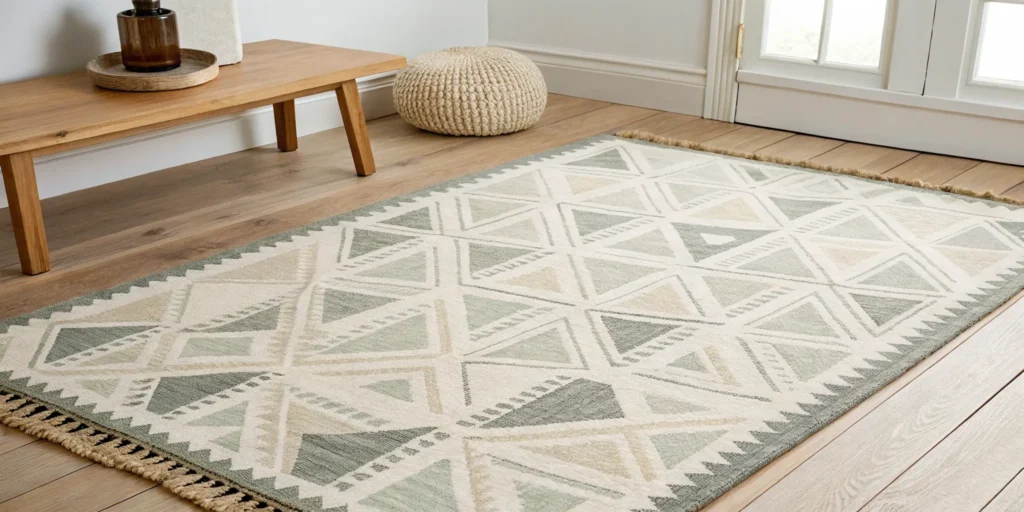
A room without a rug can feel unfinished, its elements disconnected and floating. The right rug changes everything, creating a cohesive and inviting atmosphere that feels complete. It’s the piece that introduces texture underfoot, absorbs sound, and sets the emotional tone for the entire space. Modern rugs, with their focus on sophisticated palettes and expressive patterns, are especially adept at this. They can make a room feel serene and grounded or inject it with vibrant energy. This guide is about harnessing that power, helping you select and style a rug that doesn’t just fit your room, but gives it a soul, turning a collection of beautiful objects into a harmonious home.
Key Takeaways
- Prioritize practicality by matching material to function: Choose durable fibers like wool for busy living rooms and save luxurious materials like silk for low-traffic areas. This simple consideration ensures your rug is a lasting and practical part of your home.
- Get the size right to ground your room: Avoid the common mistake of a rug that is too small. Your rug should be large enough for the front legs of your main furniture to sit on it, a simple rule that creates a unified and professionally styled space.
- Look for signs of quality craftsmanship: A superior rug reveals its quality through a dense weave, crisp pattern lines, and rich, consistent color. Investing in these details means you are choosing a foundational piece of art that will last for years.
What Defines a Modern Rug?
When we talk about modern rugs, we’re describing more than just a rug made recently. We’re talking about a design philosophy. A modern rug is a departure from the ornate, intricate patterns of traditional styles. It embraces minimalism, bold artistic expression, and clean lines to create a foundation that feels fresh, current, and intentional. Think of it as a piece of art for your floor, one that can either anchor a room with quiet sophistication or become its vibrant focal point. Understanding what makes a rug “modern” is the first step in selecting a piece that truly complements your space and reflects a contemporary aesthetic.
Modern vs. Traditional Rugs
The primary distinction between modern and traditional rugs lies in their design language. Traditional rugs, like Persian or Oriental styles, are rich with history. They often feature intricate floral motifs, detailed medallions, and elaborate borders, telling a story through dense, symmetrical patterns. A modern rug, on the other hand, strips away this ornamentation. It favors simplicity and artistic freedom, often doing away with borders and central medallions entirely. The focus shifts from detailed repetition to the overall impact of color, form, and texture, creating a piece that feels less like a historical artifact and more like a deliberate element of contemporary design.
Signature Styles and Patterns
Modern rugs are defined by their dynamic and often daring patterns. You’ll find a strong emphasis on geometric shapes, free-form abstract designs, and painterly strokes that feel expressive and unique. Instead of intricate florals, imagine bold color-blocking, asymmetrical lines, or subtle patterns that play with texture and light. These designs allow a rug to function as a foundational piece of abstract art within a room. A well-chosen pattern can introduce movement and energy into a minimalist space or complement other artistic elements in your home. The key is that the pattern serves a clear visual purpose, whether it’s to create harmony or introduce a point of compelling contrast.
Essential Color Palettes
Color in modern rugs follows two main paths. The first is a sophisticated, neutral palette that creates a serene and grounded atmosphere. Think of warm, earthy tones like sand, beige, and caramel, or clean, minimalist shades of cream and soft gray. These colors are perfect for building a layered, textural space that feels both cozy and refined. The second path is one of bold, saturated color. A modern rug can be the perfect vehicle for introducing a vibrant hue, like a deep sapphire blue or a rich emerald green, to energize a room. These impactful colors can stand alone as a statement or tie together other colorful accents in your decor.
The Appeal of Sustainable Materials
There is a growing appreciation for rugs crafted from natural, sustainable materials, and for good reason. Fibers like jute, sisal, and seagrass bring an organic, textural quality that beautifully balances the clean lines of modern interiors. Their natural, earthy tones provide a perfect neutral base, while their unique weaves add depth and interest underfoot. Beyond these plant-based fibers, undyed or lightly dyed wools are also a popular choice, offering softness and durability with minimal environmental impact. Choosing a rug made from sustainable materials is not just an eco-conscious decision; it’s a design choice that infuses your home with natural warmth and timeless character.
A Guide to Modern Rug Materials
Choosing the right material is the first step in selecting a rug that you’ll love for years. The fiber dictates not only the rug’s appearance and texture but also its durability and how it should be cared for. As we create spaces that are both beautiful and functional, we consider how a material will feel underfoot, how it will wear over time, and how it contributes to the room’s overall atmosphere. From the timeless luxury of wool to the earthy appeal of jute, each material brings its own unique character to a design.
Wool: The Standard for Luxury and Durability
When it comes to modern rugs, wool is often the gold standard, and for good reason. It offers a beautiful balance of luxurious softness and impressive durability. Wool fibers have a natural crimp that allows them to bounce back from pressure, which means they resist crushing from furniture and foot traffic. This makes wool an excellent choice for the most lived-in areas of your home, like the living room or a busy hallway. It’s also naturally stain-resistant and flame-retardant, adding a layer of practicality to its sophisticated feel. A high-quality wool rug is an investment that provides comfort and style that lasts.
Silk: For Ultimate Opulence
For pure, unadulterated luxury, nothing compares to silk. Known for its incredible softness and a luminous sheen that catches the light beautifully, a silk rug can transform a room into a truly elegant space. The fine fibers allow for exceptionally detailed patterns, making them works of art for your floor. However, this opulence comes with a need for gentle care. Silk is more delicate than wool and is best placed in low-traffic areas where its beauty can be admired without the stress of heavy wear, such as a master bedroom or a formal sitting room. Understanding these material properties is a key part of knowing what makes a rug high quality and where to place it.
Natural Fibers: Jute, Sisal, and Seagrass
Natural fiber rugs made from jute, sisal, or seagrass bring an organic, textural element to modern interiors. Their earthy tones and woven textures add warmth and a relaxed sophistication that complements clean, contemporary lines. These materials are celebrated for their sustainability and durability, making them a great choice for spaces that need a touch of rustic charm. While they are not as plush as wool or silk, their unique texture is part of their appeal. Their growing popularity is one of the key modern rug trends we see today, perfect for layering under a smaller, softer rug or for grounding a space in a sunroom or casual living area.
Synthetics: Practicality Meets Style
Do not overlook synthetic rugs, especially for high-traffic or spill-prone areas. Materials like polypropylene and nylon have come a long way, offering stylish and practical solutions for modern homes. These rugs are exceptionally durable, easy to clean, and highly resistant to stains and fading, making them ideal for families with children or pets. You can place them in a dining room, entryway, or even an outdoor space without worry. While they may not have the same natural feel as wool or silk, today’s synthetic rugs are available in a vast array of colors and patterns, allowing you to achieve a chic look without sacrificing practicality.
How Material Choice Affects Durability and Feel
Ultimately, the material you choose directly influences the daily experience of your rug. Your lifestyle and the room’s function should guide your decision. Do you need a rug that can withstand constant foot traffic, or are you looking for a soft, luxurious surface for a quiet retreat? A comprehensive modern rug buying guide will always emphasize this connection. Wool and synthetics are workhorses for busy areas, while silk is reserved for more serene, formal spaces. Natural fibers like jute offer texture and a casual feel. By matching the material to the room’s purpose, you ensure your rug is not only a beautiful design element but also a practical and enduring part of your home.
How to Select the Perfect Rug for Your Space
Choosing a rug is one of the most impactful decisions you can make for a room. It’s the piece that grounds your furniture, defines the space, and infuses the environment with color, pattern, and texture. Think of it as the soul of the room, the anchor that ties everything together. Selecting the right one involves more than just falling in love with a design; it requires a thoughtful approach to size, color, and placement to ensure it complements your space perfectly. A well-chosen rug creates a cohesive and inviting atmosphere, while the wrong one can make a room feel disjointed. Let’s walk through the key steps to finding the perfect modern rug for your home.
Master Size and Proportion
The most common mistake I see is choosing a rug that is too small for the space. A tiny rug floating in the middle of a room can make the entire area feel smaller and less cohesive. To get it right, your rug should be large enough to anchor the primary furniture in the room. In a living room, at least the front two legs of your sofa and chairs should sit comfortably on the rug. This creates a unified look. Before you buy, use painter’s tape to outline the ideal rug size on your floor. This simple trick helps you visualize the footprint and ensures you choose the right rug size for a balanced, well-proportioned room.
Coordinate with Your Color Palette
A rug can either set the tone for a room’s color scheme or seamlessly blend with it. If you’re starting from scratch, you can use a beautiful rug as your inspiration, pulling colors from its design to use for walls, pillows, and accessories. If you’re adding a rug to an existing space, look for one that complements your current palette. Neutral tones like sand, beige, and cream offer a timeless foundation, creating a cozy and sophisticated feel. For a touch of color, consider muted shades like dusty rose or sage green. These hues add personality without overwhelming the space, helping you balance your interior color schemes with an expert touch.
Use Pattern as a Focal Point
A modern rug with a striking pattern can serve as the primary piece of art in your room. If you want the rug to be the star, opt for a design with bold geometric shapes, abstract motifs, or vibrant colors. When you choose a rug with a strong personality, it’s best to keep the surrounding furniture and decor more understated. This allows the rug to command attention without competing with other elements in the room. This approach creates a dynamic focal point that draws the eye and injects energy and character into the space. It’s a wonderful way to express your personal style and make a confident design statement.
Create Texture by Layering Rugs
Layering rugs is a sophisticated technique that adds depth, warmth, and a curated, custom feel to any room. This approach is perfect for adding character, especially in minimalist spaces. The key is to create a thoughtful contrast in texture and size. Start with a large, neutral base rug made from a natural fiber like jute or sisal. Then, layer a smaller, more plush or patterned rug on top, such as a wool or silk piece. This not only adds visual interest but also allows you to define specific zones within a larger area. According to design experts, dimensional rugs are trending because they bring a handcrafted appeal that feels both luxurious and inviting.
Avoid Common Placement Mistakes
Proper rug placement is just as important as its size and style. A frequent error is placing furniture around the rug instead of on it, which creates a disconnected look. To unify your seating area, ensure the rug is large enough to connect the main furniture pieces. As mentioned, having at least the front legs of your sofa and chairs on the rug will make the space feel cohesive and intentional. In a dining room, the rug should be big enough so that when you pull a chair out to sit down, its legs remain on the rug. Avoiding these common placement mistakes will help you create a polished and well-designed room.
Styling a Modern Rug in Your Home
A modern rug does more than just cover a floor; it anchors the entire design of a room. Think of it as the canvas upon which you arrange your furniture and art. The right rug ties everything together, defining the space and adding a crucial layer of texture, color, and personality. Styling it correctly is key to creating a room that feels both intentional and inviting. As designers, we see how a well-placed rug can transform a space from a collection of beautiful objects into a cohesive, harmonious environment. It’s about creating a dialogue between the floor and the furniture, telling a story that is uniquely yours.
In the Living Room
One of the most common missteps when styling a living room is choosing a rug that is too small. A rug that looks like a postage stamp floating in the middle of the room can make the entire space feel disjointed and smaller than it is. The goal is to unify your seating area. A good rule of thumb is to select a size that allows at least the front legs of your sofa and chairs to rest comfortably on the rug. This simple placement trick connects the pieces, creating a cohesive and welcoming conversation zone. It’s this attention to proportion that helps us create sophisticated environments where every element feels perfectly balanced.
In the Bedroom
Your bedroom is your sanctuary, and the rug you choose should reflect that. It’s the perfect place to make a statement that is deeply personal. If your bedroom furniture is understated and neutral, consider a rug with a bold, abstract pattern to serve as the room’s focal point. A vibrant, colorful piece can add incredible personality and warmth, making the space feel complete. Ultimately, a rug that fits the scale of your room and resonates with your personal taste will always make the strongest statement. Don’t be afraid to choose something you truly love; it’s one of the first things you’ll see in the morning and one of the last you’ll see at night.
In Dining Rooms and Open Spaces
Modern rugs are incredibly versatile, looking just as chic in a dining room as they do in a living room or home office. In a dining area, a rug defines the space and adds a touch of softness and sound absorption. Ensure the rug is large enough so that when you pull the chairs out from the table, they remain completely on the rug. For larger spaces like dining rooms or open-concept areas, generous sizes like 8×10 or 9×12 feet work beautifully. In an open floor plan, you can use different but complementary rugs to create distinct functional zones, like a seating area and a dining space, without putting up walls.
How to Identify a High-Quality Modern Rug
Selecting a modern rug is about more than just finding a pattern you like; it’s about investing in a piece that will define your space for years to come. A high-quality rug feels substantial, displays its design with clarity, and is crafted with an artistry that sets it apart. It’s the difference between a temporary floor covering and a foundational work of art. When you know what to look for, you can confidently choose a rug that not only complements your home but also brings with it a story of quality and craftsmanship. Discerning the finer details, from the density of the weave to the richness of the dye, is the key to finding a piece with lasting beauty and value. As designers, we see rugs as an essential layer that brings warmth, texture, and personality to a room, and finding the right one is a rewarding process.
Examine the Weave and Construction
The first test of a rug’s quality is its physical construction. Turn the rug over and look at the back. A high-quality, hand-knotted rug will show the same intricate pattern on the back as it does on the front. The knots should be small and densely packed; a higher knot count per square inch generally indicates a more durable and detailed rug. For other types of weaves, like hand-tufted or flatweave, look for a tight, consistent construction that feels solid and well-made. A well-made rug has rich, well-balanced colors and crisp design lines. Whether the pattern is geometric or abstract, this level of accuracy is a clear sign of superior craftsmanship.
Look for Pattern Clarity and Color Consistency
A quality rug presents its design with confidence. The lines of the pattern should be sharp and distinct, without any fuzziness or color bleeding at the edges. This precision comes from skillful weaving and the use of high-quality dyes. The colors themselves should be rich and evenly saturated throughout the fibers. Be wary of colors that look overly shiny or artificial, as this can indicate lower-quality synthetic materials or dyes. Instead, look for even, consistent coloring that feels deep and authentic. Materials like wool and silk are known for their excellent color retention and ability to display color with a natural, subtle luster that cheap materials simply can’t replicate.
Appreciate Artisanal Craftsmanship
Behind every great rug is a story of artistry and skill. While modern rugs have a different aesthetic than traditional ones, the best among them are made with a comparable level of dedication. These pieces are known for their wonderful designs and color schemes, and they are built to last. Appreciating a modern rug means recognizing the vision of the designer and the hands of the artisan who brought it to life. At CW DESIGN, we often collaborate with global artisans to source and create pieces that are truly unique. Choosing a rug made with this level of care means you are bringing an object with soul and history into your home, making it much more than just a decorative accessory.
Explore Customization Possibilities
Sometimes, the perfect rug isn’t waiting on a showroom floor; it needs to be created. Many high-end designers and rug makers offer customization, allowing you to create a piece that is perfectly suited to your space and vision. This process gives you control over the most important elements. You can select the exact size to fit your room’s proportions, choose colors that harmonize with your existing palette, and even modify a pattern to your liking. Opting for a custom rug ensures that this foundational piece is not a compromise but a perfect reflection of your personal style. It’s an opportunity to create something truly bespoke that integrates seamlessly into your home’s design.
Choose Timeless Design Over Fleeting Trends
A beautiful, high-quality rug is a significant investment, so it’s wise to choose a design with staying power. While it can be tempting to go for the latest bold trend, a rug with a timeless quality will serve your space for much longer. This doesn’t mean you have to stick to something plain. Timelessness can be found in a sophisticated geometric pattern, a subtle texture, or an elegant abstract design. Neutral modern rugs in shades of beige, ivory, and soft gray are a designer favorite because they provide a versatile and sophisticated foundation. By focusing on enduring design principles over passing fads, you ensure your rug remains a cherished part of your home for years to come.
Understand Its Investment Value
Finally, it’s helpful to view a high-quality rug as a long-term investment in your home. Much like a piece of fine art or custom furniture, a well-made rug contributes to the overall value and character of your space. Its quality materials and expert craftsmanship mean it will withstand the test of time, often looking even better as it develops a natural patina. Investing in a high-quality rug can enhance the aesthetic of your space and provide long-term value. When you choose a rug based on its construction, artistry, and timeless design, you are acquiring an asset that will deliver functional beauty and enjoyment for decades.
Caring for Your Modern Rug
A modern rug is more than just a floor covering; it’s a piece of art that grounds your space. Like any valuable work, it requires thoughtful care to preserve its beauty and integrity for years to come. Proper maintenance protects your investment, ensuring the colors stay vibrant and the fibers remain intact. At CW DESIGN, we see rugs as foundational elements of a room’s story, and their upkeep is part of honoring that story. A well-cared-for rug not only looks better but also contributes to a healthier home environment by trapping dust and allergens, which are then removed through cleaning.
Fortunately, caring for your rug doesn’t have to be complicated. By incorporating a few simple habits into your routine and knowing how to handle the occasional spill, you can keep your rug looking as stunning as the day it was placed in your home. This guide will walk you through the essential steps for routine care, stain removal, and knowing when to call in the experts. With the right approach, your rug will continue to be a source of comfort and sophistication in your home for a very long time.
Routine Maintenance Tips
The key to a long-lasting rug is consistent, gentle care. The most important habit is to vacuum your rug at least once a week. This simple step removes the surface-level dirt and grit that can settle deep into the fibers and act like sandpaper, causing premature wear. Every six months or so, you should also rotate your rugs to ensure even wear from foot traffic and sunlight exposure. This prevents one side from fading or wearing out faster than the other. Finally, try to maintain a balanced humidity level in your home, as extreme dryness or dampness can damage the rug’s natural fibers over time.
How to Spot Clean Stains
Accidents happen, but a quick response can prevent a small spill from becoming a permanent stain. The golden rule is to act immediately. Gently blot the spill with a clean, dry, white cloth, working from the outside of the stain inward to prevent it from spreading. Whatever you do, resist the urge to rub or scrub, as this can push the liquid deeper into the rug’s foundation and damage the delicate fibers. For most common spills, this blotting technique is the most effective first step. You can find many rug care tips online, but always test any cleaning solution on an inconspicuous area first to ensure it doesn’t affect the rug’s color.
When to Call a Professional
While at-home care is essential, there is no substitute for professional cleaning. We recommend having your modern rugs professionally cleaned at least once a year. Experts have the tools and knowledge to perform a deep cleaning that removes the embedded dirt and allergens that regular vacuuming can’t reach. This process revitalizes the rug’s fibers and restores its original luster. If you’re dealing with a particularly stubborn stain, a persistent odor, or a delicate material like silk, it’s always best to consult a professional. They can assess the situation and apply the correct treatment without risking damage to your beautiful piece.
Frequently Asked Questions
Is it really a deal-breaker if my rug is too small? While I wouldn’t call it a deal-breaker, a rug that is too small for a room is a significant missed opportunity. It can make a space feel unbalanced and disconnected. The goal of a rug is to unify your furniture into a cohesive group, so having at least the front legs of your main seating on the rug is a guideline worth following. If a larger rug isn’t an option, consider layering a smaller, more precious rug over a larger, neutral one made of jute or sisal. This creates a deliberate, stylish look instead of an accidental sizing mistake.
Can I still have a beautiful wool or silk rug if I have children or pets? Absolutely, but it requires a bit of strategic thinking. Wool is a fantastic choice because it is naturally durable, resilient, and stain-resistant, making it surprisingly practical for a busy home. For a truly luxurious material like silk, placement is everything. A silk rug can thrive in a lower-traffic area like a master bedroom or a formal study, where it is less exposed to spills and heavy wear. It’s about matching the material’s qualities to the room’s function, not giving up on luxury altogether.
How do I mix a modern rug with more traditional furniture? This is a wonderful way to create a dynamic and personal space. The key to success is finding a common thread between the old and new. Look for a modern rug that picks up on a color from your traditional furniture’s upholstery or wood tones. Alternatively, a modern geometric rug in a neutral palette can provide a clean, contemporary foundation that makes antique pieces feel fresh and intentional rather than dated. This contrast creates a sophisticated dialogue between different design eras.
What really makes a high-quality modern rug worth the investment? The value of a high-quality rug comes from its material, density, and craftsmanship. A rug made from superior natural fibers like wool or silk will not only feel better underfoot but will also wear beautifully over time, often developing a richer character with age. When you look at the back of the rug, a high density of tight knots indicates a more durable and detailed piece that took an artisan immense skill and time to create. You are investing in a piece of functional art that will ground your space for decades, not just a temporary floor covering.
My new rug is shedding. Should I be concerned? Shedding is completely normal, especially for new wool rugs. This is just the release of loose fibers that were left over from the shearing and weaving process. You can manage it by vacuuming the rug regularly, about once or twice a week, with the beater bar turned off to be gentle on the fibers. The shedding will lessen significantly over a few months. Think of it as the rug settling into your home, not as a sign of a defect.