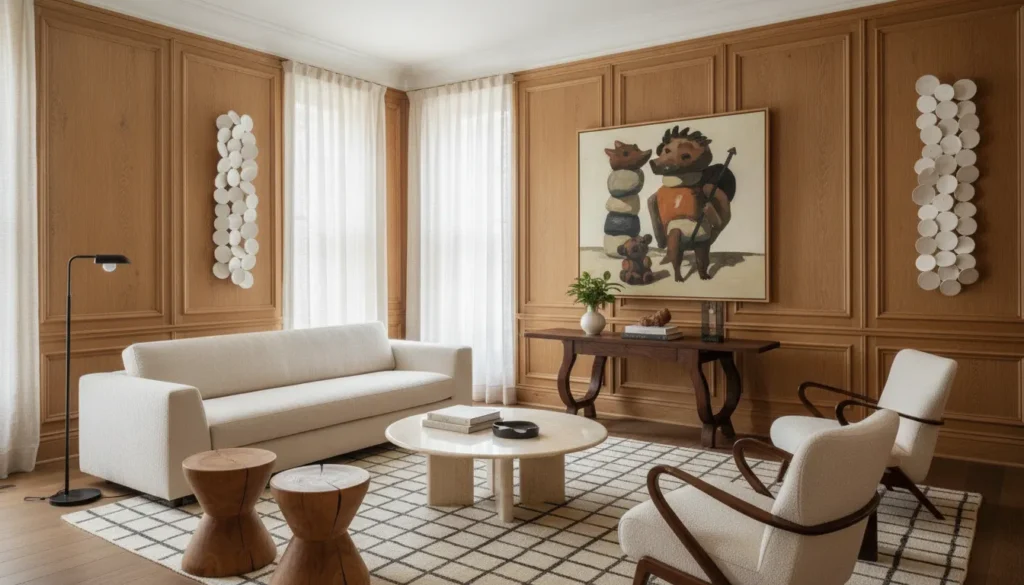
Luxury interior design as an investment is not a promise of a guaranteed financial return. It is a disciplined decision to improve how a property works, ages, and is experienced over time. For an art collector or high-net-worth homeowner, the strongest result is a residence with lasting utility, authentic materials, and a coherent identity that can retain its appeal long after a passing trend has disappeared.
Speak with CW DESIGN about a private, art-led interior design commission.
The distinction matters. Decorating can be a short-term exercise in appearance. A considered interior commission coordinates architecture, circulation, lighting, furnishings, restoration, and installation around the life of the property and the people who live with it. That broader view helps a homeowner judge quality by more than a first impression. It asks whether each decision will continue to serve the home, the collection, and the next chapter of ownership.
How interior design increases the perceived and actual value of a property
Luxury interior design can increase a property’s value by improving the qualities that owners and future buyers notice immediately: proportion, natural movement through the rooms, material integrity, light, storage, and the feeling that every decision belongs. These improvements do not create a universal formula or guarantee a sale price. They create a more resolved property, one that is easier to live in, easier to understand, and less dependent on cosmetic novelty.
CW DESIGN approaches this work from the inside out. A residence should express its architecture and its occupants rather than imitate a showroom. In a New York townhouse, pre-war apartment, or multi-residence property, a thoughtful plan can preserve meaningful details while introducing modern function. It can also prevent expensive contradictions, such as beautiful furniture blocking circulation, lighting that diminishes artwork, or finishes selected without regard to daily use.
- Better planning: rooms support the way the household actually lives, entertains, rests, and receives art.
- Stronger coherence: architecture, finishes, furniture, and collection placement read as one composition.
- Greater flexibility: lighting, storage, and circulation can accommodate changing needs and future acquisitions.
- More persuasive presentation: a prospective buyer can understand the property’s quality without having to imagine the finished result.
- Less remedial work: decisions are coordinated before fabrication and installation make changes disruptive.
This is where perceived and actual value meet. A refined plan can make a residence feel calmer and more generous, while durable construction and coordinated systems can reduce the need to replace or undo work. The benefit is not limited to resale. An owner experiences the return every day through ease, comfort, and confidence in the home.
Why bespoke materials and custom fabrication hold value that off-the-shelf does not
Bespoke materials and custom fabrication are valuable because they respond to a particular room, a particular collection, and a particular way of living. Standard pieces can be useful, but they often require compromise. A custom cabinet can use an awkward wall efficiently. A crafted table can establish the right proportion for a room. A hand-finished surface can connect old architectural character with new work without pretending that both are identical.
CW DESIGN’s approach to bespoke furniture fabrication brings design, restoration knowledge, materials, and making into one conversation. That does not mean every element must be custom. It means the elements that carry the identity or function of a room deserve careful judgment. Selective investment is often more convincing than a blanket preference for novelty.
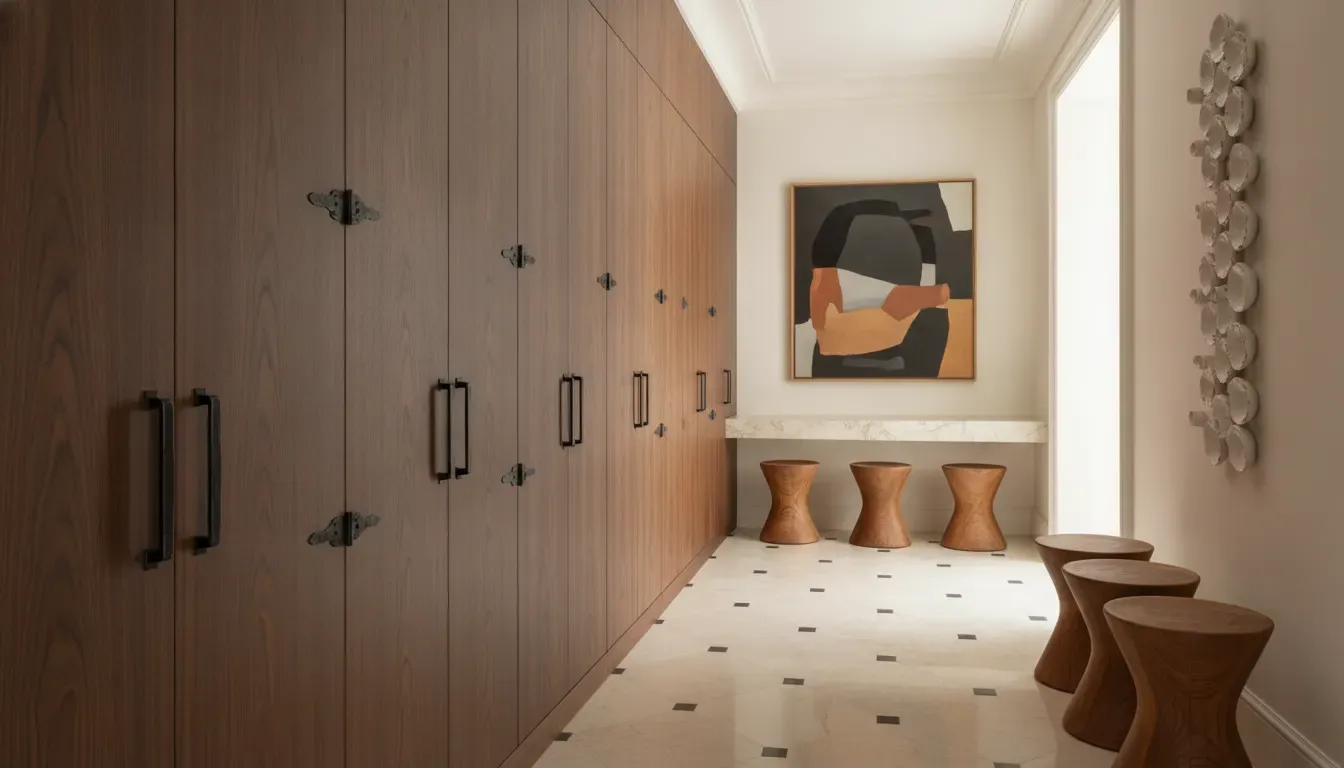
| Short-term approach | Long-term design approach |
|---|---|
| Chooses an item because it is immediately available | Chooses or commissions an item for proportion, use, and context |
| Adapts the room to a standard dimension | Resolves the dimension around the architecture and household |
| Follows a recognizable moment in fashion | Builds a quiet foundation that can accept future change |
| Replaces when wear or mismatch becomes obvious | Maintains, restores, and lives with materials intended to age well |
Craftsmanship can also carry cultural and emotional value. CW DESIGN’s relationships with global artisans and galleries bring a sense of provenance to the interior, while Catherine Weinstock’s training in interior design, furniture restoration, and fine arts supports a more exacting view of condition and finish. A piece does not become valuable merely because it is expensive or rare. Its value grows when its material, making, scale, and purpose are appropriate to the home.
The compounding return of quality: maintenance costs, durability, and resale
The return on quality is often cumulative rather than dramatic. Materials that are selected for the way they will be used can remain serviceable and beautiful for longer. Joinery that is properly considered can be repaired rather than discarded. Lighting that is designed around artwork and circulation can continue to support the collection as it changes. These are practical forms of value, even when no immediate sale is planned.
For an owner, durability can reduce the cycle of replacing work that was never right for the room. It can also protect the time and attention invested in a property. A home that is coordinated from the beginning is less likely to accumulate mismatched fixes, rushed purchases, and unfinished transitions. That does not mean that every material is indestructible. It means that wear, care, restoration, and eventual adaptation have been considered as part of the design.
Contact CW DESIGN to discuss a whole-home interior that is made to endure.
Resale is one part of this picture, but it should not be the only measure. A generic renovation can be difficult to distinguish from another property competing in the same market. A residence with a clear architectural response, thoughtful proportions, and authentic details may be more memorable to a qualified buyer. It can also communicate care without relying on loud finishes that date quickly.
For collectors, the collection itself adds another layer. A well-integrated art environment can make the home feel individual while allowing pieces to be lived with, viewed properly, and rotated as the collection develops. CW DESIGN’s art-centric approach treats artwork as a starting point for spatial decisions, not an accessory placed after the interior is complete.
What HNW homeowners understand about design investment that others do not
High-net-worth homeowners often understand that the cost of a decision includes more than its invoice. It includes the time required to coordinate it, the disruption caused by correcting it, the opportunity lost when a room does not work, and the difficulty of finding the right piece later. They also recognize that a home is not a collection of isolated purchases. It is an environment whose parts either support one another or create friction.
CW DESIGN’s clients are drawn to a level of detail and curation that cannot be reduced to a package of interchangeable selections. That is especially true when a commission includes antiques, restored furniture, contemporary art, historic architecture, or work by international makers. A multidisciplinary perspective can make the process more coherent because questions of condition, proportion, material, and placement are considered together.
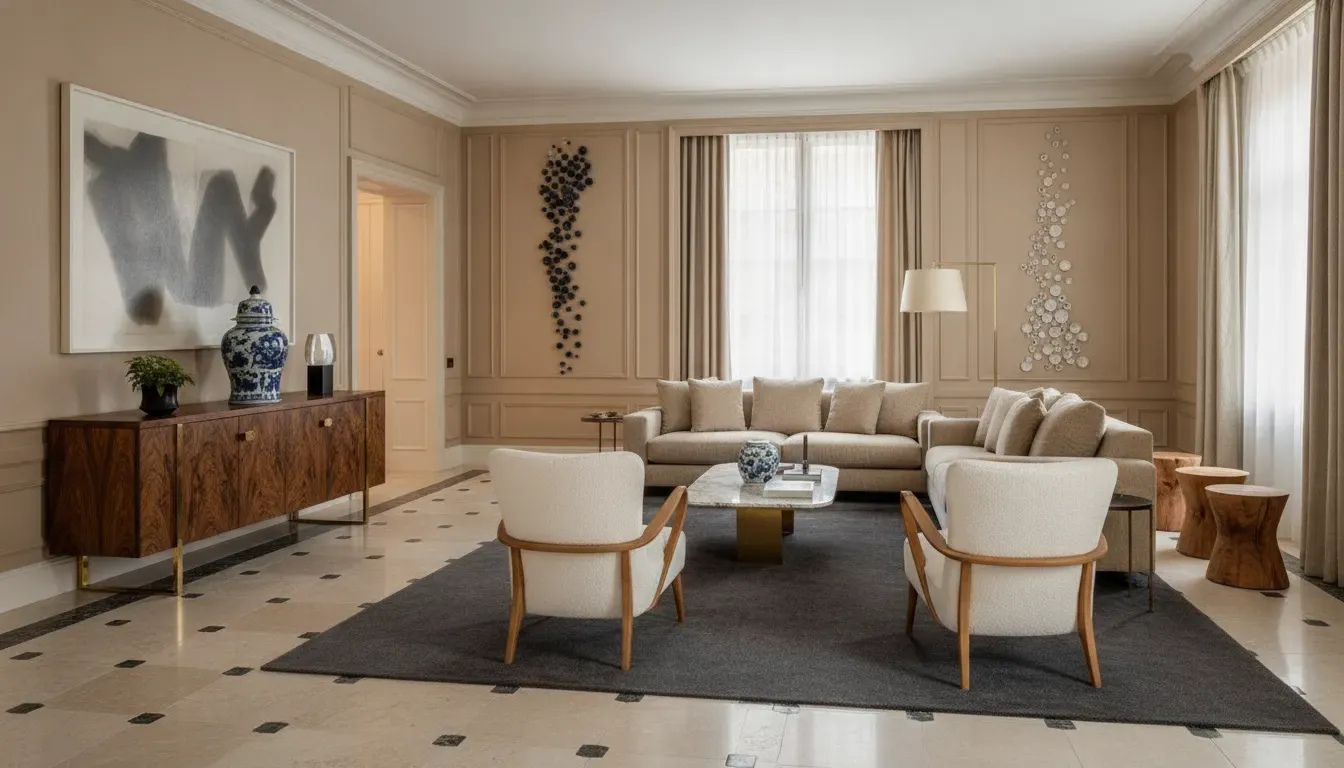
This mindset changes the questions a homeowner asks. Instead of asking only whether a finish is fashionable, the better questions include:
- Will this decision support the architecture, or compete with it?
- Can the material be maintained, repaired, or restored with care?
- Does the plan allow the collection and the household to evolve?
- Is the work being coordinated early enough to avoid expensive reversals?
- Will the interior still feel specific and personal when current trends have passed?
The answer is not always to spend more or to make every choice custom. The answer is to direct attention toward the decisions with the greatest effect on the property’s life. That may mean restoring a significant piece, improving the lighting around a painting, refining a circulation path, or commissioning one architectural element that resolves a difficult room.
How to approach a commission as a capital decision rather than a decorating exercise
A capital-minded commission begins with a clear understanding of the property, the collection, the household, and the desired horizon of use. It considers what must be preserved, what should be transformed, and which decisions need specialists. For a renovation, it also recognizes that architecture, approvals, systems, fabrication, procurement, and installation are connected stages rather than separate purchases.
A useful process has five parts:
- Establish the brief: document how the residence is used, what the collection requires, and which architectural qualities matter.
- Set the hierarchy: identify the elements that will define the experience, from room proportions and sightlines to lighting and material transitions.
- Coordinate expertise: involve the right architects, artisans, fabricators, conservators, and installers at the right point in the work.
- Design for care: choose finishes, hardware, textiles, and systems with maintenance and future restoration in mind.
- Review the whole composition: assess the finished environment as a home, not as a catalogue of individual selections.
CW DESIGN’s full-service renovation management reflects this connected view of a commission. Its value lies in maintaining design intent through the long middle of a project, when architectural decisions, custom work, procurement, and installation must remain aligned. For a client considering a broader engagement, the multidisciplinary background of Catherine Weinstock is relevant because it joins interior design, furniture restoration, and fine arts in a single practice.
The most responsible way to think about luxury interior design as an investment is therefore neither as a guaranteed return nor as an indulgence without consequences. It is a decision to build quality into the property while making the home more useful, more personal, and more resilient. When the work is art-led, carefully made, and designed for real life, its value is present long before a future buyer ever sees it.
Begin a private conversation with CW DESIGN about your residence and collection.
Frequently Asked Questions
Is luxury interior design a good investment?
It can be a sound long-term property decision when it improves usability, material durability, architectural coherence, and the experience of the home. No designer can guarantee a particular resale result, so the strongest measure is lasting quality rather than a promised percentage return.
Does interior design increase property value?
A well-resolved interior may strengthen perceived value and make a property more compelling, but the result depends on location, architecture, condition, market conditions, and the quality of the work. Design should improve the owner’s experience first, with resale considered as one part of the brief.
Why do bespoke materials matter in a luxury home?
Bespoke materials and fabrication can solve the exact proportions, use, and character of a particular room. When selected carefully, they can be maintained or restored over time and create a more coherent relationship between architecture, furnishings, and art.
How should an art collector approach a design commission?
Begin with the collection, the architecture, and the way the home will be lived in. Consider lighting, sightlines, circulation, conservation needs, future acquisitions, and the relationship between artwork and materials before choosing individual furnishings or finishes.